
Paperless Recorders

Paperless Chart Recorder, 1-48 Channel
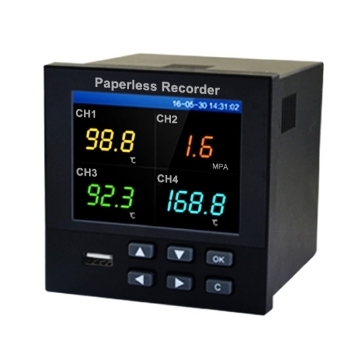
Paperless Recorder, 1/4/8/12/18 Channel
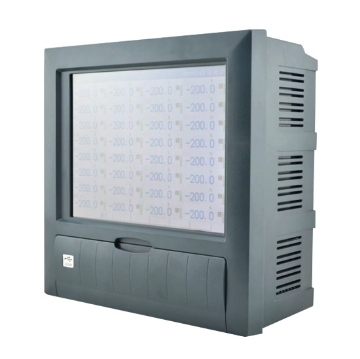
Paperless Recorder, 8-40 Channel

Paperless Recorder, 8/16/24/32 Channel
SISCO paperless recorders are designed for industrial data acquisition, process monitoring, and digital measurement recording. These instruments collect, display, and store measurement data from connected sensors and industrial instruments, providing a convenient way to monitor process variables without relying on traditional paper chart recording. Depending on the model and configuration, a paperless recorder can support multiple input channels, digital data storage, alarm functions, and communication interfaces for a wide range of industrial monitoring requirements.
An industrial paperless recorder is commonly used to monitor parameters such as temperature, pressure, flow, voltage, current, humidity, and other process signals. By recording measurement data over time, it helps operators review operating conditions, identify process variations, analyze historical trends, and maintain measurement records for production management and quality control.
Key Features of Industrial Paperless Recorders
Multi-Channel Data Acquisition
Multi-channel paperless recorders can monitor several process variables simultaneously through multiple input channels. SISCO offers different configurations to meet various industrial data acquisition and process monitoring requirements, including the 1–48 Channel Paperless Recorder, 8–40 Channel Paperless Recorder, and 8–32 Channel Paperless Recorder. These multi-channel recording systems support centralized monitoring of multiple measurement points, helping users select a suitable configuration based on the number of connected sensors, input signal types, and application requirements.
Multiple Input Signal Types
Industrial paperless recorders may support different input signal types, including thermocouples, RTDs, voltage signals, current signals, and other compatible sensor inputs, depending on the model. Flexible input configurations allow users to monitor different process parameters with one recording instrument. Before selecting a model, check the supported signal types and input specifications to ensure compatibility with the connected sensors and transmitters.
Digital Data Recording and Storage
A paperless data recorder stores measurement records electronically rather than printing them on paper charts. Recorded data can help users review historical measurements, compare operating conditions, and identify changes in industrial processes. Available storage methods, data export options, recording intervals, and file formats vary by model.
Real-Time Display and Trend Monitoring
A digital paperless recorder displays measurement values and process trends on a screen, allowing operators to observe changes in monitored parameters. Depending on the model, the display may present numerical readings, trend curves, channel information, and alarm status. This information supports routine equipment monitoring and helps operators identify abnormal process variations.
Alarm and Communication Functions
Selected paperless recorders provide configurable alarm functions to notify operators when monitored values exceed preset limits. Certain models may also offer communication interfaces for data transfer, remote monitoring, or integration with compatible industrial systems. Alarm outputs, communication protocols, and connectivity options should be verified against the specifications of each model.
Applications of Paperless Recorders
Paperless recorders are used in industrial environments where continuous measurement, electronic data logging, and process trend analysis are required.
- Industrial automation and manufacturing: Monitor production parameters, equipment operating conditions, and process variables across multiple measurement points.
- Temperature monitoring: Record temperature data from compatible thermocouples and RTD sensors in industrial equipment, ovens, and controlled environments.
- Water and wastewater treatment: Track compatible measurement signals associated with treatment processes, equipment operation, and process control.
- Laboratories and testing facilities: Collect and review measurement data during experiments, equipment testing, and environmental monitoring.
- Energy and electrical systems: Record compatible voltage, current, and other electrical measurement signals for operational monitoring and analysis.
- Process industries: Monitor variables such as pressure, flow, and temperature in chemical processing, manufacturing, and other industrial operations, subject to the recorder's supported inputs.
How to Choose the Right Paperless Recorder?
Selecting a suitable paperless recorder depends on the measurement requirements, installation environment, and data management needs of the application.
- Determine the number of input channels. Choose a channel capacity that accommodates the required measurement points, with additional capacity if future expansion is expected.
- Check input signal compatibility. Confirm that the recorder supports the connected thermocouples, RTDs, transmitters, voltage signals, or current signals.
- Review the display and interface. Consider screen size, readability, trend visualization, and ease of operation in the intended installation environment.
- Evaluate data storage and export. Check internal storage, removable media support, data export formats, and recording intervals according to your data retention requirements.
- Confirm alarm and communication options. Review alarm configuration, output types, communication interfaces, and supported protocols when integration with other equipment is required.
- Consider installation and operating conditions. Verify the power supply, panel dimensions, ambient temperature range, and other environmental specifications before installation.
Paperless Recorder FAQs
1. What is a paperless recorder?
A paperless recorder is an electronic instrument that measures, displays, and records process data digitally. It replaces traditional paper-based recording methods with electronic data storage and allows users to review measurement values and historical trends.
2. What does an industrial paperless recorder measure?
Depending on its input configuration, an industrial paperless recorder can monitor temperature, pressure, flow, voltage, current, humidity, and other compatible measurement signals. The available measurement types depend on the recorder model and connected sensors or transmitters.
3. What is the difference between a paperless recorder and a chart recorder?
A traditional chart recorder typically records measurement data on paper charts, while a paperless recorder stores data electronically and displays readings or trends digitally. Electronic recording can simplify historical data review and data transfer, depending on the model's available functions.
Explore the SISCO paperless recorder range to compare available channel configurations, input options, recording functions, and communication features for industrial data acquisition and process monitoring.

Shop on sisco.com for all of your industrial test and measurement equipment & accessories including portable detectors, meters, testers, scales, etc.


