
The transmittance haze meter can connect to a PC to print measurement data. It uses a 0/D optical path and meets the requirements of CIE-A, CIE-C, and CIE-D 65 for total transmittance and haze measurements. The spectral haze meter can measure in either vertical or horizontal positions, meeting ASTM and ISO standards. Using an independent PD array detector, it is widely used in glass processing, thin films, and display screen processing.
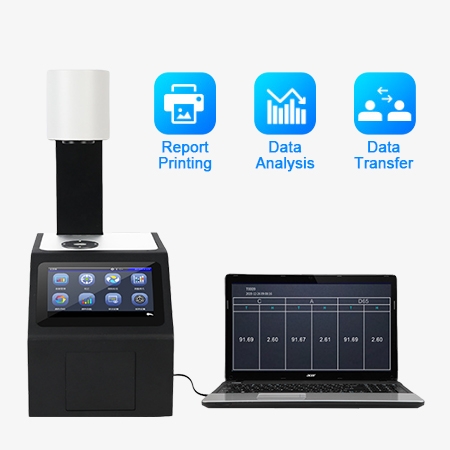
PC connection, accurate dynamic measurement
- The spectral haze meter can be connected to PC software, providing transmittance and haze measurement and analysis. This digitizes user management on the PC and generates test reports for easy management.
- The transmittance haze meter can operate in either vertical or horizontal positions, offering a wide range of test conditions.
- The digital haze meter utilizes an independent PD array detector that meets CIEV (λ) 2-degree visual response, enabling highly accurate and repeatable transmittance and haze measurements while constantly monitoring light source and environmental changes to ensure reliable haze meter data. Dynamic measurement is unaffected by environmental influences.
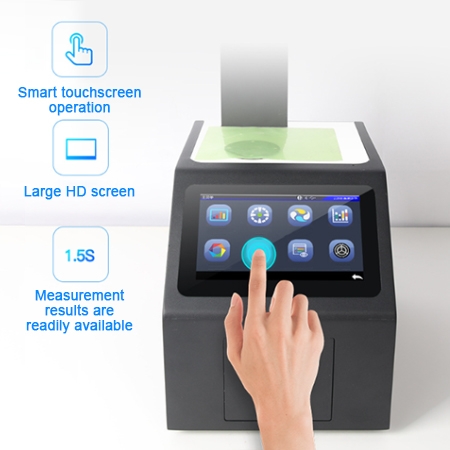
Convenient color touchscreen, 3 standard illumination sources
- Available with or without compensation port, the glass haze meter easily implements the ASTM D1003 uncompensated method for full transmittance and haze testing.
- The transmittance haze meter is available in apertures of 20 mm, 15 mm, 8 mm, and 4 mm. The digital haze meter utilizes a 0/D (parallel light illumination, diffuse reflection reception) optical path configuration, meeting the requirements for haze and total transmittance measurements under three standard illumination sources: CIE-A, CIE-C, and CIE-D 65.
- The color haze meter features a 7-inch capacitive touchscreen for convenient operation and a smoother testing experience.
- The digital haze meter's screen simultaneously displays measurement results under three different light sources, facilitating data comparison.
- Testing begins immediately after power-on calibration. Tests are quick, with transmittance/haze measurement results available in approximately 1.5 seconds.
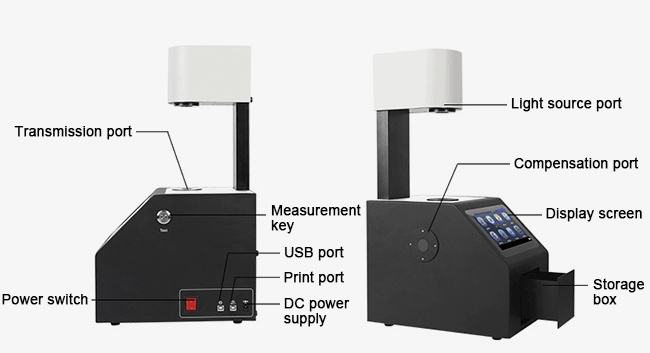
Digital Haze Meter Structure
Application
A haze meter is an instrument used to accurately measure the optical properties of transparent and translucent materials. It is used to quantify the haze (the degree of light scattering) and transmittance (the efficiency of light transmission) of materials, such as soft films, glass, plastics, liquid chemical analysis, LCD panels, and flexible display materials.
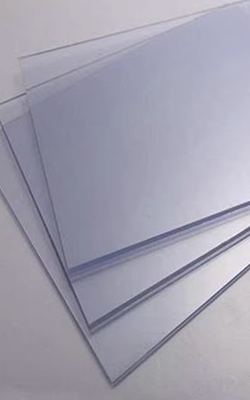
Plastics
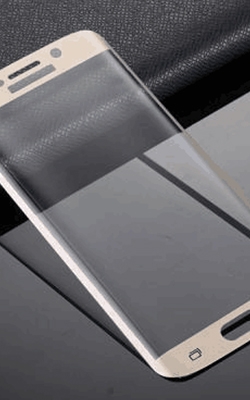
Tempered Glasses

Soft Films

Glasses
| Model | SISCO-HZ-YH1210 | SISCO-HZ-YH1200 | SISCO-HZ-YH1100 | SISCO-HZ-YH1000 |
| Illumination | Transmission: 0/D (parallel light illumination, diffuse reflection reception) | |||
| Features | With a compensation port It can easily implement ASTM D1003 non-compensated method, ISO 13468 compensated method, full transmittance and haze testing. |
No compensation port It can easily implement ASTM D1003 non-compensation method, full transmittance and haze testing. |
||
| Aperture | Φ20mm/ Φ15mm/ Φ8mm/ Φ4mm (select single caliber) | |||
| Integrating Sphere Size | Φ154mm | |||
| Transmittance Measurement Range | 0-100% | |||
| Measurement Wavelength Range | 400~700nm combined LED light source | |||
| Sample Size | Thickness<105mm | Thickness<170mm | ||
| Chromaticity Index | Haze (ASTM D1003/1044, ISO 13468), Light Transmittance T (ISO), Light Transmittance T (ASTM) | Haze (ASTM D1003/1044, ISO 13468), transmittance T (ASTM) | Haze (ASTM D1003/1044), transmittance T (ASTM) | |
| Haze Repeatability | Φ20mm diameter, less than 0.1 (After the instrument is preheated and calibrated, test a standard haze sheet with a haze of about 40 at 5s intervals, 30 times the standard deviation) | |||
| Observation Light Source | CIE-A, CIE-C, CIE-D 65 | |||
| Observer Angle | 2° | |||
| Sensor | PD array detector, meeting CIE V(λ)2 degree visual response | |||
| Measurement Time | 1.5S | |||
| Inter-unit Difference | Φ20mm diameter, less than 0.4 (After the instrument is preheated and calibrated, the standard deviation between the haze standard haze sheet and the reference value is tested at intervals of 5s) | |||
| Display | Color 7-inch capacitive touch screen | |||
| Interface | USB, serial port for printing | |||
| Data Storage | 1,000 standard samples, 20,000 test samples | |||
| Power Supply | Powered by a 24V DC, 3A power adapter | |||
| Light Source Lifespan | Over 3 million measurements in 5 years | |||
| Dimensions (L x W x H) | 487 X 260 X 298 (mm) | 290 X 211 X 511 (mm) | ||
| Weight | 8kg | 7.6kg | ||
| Standard Accessories | Power adapter, instruction manual, quality management software (download from official website), data cable, 0% calibration box, measuring aperture | |||
| Optional Accessories | Micro printer, test fixture, standard haze sheet, foot switch | |||
 Digital Haze Meter YH1200 Introduction.pdf
Q1: What is a haze meter?
A1: A haze meter is a specialized instrument used to measure the optical properties of transparent or translucent materials, primarily quantifying the material's haze and transmittance. A haze meter features a dual optical path design, compatibility with multiple standards, and a diverse light source.
Q2: How does a haze meter work?
A2: The instrument has a built-in stable light source, emitting a beam of parallel light. This beam passes through the material being measured (such as plastic film or glass), where some of the light is absorbed. The remaining light undergoes two variations: direct light and scattered light. After spectrophotometry, the haze meter's chip automatically processes the data and displays the results within 1 second.
Q3: How to use a haze meter?
A3: After warming up, calibrate the haze meter. Cut the sample to ≥50mm x 50mm and clean the surface. Thin film samples should be flattened. Then, completely cover the measurement aperture with the sample. Press the "Measure" button. The haze and transmittance values will be displayed within 1-3 seconds. Record the data, repeat the measurement 3-5 times, and average the values. Export the data via USB or record them manually.
Tips: What is the haze meter function?
Digital haze meters can quickly and accurately measure the haze and light transmittance of transparent or translucent materials to evaluate their optical clarity and scattering properties. They provide more stable and precise measurement results through electronic readings and are commonly used in industries such as plastic films, glass, display screen protectors, and lampshades. This helps companies with quality control, product inspection, and batch consistency testing, ensuring that materials meet standard requirements in terms of visual and optical performance.
Thank you for buying industrial test and measurement equipment on SISCO.com, all products sold by SISCO and the partner cover a 12 months warranty, effective from the date of receiving the products.
What is covered?
SISCO is responsible for providing free spare parts, and free technical support to assist the customer to repair the defective products until the problem is solved.
What is not covered?
- Product purchased from anyone other than a SISCO store or a SISCO authorized reseller.
- Expendable parts.
- Routine cleaning or normal cosmetic and mechanical wear.
- Damage from misuse, abuse or neglect.
- Damage from use of parts other than SISCO approved.
- Damage from use outside the product’s usage or storage parameters.
- Damage from use of parts not sold by SISCO.
- Damage from modification or incorporation into other products.
- Damage from repair or replacement of warranted parts by a service provider other than a SISCO authorized service provider.
- Damage caused by the application environment not meeting the product usage requirements and the failure to perform preventive maintenance.

Shop on sisco.com for all of your industrial test and measurement equipment & accessories including portable detectors, meters, testers, scales, etc.


