
High-precision infrared CO2 sensor module adopts advanced NDIR infrared technology Utilizing NDIR technology, this sensor ensures high sensitivity and stability in detecting CO2 levels. With low average current consumption, temperature and humidity tolerance, and 10-year average service life make it suitable for HVAC systems, indoor air quality monitors, smart ventilation equipment, environmental monitoring devices, and other embedded CO₂ detection applications.
Full-Scale Linear Output
- Full-Scale Linearity: Provides a linear output across the full oxygen measurement range for accurate and consistent O₂ concentration measurement.
- Self-Powered Operation: Generates an electrical signal during oxygen detection without requiring an external power supply for normal operation.
- Fast Response: Delivers a rapid response to changes in oxygen concentration, making it suitable for real-time gas monitoring.
- Temperature Compensation: Built-in temperature compensation helps reduce measurement deviations caused by changes in ambient temperature.
- Accurate & Reliable: Provides stable and dependable oxygen measurement for demanding gas detection and monitoring applications.
- Strong Anti-Interference: Offers strong resistance to environmental and electrical interference for more stable measurement performance.
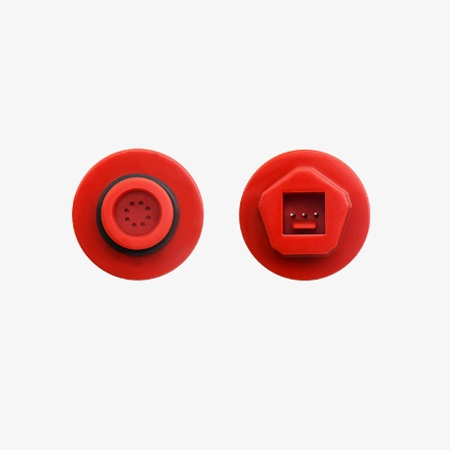
Reliable Electrochemical Detection
- Electrochemical Sensing: Uses an electrochemical detection principle to convert oxygen concentration into a measurable electrical signal.
- Stable Signal Output: Provides consistent output characteristics for easy integration with gas detection and monitoring systems.
- Low Power Integration: Self-powered sensing helps simplify system design and reduces external power requirements.
- Wide Application Range: Suitable for automotive, industrial, coal mining, steel, petrochemical, and environmental monitoring applications.
- Long-Term Stability: Designed to maintain reliable sensing performance during continuous oxygen monitoring.
- Easy System Integration: Compact construction and stable signal output make it suitable for integration into oxygen detectors and other gas monitoring equipment.
Applications

Automobile

Coal Mine

Industry
Steel
| Model | SISCO-GS-O2-02 | SISCO-GS-O2-03 | SISCO-GS-O2-06 |
| Interface | Molex 3 Pin Connector (2.54 mm) | 2 Electrodes | 3P 2.54 |
| Applications | Automobile, Industry, Coal Mine, Steel, Petrochemical and Environmental Protection | High Pressure Environment | |
| Working Principle | Partial Voltage Electrochemistry | Electrochemistry | Partial Voltage Electrochemistry |
| Output Method | 9~13mV (in Air) | 0.1±0.03mA (in Air) | 9~13mV (in Air) |
| Measuring Range | 0~100% | 0~30% (Linear Output) 30~100% (Non~Linear Output) |
0~100% |
| Response Time (T90) | <15s | <15s | <15s |
| Linearity | Full-Scale Linearity | Without | Full Scale Linearity |
| Temperature Compensation | <2% O2, Equivalent (0~40℃) | Without | <2% O2, Equivalent (0~40℃) |
| Load Resistance | ≥10kΩ | 45Ω | ≥10kΩ |
| Operating Temperature | 0~50℃ | 0~45℃ | 0~50℃ |
| Working Humidity | 0~99%RH (No Condensation) | ||
| Work Pressure | 0.5~2.0 Bar | Atmospheric Pressure ±20% | 0.5~2.0 Bar |
| Shell Material | ABS | ||
| Weight | 40g | 15g | 40g |
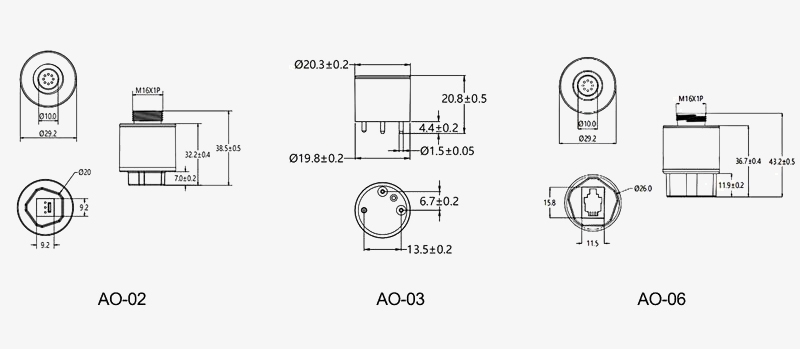
| Size | 29.2x38.5mm | 20.3x20.8mm | 29.2x41.7mm |
Dimension
Pin Definition Diagram
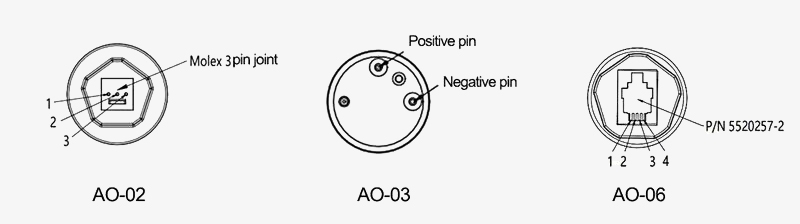
| SISCO-GS-AO-02 | SISCO-GS-AO-06 | ||
| Pin | Definition | Pin | Definition |
| 1 | Positive Pin | 1 | No Connection |
| 2 | Negative Pin | 2 | Negative Pin |
| 3 | Negative Pin | 3 | Positive Pin |
| 4 | No Connection | ||
Q1: What is an oxygen sensor?
A1: An oxygen sensor is a device used to measure the concentration of oxygen (O₂) in air or other gases. It is widely used for gas detection, industrial process monitoring, environmental protection, and safety applications.
Q2: How does an oxygen sensor work?
A2: An oxygen sensor typically uses an electrochemical principle to detect oxygen. When oxygen enters the sensing element, it produces an electrical signal that corresponds to the oxygen concentration, allowing the sensor to provide a measurable output.
Q3: What is the difference between an oxygen sensor and an oxygen detector?
A3: An oxygen sensor is the sensing component that measures oxygen concentration, while an oxygen detector is a complete device that typically combines an oxygen sensor with a display, signal processing circuit, alarm, and other components.
Tips: How to choose a right oxygen sensor?
Choosing the right oxygen sensor depends on the application environment, measuring range, output method, and installation requirements. Consider the following factors:
- Measuring Range: Choose a sensor based on the required O₂ concentration range, such as 0–30% or 0–100% O₂.
- Output Method: Check whether your system requires a voltage output or current output for easy integration with the control or monitoring device.
- Working Environment: Consider operating temperature, humidity, and pressure. For high-pressure applications, select a sensor designed for the required pressure range.
- Response Time: For real-time gas monitoring, choose a sensor with a fast response time, such as T90 <15 seconds.
- Linearity & Accuracy: Full-scale linearity and temperature compensation can provide more consistent measurement results across different operating conditions.
- Size & Interface: Make sure the sensor dimensions and connector type are compatible with your existing equipment.
- Application: Select the model according to its intended use, such as automotive, industrial, coal mining, steel, petrochemical, or environmental monitoring.
Thank you for buying industrial test and measurement equipment on SISCO.com, all products sold by SISCO and the partner cover a 12 months warranty, effective from the date of receiving the products.
What is covered?
SISCO is responsible for providing free spare parts, and free technical support to assist the customer to repair the defective products until the problem is solved.
What is not covered?
- Product purchased from anyone other than a SISCO store or a SISCO authorized reseller.
- Expendable parts.
- Routine cleaning or normal cosmetic and mechanical wear.
- Damage from misuse, abuse or neglect.
- Damage from use of parts other than SISCO approved.
- Damage from use outside the product’s usage or storage parameters.
- Damage from use of parts not sold by SISCO.
- Damage from modification or incorporation into other products.
- Damage from repair or replacement of warranted parts by a service provider other than a SISCO authorized service provider.
- Damage caused by the application environment not meeting the product usage requirements and the failure to perform preventive maintenance.

Shop on sisco.com for all of your industrial test and measurement equipment & accessories including portable detectors, meters, testers, scales, etc.


