
This environmental air sampling equipment is a high-performance environmental monitoring device with an intuitive LCD screen. It supports flexible timed and interval sampling modes, meeting the needs of long-term unattended monitoring. (Standard TSP cutter)
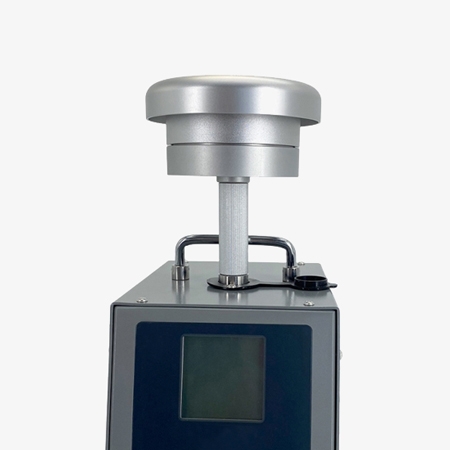
Multi-particle Sampling & Stable Flow Rate
- This air sampler for environmental monitoring is specifically designed for capturing total suspended particulate matter (TSP) in the ambient atmosphere. By selecting different cutters, it can be extended to collect inhalable particulate matter (PM10) or fine particulate matter (PM2.5), achieving "one device for multiple uses."
- This air sampling equipment has a wide sampling flow rate range of (60~130) L/min, a resolution of 0.1 L/min, and an accuracy better than ±2.5%. This air sampling device monitors pressure and temperature in real time and automatically compensates for flow rate deviations, maintaining a constant flow rate with high accuracy under various environmental conditions and supporting long-term continuous operation.
- It offers two modes: non-interval (single sampling) and interval (multiple segmented sampling). Sampling time ranges from 1 min to 99 h 59 min, with 1 to 99 sampling times. Timed sampling is supported, and the start time can be preset, requiring no manual intervention.
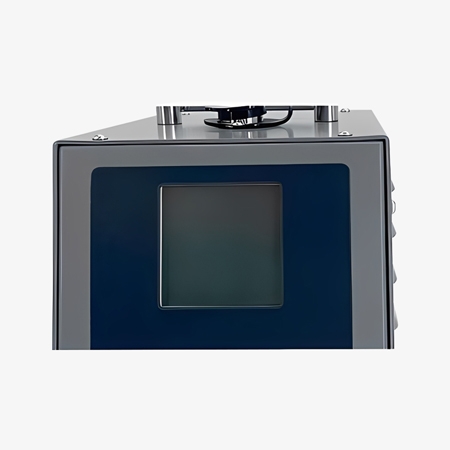
Stable Operation over a Wide Temperature Range
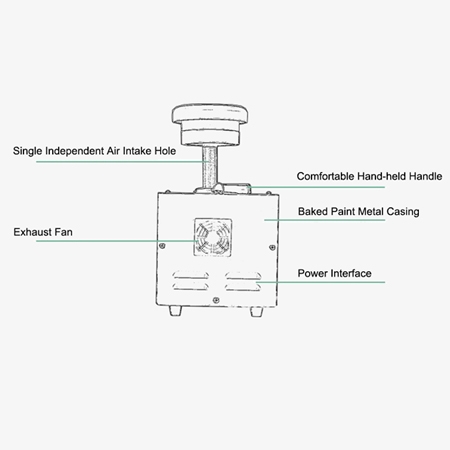
- This air sampler uses a brushless fan, characterized by low noise, high load capacity, and suitability for long-term continuous operation. Its operating temperature range is wide (-30~+55)℃, and it can operate stably at atmospheric pressures of (70~130) kPa, meeting demanding outdoor monitoring requirements.
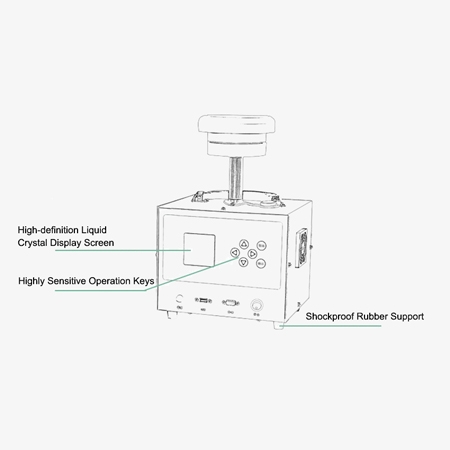
- The sampler is equipped with an automatically adjusting contrast LCD screen that displays key parameters such as the current actual sampling flow rate, volume, pressure, temperature, and time in real time.
- It automatically monitors temperature and pressure and converts them to standard volume, stores 80 sets of sampling data (including filter membrane number, flow rate, etc.), and supports querying historical records by file number. Data is automatically overwritten when full, facilitating subsequent querying and analysis and reducing human error.
Applications
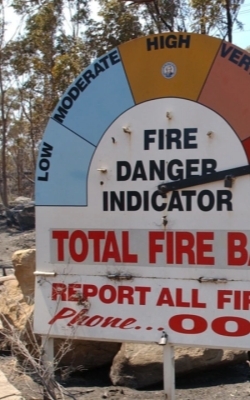
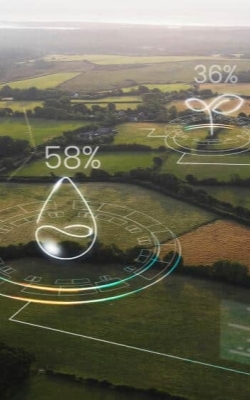
Air samplers have a wide range of applications, which can be summarized into four main areas: In environmental monitoring, they are used to track air quality in cities and regions over a long period of time and assess the status of pollutants such as PM2.5 and ozone; in industrial safety, they monitor toxic and harmful gases and dust in working environments such as chemical plants and mines in real time to protect occupational health; in public health, they provide a basis for disease prevention and control and environmental sanitation; and in fire early warning systems, they enable early warning of fires to protect life and property.

Industrial Safety
Fire Early Warning

Public Health
Environmental Monitoring
| Model | SISCO-AS-JCH120F |
| Sampling Flow Rate | (60~130)L/min, resolution 0.1L/min, accuracy>±2.5% |
| Sampling Time | 1min~99h59min, resolution 1min, accuracy>±0.2% |
| Number of Samples | 1~99times |
| Interval Time | <99h59min |
| Maximum Sampling Volume | 9999.99L |
| Present Pressure | (-20~0)Kpa, resolution 0.01Kpa, accuracy>±2.5% |
| Atmospheric Pressure | (70~130)Kpa, resolution 0.1Kpa, accuracy>±2.5% |
| Operating Temperature | (-30~+55)℃, resolution 0.1℃, accuracy>±1℃ |
| Operating Power Supply | AC 220V ±10%, 50Hz |
| PM2.5 Cutting Characteristics | Da50 = (2.5±0.2)μm σg = (1.2±0.1) μm |
| PM10 Cutting Characteristics | Da50 = (10±0.5)μm σg = (1.5±0.1) μm |
| Inlet Velocity | 0.3m/s |
| b/a | 0.625 |
| Sampling Flow Rate | 100 L/min |
| Effective Filter Membrane Diameter | Ф80mm |
| Connector | M20×1.5 |
| Dimensions | 400mm×270mm×190mm |
| Total Weight | 5kg |
Structural Diagram
Q1: What are the Key Parameters of an Air Sampler?
A1: The core parameters of an air sampler include: sampling flow rate (including stability and accuracy, with constant/medium/low flow rates to suit different scenarios), sampling time (precisely settable and cumulatively timed), and compatibility with the sampling medium (compatible with filter membranes, adsorption tubes, etc.). In addition, flow rate calibration accuracy, negative pressure tolerance, operating temperature and humidity range, air path sealing, and the battery life of portable models and the continuous operation stability of stationary models directly affect sampling accuracy and applicable scenarios, making them key selection criteria.
Q2: What is the Correct Operating Procedure for an Air Sampler?
A2: Before the operation, check the air circuit sealing, battery/power supply status, and calibrate the flow rate. Install the appropriate filter membrane or adsorption tube as needed, ensuring a secure and leak-free installation. Set the sampling flow rate, time, and other parameters, and aim the sampling head at the target area (avoiding obstructions and strong airflow). After starting the device, observe its operating status. Avoid touching or moving the instrument during sampling. After sampling, promptly remove the collection medium and seal the label. Turn off the device, clean the sampling head and air circuit, and record the usage to ensure sample integrity and future device usability.
Q3: What Factors can interfere with the Use of Air Samplers?
A3: How often the probe of a dew point meter needs to be cleaned depends on a variety of factors, including the environment in which it is used, the frequency of use, the cleanliness of the sample gas, and the specific requirements of the instrument. Here are the steps to clean the probe. Air samplers are susceptible to interference from multiple factors: Environmentally, high temperature, high humidity, and strong airflow can affect sampling stability; dust or corrosive gases may clog the air path and damage components. Operationally, flow calibration deviations, improper installation of the sampling medium, and obstruction or improper positioning of the sampling head can lead to sample distortion. Equipment-wise, air path leaks, pump aging, sensor drift, and insufficient battery life (for portable models) can reduce sampling accuracy. Furthermore, unreasonable sampling time settings and ambient electromagnetic interference can also interfere with normal operation and data accuracy.
Tips: What is Passive and Active Sir Sampler?
A passive air sampler and an active air sampler are two different methods for collecting airborne microorganisms or pollutants. Passive sampler, also known as natural sedimentation, relies on the natural sedimentation of airborne microbial particles onto the surface of an open nutrient culture medium (such as an agar plate). It requires no external force to drive airflow, making the sampling process simple and the equipment inexpensive. However, it is easily affected by environmental factors such as airflow, temperature, and humidity, and can only reflect the sedimentation of larger particles within a certain time frame. It is often used for preliminary assessments or static environmental monitoring. An active sampler, on the other hand, actively extracts a certain volume of air using a sampler (such as an impactor, centrifugal, or membrane filter sampler) and forcibly captures microorganisms onto the culture medium or filter membrane. It allows for precise control of sampling flow rate and time, provides highly representative data, and is suitable for locations with high air quality requirements.
Thank you for buying industrial test and measurement equipment on SISCO.com, all products sold by SISCO and the partner cover a 12 months warranty, effective from the date of receiving the products.
What is covered?
SISCO is responsible for providing free spare parts, and free technical support to assist the customer to repair the defective products until the problem is solved.
What is not covered?
- Product purchased from anyone other than a SISCO store or a SISCO authorized reseller.
- Expendable parts.
- Routine cleaning or normal cosmetic and mechanical wear.
- Damage from misuse, abuse or neglect.
- Damage from use of parts other than SISCO approved.
- Damage from use outside the product’s usage or storage parameters.
- Damage from use of parts not sold by SISCO.
- Damage from modification or incorporation into other products.
- Damage from repair or replacement of warranted parts by a service provider other than a SISCO authorized service provider.
- Damage caused by the application environment not meeting the product usage requirements and the failure to perform preventive maintenance.

Shop on sisco.com for all of your industrial test and measurement equipment & accessories including portable detectors, meters, testers, scales, etc.


