
A mini digital surface roughness meter is a compact handheld instrument designed to measure the smoothness of a material's surface. Despite its small size, it provides accurate, real-time readings of key roughness parameters: Ra, Rz, Rq and Rt. Mini surface roughness instrument is widely used in manufacturing, metal processing, quality control, and laboratory testing because they offer quick, non-destructive measurements.
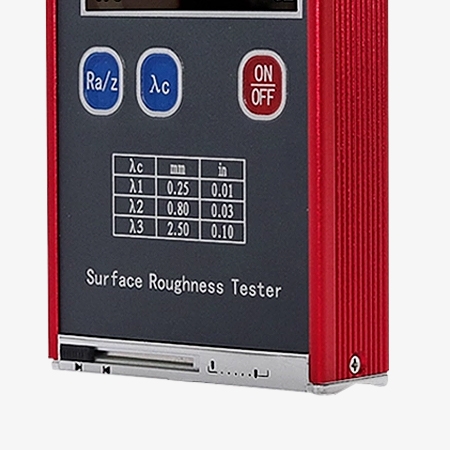
Adopts Metal Housing
- Enhanced Durability and Impact Resistance. Metal housings provide significantly better protection against drops, shocks, and daily handling compared to plastic enclosures. In workshop or factory settings where the portable surface roughness tester may be exposed to accidental impacts, a metal body helps safeguard internal structures.
- Enhanced Anti-Magnetic Performance. Metal housing provides excellent resistance to magnetic interference. In industrial environments, strong magnetic fields from machinery or welding equipment can distort electronic measurements. The anti-magnetic properties of the metal housing help maintain accurate hardness readings.
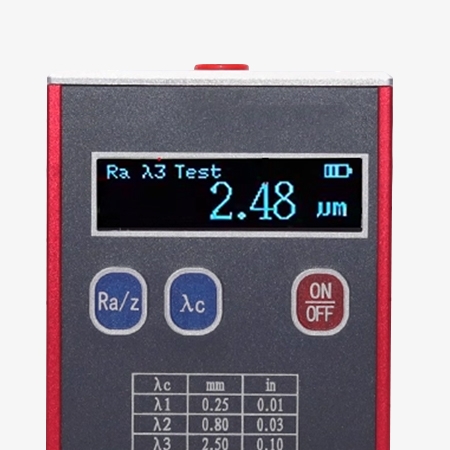
OLED Display
- Superior Visibility and Contrast. OLED displays provide high contrast and vibrant colors, making readings easier to view even in challenging lighting conditions, such as bright sunlight or dimly lit workshops.
- Lower Power Consumption. When displaying simple numeric readings or minimal graphical data, OLED can be more energy-efficient than LCD. This contributes to longer battery life for a roughness meter.
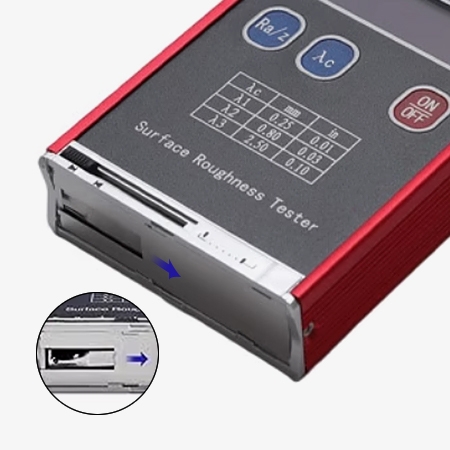
Equipped with a Protective Door
- Protection Against Contaminants. The primary advantage of a protective door is its ability to shield the sensitive measurement probe and internal components from dust, dirt, oil, and other contaminants commonly found in industrial environments.
- Enhanced Durability. Industrial and laboratory environments often involve heavy usage of instruments. A protective door adds a layer of physical protection to the surface finish tester, reducing the risk of accidental damage, scratches, or impacts to the probe and internal mechanisms. This not only extends the device's service life but also minimizes maintenance and repair costs.
Applications
SISCO's surface roughness tester is widely used in quality control and research across various industries. It measures surface texture, helping ensure precision and performance in manufacturing. It is commonly applied in metal machining, automotive, aerospace, and mold manufacturing, enabling inspection of shafts, gears and engine parts.

Mold Casting

Automobile Making

Aerospace Industry

Laboratory
| Model | SISCO-SRT-TR9110 |
| Measurement Parameters | Ra, Rz, Rq, Rt |
| Stroke Length | 6mm |
| Sampling Length | 0.25, 0.80, 2.50mm |
| Evaluation Length | 1.25, 4.0, 5.0mm |
| Measuring Range | Ra, Rq: 0.05~15.0μm; Rz, Rt: 0.1~50.0μm |
| Error of Indication | ±(10nm+0.1A) |
| Variability of Indication | <6% |
| Needle Tip Arc Radius | 10 µm±1 µm |
| Stylus Static Force | ≤0.016N |
| Force Measuring Rate of Change | ≤ 800N/m |
| Power Supply | 3.7V rechargeable lithium-ion battery |
| Working Temperature | -20 ℃~40 ℃ |
| Relative Humidity | <90% |
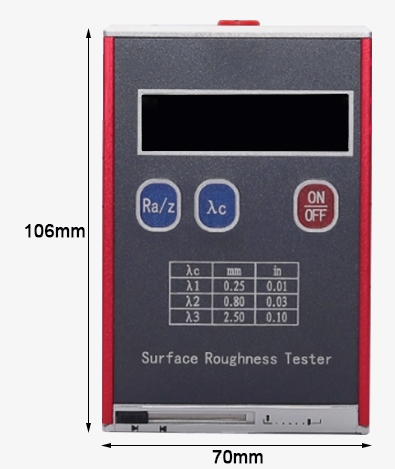
| Dimension | 106*70*24mm |
| Weight | 200g (net weight); 1.2kg (gross weight) |
Dimension:
Q1: What is a surface roughness tester?
A1: A surface roughness tester is an instrument used to measure the surface roughness of an object. It can accurately reflect the degree of unevenness of the surface of an object. Surface roughness testers are widely used in manufacturing, engineering, and quality control to ensure parts meet specifications, improve friction performance, and enhance coatings or finishes.
Q2: How do environmental conditions affect roughness measurement?
A2: Environmental conditions can significantly influence roughness measurements. Temperature fluctuations may cause material expansion or contraction, altering surface profiles. Humidity can affect both the material surface, especially porous or hygroscopic materials, and the measurement probe, potentially leading to inaccurate readings. Vibrations or air currents can disturb sensitive instruments, introducing noise or measurement errors. Dust, oil, or moisture on the surface may also interfere with probe contact or optical detection. To ensure reliable results, measurements should be conducted in a controlled environment with stable temperature, low humidity, minimal vibration, and clean surfaces.
Q3: What is the measuring range of this mini roughness tester?
A3: Ra, Rq: 0.05~15.0μm; Rz, Rt: 0.1~50μm. This compact device is designed for quick, on-site assessments, offering reliable readings for metals and machined parts where surface finish quality is critical.
Tips: How to maintain a mini digital roughness meter?
Maintaining a mini digital roughness meter involves keeping the device clean, dry, and properly stored. After each use, gently wipe the surface contact area with a soft, lint-free cloth to remove dust or residues. Store the tester in its protective case and keep it away from moisture, extreme temperatures, and vibration.
Thank you for buying industrial test and measurement equipment on SISCO.com, all products sold by SISCO and the partner cover a 12 months warranty, effective from the date of receiving the products.
What is covered?
SISCO is responsible for providing free spare parts, and free technical support to assist the customer to repair the defective products until the problem is solved.
What is not covered?
- Product purchased from anyone other than a SISCO store or a SISCO authorized reseller.
- Expendable parts.
- Routine cleaning or normal cosmetic and mechanical wear.
- Damage from misuse, abuse or neglect.
- Damage from use of parts other than SISCO approved.
- Damage from use outside the product’s usage or storage parameters.
- Damage from use of parts not sold by SISCO.
- Damage from modification or incorporation into other products.
- Damage from repair or replacement of warranted parts by a service provider other than a SISCO authorized service provider.
- Damage caused by the application environment not meeting the product usage requirements and the failure to perform preventive maintenance.

Shop on sisco.com for all of your industrial test and measurement equipment & accessories including portable detectors, meters, testers, scales, etc.


