
400 NTU handheld turbidity meter features two-point or multi-point calibration, supports adding curves, and allows for self-calibration of curves. The digital turbidity meter equipped with advanced optical sensing technology, the instrument ensures indication error and repeatability within ±2% F.S. It delivers precise readings even at low turbidity levels, making it ideal for laboratory testing, environmental monitoring, and water treatment processes.
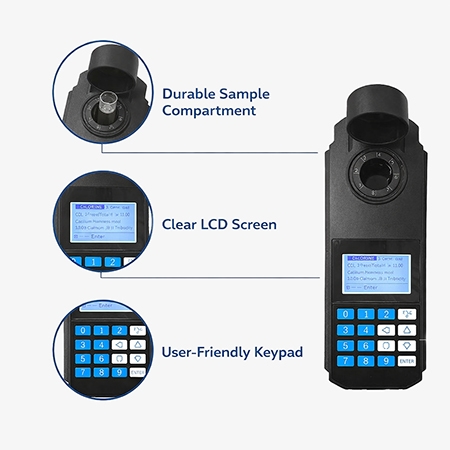
Water Turbidity Meter Features
- High-Sensitivity Optical Sensor: Precision optical sensing module ensures stable and accurate turbidity measurements, even in low-turbidity water samples.
- Integrated Sample Chamber Design: Built-in sample chamber effectively blocks ambient light interference, improving repeatability and test reliability.
- Clear Backlit LCD Display: High-contrast LCD screen with backlight provides clear readings in both bright environments and low-light conditions.Intuitive Keypad Operation: Ergonomic button layout allows quick parameter setting, calibration, and data navigation with minimal training.
- Rugged Industrial Housing: Durable enclosure designed for long-term use in laboratory, field testing, and water quality monitoring applications.
Applications
A portable turbidity meter is used to measure the degree of scattering produced by insoluble particles suspended in water or transparent liquids, and can quantitatively indicate the content of these suspended particulate matter. It can be widely used in various sectors such as power plants, pure water plants, municipal water treatment plants, beverage plants, departments, industrial water, the wine industry, the pharmaceutical industry, epidemic prevention departments, and other departments for turbidity determination.

Wine Industry

Pharmaceutical
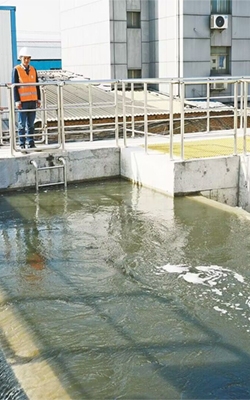
Sewage disposal

Water Quality
| Model | SISCO-PTM-B3190 |
| Measurement Range | 0~400 NTU (3 ranges: 0~20 NTU/ 20~100 NTU/ 100~400 NTU) |
| Indication Error | ≤ ±2% F.S. |
| Repeatability | ≤ ±2% F.S. |
| Resolution | 0.01 NTU |
| Drift per Hour | ≤ 0.1 NTU |
| Operating Temperature | 5~40 °C |
| Relative Humidity | ≤ 70% RH |
| Power Supply | AC 220V ±10%, 50Hz |
| Operating Conditions | Avoid direct sunlight, strong vibration, and electromagnetic interference |
| Dimensions | 80*230*55 mm |
| Weight | 1 kg |
Q1: What is the turbidity meter used for?
A1: The turbidimeter is an instrument used for measuring the turbidity of a liquid by determining the degree to which particles suspended in the solution decrease the intensity of light lost as a beam is passed through it. The devices are considered important tools for monitoring water quality.
Q2: What is the turbidimeter theory?
A2: Turbidimetry is based on the measurement of the loss of intensity of transmitted light in an emulsion (or solution containing fine particles) due to the scattering effect of particles suspended in it. Nephelometry is based on the measurement of scattered light by a solution containing fine particles.
Q3: What precautions should be taken during turbidity meter?
A3: 1. Measure in time after sampling to avoid the lack of authenticity of the measurement results due to temperature changes and water sample particle settlement.
2. The sample bottle must be cleaned very clean to avoid scratches and scratches.
Tips: What does this turbidity meter measure?
This turbidity meter measures water turbidity, which describes the degree of cloudiness or clarity of water caused by suspended particles such as silt, sediment, organic matter, algae, and microorganisms. Turbidity is a key indicator of water quality, as higher turbidity levels often suggest contamination, poor filtration, or changes in water treatment efficiency.
The meter uses optical nephelometric measurement technology to detect how light is scattered by particles in the water sample and reports the result in NTU (Nephelometric Turbidity Units), an internationally recognized standard. By providing accurate and repeatable turbidity readings, this instrument helps users evaluate drinking water safety, monitor wastewater treatment performance, and assess environmental water conditions in both field and laboratory applications.
Thank you for buying industrial test and measurement equipment on SISCO.com, all products sold by SISCO and the partner cover a 12 months warranty, effective from the date of receiving the products.
What is covered?
SISCO is responsible for providing free spare parts, and free technical support to assist the customer to repair the defective products until the problem is solved.
What is not covered?
- Product purchased from anyone other than a SISCO store or a SISCO authorized reseller.
- Expendable parts.
- Routine cleaning or normal cosmetic and mechanical wear.
- Damage from misuse, abuse or neglect.
- Damage from use of parts other than SISCO approved.
- Damage from use outside the product’s usage or storage parameters.
- Damage from use of parts not sold by SISCO.
- Damage from modification or incorporation into other products.
- Damage from repair or replacement of warranted parts by a service provider other than a SISCO authorized service provider.
- Damage caused by the application environment not meeting the product usage requirements and the failure to perform preventive maintenance.

Shop on sisco.com for all of your industrial test and measurement equipment & accessories including portable detectors, meters, testers, scales, etc.


