
SISCO melt flow index tester is suitable for measuring melt mass flow rate(MFR) and melt volume flow rate(MVR) of plastic materials such as polyethylene, polypropylene, polystyrene, ABS, polyamide, fiber resin, acrylic, POM, fluorine plastic, polycarbonate. It is widely used in plastic production, plastic products, petrochemical industries and related institutions, research institutes and inspection departments.
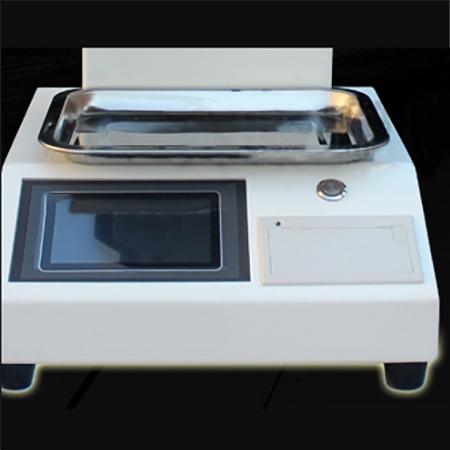
Equipped with High-Resolution Color LCD Display
- High-resolution color LCD display provides real-time visualization of test temperature, load status, timing process, and measurement results for clear and intuitive operation.
- Real-time data and process monitoring, allowing users to observe the melt flow testing process and system stability directly on the screen.
- Visualized automatic testing workflow, with clear status indicators, step-by-step operation prompts, and completion notifications displayed on the color screen.
- Multi-parameter simultaneous display, enabling temperature, load, cutting cycles, and MFR/MVR results to be viewed at a glance, improving testing efficiency.
- User-friendly graphical interface, supporting quick parameter setup and menu navigation, reducing operator errors.
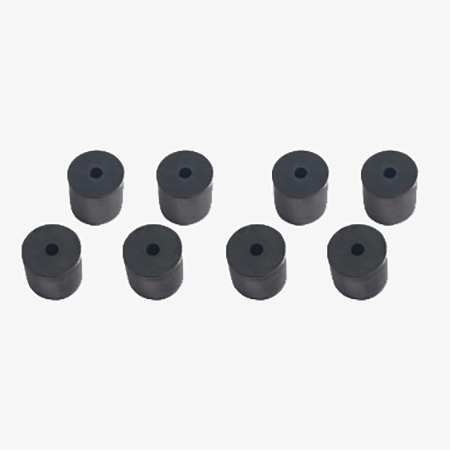
Made with Imported Tungsten Steel, Ensuring High Precision and Durability
- Imported tungsten carbide components ensure exceptional durability and high precision, even under continuous testing conditions.
- The tungsten carbide die and plunger are designed to resist wear and tear, providing long-lasting performance without compromising accuracy.
High-precision testing with minimal error margins, ideal for quality control in PVC and other plastic materials. - The tungsten carbide construction enhances material flow consistency, helping to maintain reliable and repeatable results over time.
- Built to withstand rigorous testing environments, ensuring reduced maintenance costs and extended operational lifespan.
- Ideal for high-frequency testing of PVC, maintaining the integrity of the test results even after extensive use.
Applications
SISCO melt flow indexer is mainly used in the plastics and polymer industry to measure the melt flow properties of thermoplastic materials. It is widely applied in plastic manufacturing, raw material quality control, polymer R&D laboratories, injection molding and extrusion processing plants, and plastic recycling industries to ensure material consistency, processing stability, and product quality.
 Plastic Recycling Industry
 Polymer R&D Laboratory
 Injection Molding
 Plastic Manufacturing
| Model | SISCO-MFI-5605 |
| Die Orifice Diameter | Ø2.095 ± 0.005 mm |
| Die Orifice Length | 8.000 ± 0.025 mm |
| Barrel Inner Diameter | Ø9.550 ± 0.025 mm |
| Barrel Length | 152 ± 0.1 mm |
| Piston Rod Diameter | Ø9.475 ± 0.015 mm |
| Piston Rod Length | 6.350 ± 0.100 mm |
| Test Weight | 8 sets of standard weights (class 8) |
| Temperature Range | Ambient to 400 °C (500 °C optional) |
| Temperature Stability | ±0.5 °C |
| Temperature Display Resolution | 0.1 °C |
| Cutting Method | Manual or automatic cutting (optional) |
| Heating Time | Less than 4 minutes |
| Output Method | Built-in micro printer with automatic printout |
| Power Supply | AC 220V ±10%, 50 Hz |
Q1: What does a melt flow indexer measure?
A1: A melt flow indexer measures the Melt Flow Index (MFI), also known as Melt Mass-Flow Rate (MFR), which indicates how easily a thermoplastic material flows when melted under a specified temperature and load. The result reflects the material's viscosity and molecular weight consistency, and is commonly expressed in grams per 10 minutes (g/10 min) according to standard test methods such as ASTM D1238 and ISO 1133.
Q2: Why is melt flow indexer important?
A2: A melt flow indexer is important because it provides a quick and reliable indication of a plastic material's flow behavior, which directly affects processing and product quality. By measuring the Melt Flow Index, manufacturers can control raw material quality, ensure batch-to-batch consistency, select suitable materials for injection molding or extrusion, detect material degradation, and maintain stable production processes, all in accordance with standards such as ASTM D1238 and ISO 1133.
Q3: What materials can be tested with a melt flow indexer?
A3: A melt flow indexer can be used to test thermoplastic materials that soften and flow when heated. Common test materials include polyethylene (PE), polypropylene (PP), polystyrene (PS), ABS, polyethylene terephthalate (PET), nylon (PA), and polycarbonate (PC), as well as other engineering plastics and recycled polymers used in injection molding, extrusion, and blow molding processes.
Tips: How does the melt flow index (MFI) impact material processing?
The melt flow index (MFI) directly impacts material processing by indicating a material's flowability and viscosity when heated.
High MFI: Indicates lower viscosity, making the material easier to process, ideal for applications like injection molding or extrusion where smooth flow is required. However, it may result in lower strength and durability in the final product.
Low MFI: Indicates higher viscosity, meaning the material is more resistant to flow and typically used when higher mechanical strength is needed. It may require higher pressures or longer processing times.
MFI helps control material consistency, ensure quality, and determine the impact of additives or fillers on the final material properties.
Thank you for buying industrial test and measurement equipment on SISCO.com, all products sold by SISCO and the partner cover a 12 months warranty, effective from the date of receiving the products.
What is covered?
SISCO is responsible for providing free spare parts, and free technical support to assist the customer to repair the defective products until the problem is solved.
What is not covered?
- Product purchased from anyone other than a SISCO store or a SISCO authorized reseller.
- Expendable parts.
- Routine cleaning or normal cosmetic and mechanical wear.
- Damage from misuse, abuse or neglect.
- Damage from use of parts other than SISCO approved.
- Damage from use outside the product’s usage or storage parameters.
- Damage from use of parts not sold by SISCO.
- Damage from modification or incorporation into other products.
- Damage from repair or replacement of warranted parts by a service provider other than a SISCO authorized service provider.
- Damage caused by the application environment not meeting the product usage requirements and the failure to perform preventive maintenance.

Shop on sisco.com for all of your industrial test and measurement equipment & accessories including portable detectors, meters, testers, scales, etc.


