
The water level meter features a corrosion-resistant stainless steel probe and a durable measuring tape with clear scale markings for easy reading. It is a dependable solution for engineers, environmental consultants, drilling contractors, and water resource professionals seeking accurate and repeatable water level measurements.
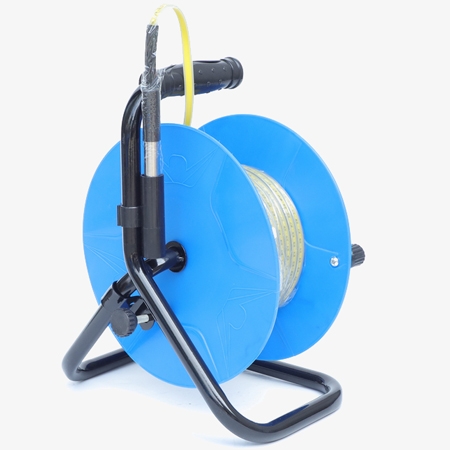
Portable Design with Carrying Handle and Bracket
- Water level meter features an integrated handle and support bracket design, making it easy to carry, store, and operate in various field environments.
- The measuring tape features clear and easy-to-read scale markings, allowing users to quickly identify water depth during field measurements.
- This portable water level meter is widely used for groundwater surveys, well depth measurement, environmental monitoring, water resource management, and engineering projects.
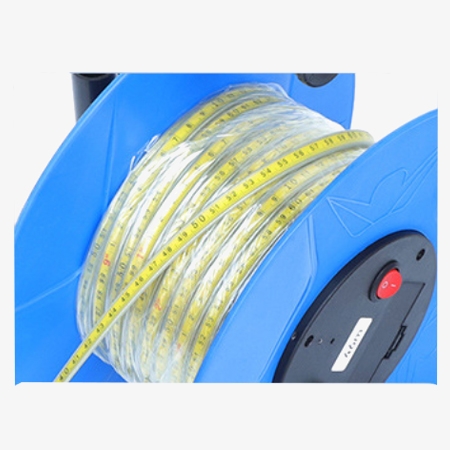
Wide Measurement Range from 10m to 150m
- The water level meter is available in multiple measuring ranges, including 10m, 20m, 30m, 50m, 100m, and 150m, providing accurate water depth measurement for wells, groundwater monitoring, and industrial applications.
- Designed with a sensitive detection system, this water level meter provides precise and reliable readings to help users monitor water levels efficiently.
- Equipped with a corrosion-resistant stainless steel probe, the water level meter offers excellent durability and a long service life, even in harsh water environments.
Applications
The use scenarios of water level meters cover multiple fields such as industry, water conservancy, environmental protection, and energy. Its applications are diversified according to the characteristics of the measuring medium, environmental requirements, and functional requirements.
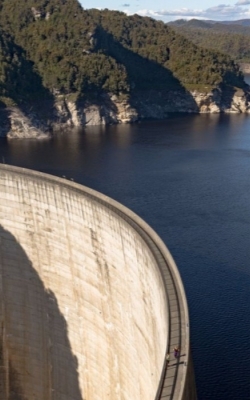
Dam

Hydroelectric Power Station

Water Tank
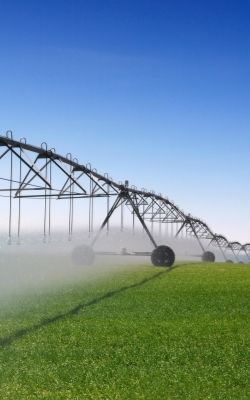
Agricultural Irrigation
| Model | SISCO-WLM-SG10200 | |||||
| Range | 0~10m | 0~20m | 0~30m | 0~50m | 0~100m | 0~150m |
| Operating Voltage | 9V | |||||
| Weight | 2.7kg | 2.8kg | 2.9kg | 3.3kg | 4.3kg | 5.8kg |
Probe Cross Section Diagram
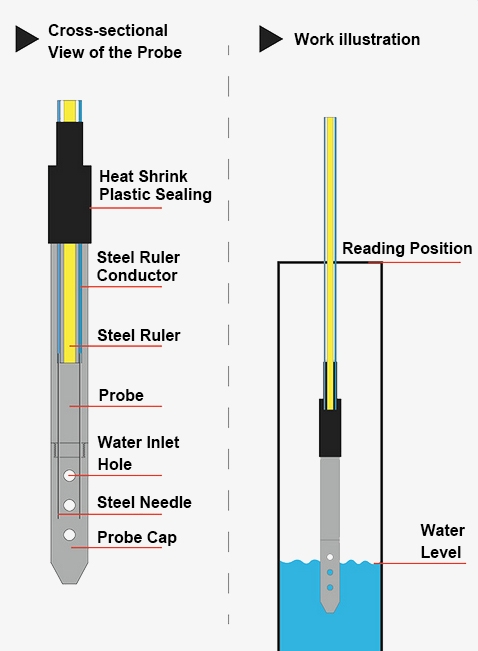
Q1: How to Read a Water Level Gauge Correctly?
A1: The key to reading a water level gauge correctly is to first check the device status and environmental conditions to ensure there are no interference factors, then use the corresponding method according to its type (such as glass tube, float type, pressure type or radar/ultrasonic) to read it, usually by looking directly or viewing the display, paying attention to the units and decimal points; at the same time, make sure the device is calibrated, and pay attention to factors such as bubbles and dirt that may affect the accuracy of the reading. Finally, record the reading and do daily cleaning and maintenance to ensure the reliability of the measurement results and the life of the equipment.
Q2: How to Calibrate a Water Level Meter?
A2: The water level meter calibration needs to be completed in a static water body. First, place the probe into a known depth (such as 0 cm or standard water level) to adjust the zero point, then calibrate the range by comparing the actual water depth, and set compensation parameters according to the water temperature to eliminate thermal expansion and contraction errors. After completion, record the calibration data and recheck it regularly (such as monthly) to ensure measurement accuracy.
Q3: Common Operational Errors When Using Water Level Meters
A3: Common operational errors when using water level meters include improper installation, neglect of calibration, and neglect of environmental factors. For example, when installing the probe tilted or close to the inlet/outlet, the measured value may be too large or too small, or even fluctuate unstably; failure to perform zero point calibration or neglecting that the medium density does not match the device setting value may cause inaccurate readings.
Tips: What precautions should be taken when using a Water Level Meter in different scenarios?
- Groundwater Monitoring: Avoid installing the water level meter directly above the pumping pipe, otherwise the pump operation will cause continuous measurement noise.
- Sewage Tanks: Prioritize low-frequency ultrasonic models, as foam has a more significant impact on high-frequency ultrasonic waves.
- Open Channels/rivers: When used in conjunction with a flow meter, timestamps should be consistent to avoid data mismatch.
Thank you for buying industrial test and measurement equipment on SISCO.com, all products sold by SISCO and the partner cover a 12 months warranty, effective from the date of receiving the products.
What is covered?
SISCO is responsible for providing free spare parts, and free technical support to assist the customer to repair the defective products until the problem is solved.
What is not covered?
- Product purchased from anyone other than a SISCO store or a SISCO authorized reseller.
- Expendable parts.
- Routine cleaning or normal cosmetic and mechanical wear.
- Damage from misuse, abuse or neglect.
- Damage from use of parts other than SISCO approved.
- Damage from use outside the product’s usage or storage parameters.
- Damage from use of parts not sold by SISCO.
- Damage from modification or incorporation into other products.
- Damage from repair or replacement of warranted parts by a service provider other than a SISCO authorized service provider.
- Damage caused by the application environment not meeting the product usage requirements and the failure to perform preventive maintenance.

Shop on sisco.com for all of your industrial test and measurement equipment & accessories including portable detectors, meters, testers, scales, etc.


