
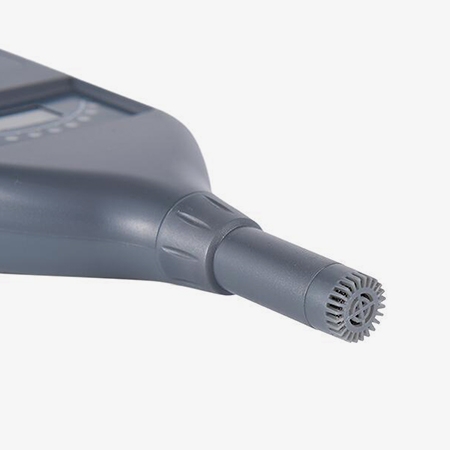
The ultrasonic vacuum leak detector utilizes the strong directionality of high-frequency ultrasound (20kHz-100kHz) to present leak signals, which are inaudible to the human ear, through both LED indicators and sound conversion, enabling precise location of the leak point.

Wideband Adaptability, Dual-Mode Indication
- The ultrasonic air leak detector can detect ultrasonic frequencies from 20kHz to 100kHz, covering the sound wave range generated by common gas leaks, making it applicable to various leak detection scenarios.
- The LED display panel provides visual prompts, while also supporting audible sound conversion via an internal buzzer or external headphones, allowing users to both visually view the leak intensity and use auditory assistance to determine the leak location.
Upgraded for Non-Pressurized Testing
- With its accompanying ultrasonic transmitter, the ultrasonic air leak detection equipment transcends the limitations of single-pressurized system testing, extending its application to non-pressurized sealing scenarios. This makes it suitable for applications such as building energy efficiency, sealing testing, and automotive body sealing performance checks.
- Weighing only approximately 140g, its compact and lightweight design makes it easy for operators to carry and operate, effectively reducing physical burden and improving operational flexibility and convenience, adapting to diverse field working environments.
Application
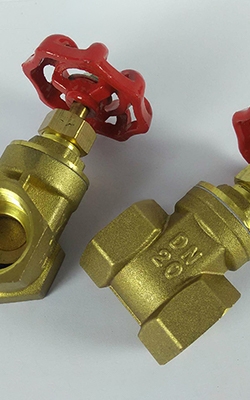
Air pressure leak testers can be used to assess the sealing performance of electronic components, including automobile engines, transmissions, braking systems, doors, windows, roofs, and other elements. An air leak tester can also be used to detect leaks in batteries, valves, and smart electronic devices, among other applications.
Valves

Vials

Smart Devices

Batteries
| Model | SISCO-VLD-ULD586 |
| Leakage Sensitivity Indicator | LED display panel & audible sound (LED display is a relative measurement; audible sound is the frequency of the received ultrasound divided by 32) |
| Reaction Frequency | 20kHz to 100kHz |
| Power Supply | 4x1.5V AAA (UM4) batteries |
| Power Consumption | Approx. DC 25mA |
| Operating Temperature | 0 to 50°C (32 to 122°F) |
| Operating Humidity | Maximum 80%RH |
| Weight | Approx. 140g/ 0.31lb (including batteries) |
| Dimensions | 236mm×63mm×26mm (9.3×2.5×1.0inch) |
Q1: What is an air leak detector?
A1: An air leak detector, also known as a sealing detector or a leak detector, is a key device used in the field of industrial manufacturing to detect the sealing performance of products. Its core function is to accurately measure the amount of tiny leaks to ensure that the sealing performance of the product meets the design requirements.
Q2: How does an air pressure leak tester work?
A1: The object to be tested is placed in a closed test chamber, and a certain pressure of compressed gas is filled into the object to be tested so that the pressure in the chamber reaches the preset test pressure. Subsequently, the leak detector monitors the changes in the pressure in the chamber in real time, and then monitors the changes in pressure to evaluate its sealing performance.
Q2: What is an air leak tester used for?
A1: An airtight leak detector is a high-precision testing device that is widely used in many industries such as medicine, food, cosmetics, and medical devices.
Tips: Daily Maintenance of the Ultrasonic Air Leak Detector
After each use, clean the ultrasonic detection probe with a dry, lint-free soft cloth to remove any adhering dust and oil to prevent interference with the acoustic wave sensing. Do not allow corrosive substances to come into contact with the probe. Store in a dry, room-temperature environment free from strong vibrations, avoiding impacts to the probe and moisture damage to the device. When not in use, recharge the built-in battery monthly to protect it. Perform a professional calibration every 3-6 months as required. Before use, quickly check that the probe is undamaged and that the sensor response is normal.
Thank you for buying industrial test and measurement equipment on SISCO.com, all products sold by SISCO and the partner cover a 12 months warranty, effective from the date of receiving the products.
What is covered?
SISCO is responsible for providing free spare parts, and free technical support to assist the customer to repair the defective products until the problem is solved.
What is not covered?
- Product purchased from anyone other than a SISCO store or a SISCO authorized reseller.
- Expendable parts.
- Routine cleaning or normal cosmetic and mechanical wear.
- Damage from misuse, abuse or neglect.
- Damage from use of parts other than SISCO approved.
- Damage from use outside the product’s usage or storage parameters.
- Damage from use of parts not sold by SISCO.
- Damage from modification or incorporation into other products.
- Damage from repair or replacement of warranted parts by a service provider other than a SISCO authorized service provider.
- Damage caused by the application environment not meeting the product usage requirements and the failure to perform preventive maintenance.

Shop on sisco.com for all of your industrial test and measurement equipment & accessories including portable detectors, meters, testers, scales, etc.


