
SISCO handheld salinometer With automatic temperature compensation and quick response time, the device maintains stable accuracy across different environmental conditions. The salt meter is widely used in aquaculture, seawater testing, aquariums, swimming pools, food processing, and environmental monitoring.
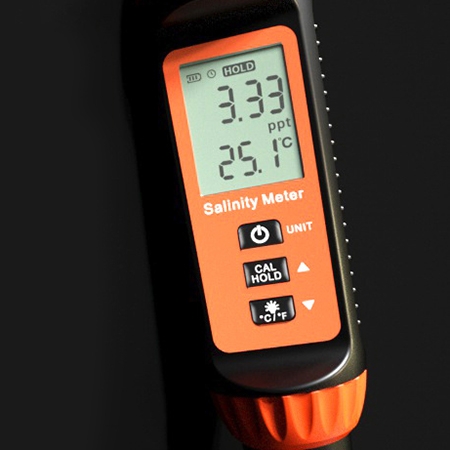
Large and Bright LCD Display
- Clear Digital Display: Features a high-contrast LCD screen that simultaneously shows salinity and temperature readings for quick, accurate monitoring.
- Compact Handheld Design: Lightweight and ergonomically designed for one-hand use in laboratories, aquariums, or field testing.
- Accurate and Reliable: Provides fast and stable readings, ideal for testing water quality in aquaculture, marine environments, and industrial applications.
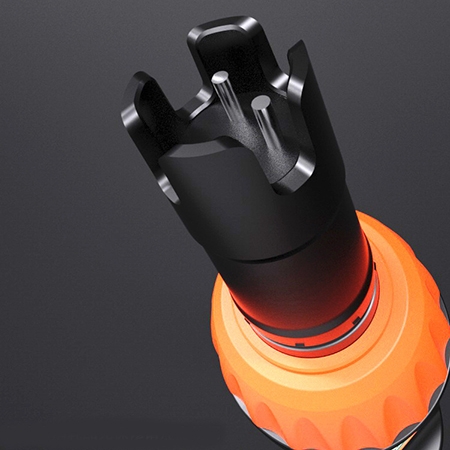
Built-in High-Sensitivity Electrode Head
- High-Sensitivity Electrode: Equipped with a high-precision electrode head, ensuring more accurate measurements for various salt concentrations.
- Fast Response: The advanced design of the electrode head ensures quick responses to changes in salt levels, reducing testing time.
- Corrosion-Resistant: Made from corrosion-resistant materials, the electrode head is suitable for long-term use in diverse liquid environments.
- Easy to Clean: The smooth surface of the electrode head makes it easy to clean and maintain, ensuring long-term accuracy.
- Strong Stability: The electrode head maintains stable performance under varying salt levels, minimizing the impact of external factors.
Applications
SISCO salinometer is used to measure the salt concentration in liquids, ensuring accurate control of salinity levels. It is widely applied in aquaculture, marine research, water treatment, food processing, and beverage industries, as well as in laboratories and environmental monitoring to maintain water quality and process consistency.

Scientific Laboratories

Pool

Food Processing

Agriculture
| Model | SISCO-SM-YHT70A | SISCO-SM-YHT100B |
| Measurement Range | Salinity: 0-70 ppt Temperature: 0~60°C |
Salinity: 0-100 ppt Temperature: 0~60°C |
| Resolution | Salinity: 0.01 ppt (0.00~9.99 ppt), 0.1 ppt (Others); Temperature: 0.1°C |
|
| Accuracy | Salinity: ±3% F.S ±1 digit; Temperature: ±1.0°C |
|
| Operating Environment | Temperature: 0~60°C; Humidity: <85% RH (non-condensing) |
|
| Storage Environment | Temperature: 0~60°C; Humidity: <85% RH (non-condensing) |
|
| Units | ppt, %, SG; Temperature: °C, °F |
|
| Protection Level | IP66 | |
| Power Supply | 2*1.5V Alkaline Batteries (Not Included) | |
| Material | ABS | |
| Dimensions | 180*44*44 mm | |
| Weight | 100g | |
A1: What is a salinometer?
Q1: A salinometer is an instrument used to quickly determine the weight percent concentration or refractive index of a solution containing salt (sodium chloride). Digital salinometers are widely used in industrial sectors such as salt, food, and beverage, as well as in agricultural production and scientific research.
A2: How does a salinity meter work?
Q2: Refraction occurs when light enters a medium from one medium to another, and the ratio of the sine of the angle of incidence is constant, which is called the refractive index. The refractive index of a salt solution can be determined by using the fact that the content of soluble substances in the salt solution is proportional to the refractive index in an ordinary environment so that the salinometer can calculate the concentration of salt.
A3: How to use the salinometer?
Q3: The salinometer is immersed in the liquid, and after it is stabilized, the scale is read directly on the salinometer, and the scale shows the salinity of the liquid.
Tips: Is the digital salt tester safe for food contact?
Yes, the digital salt tester is safe for food contact and suitable for use with a wide range of liquid food samples. The measuring probe is made from food-grade, corrosion-resistant materials that do not react with salt or common food ingredients, ensuring reliable readings without contaminating the sample.
The probe is specifically designed for direct immersion in foods such as soups, sauces, broths, marinades, and brines, making it appropriate for both home kitchens and professional food processing environments. Its smooth surface helps prevent residue buildup and allows for easy cleaning between measurements.
For best hygiene and long-term performance, the probe should be rinsed with clean water before and after each use and wiped dry after testing. Avoid testing extremely hot food directly; allowing samples to cool slightly will help protect the sensor and maintain measurement accuracy. When used and maintained properly, the digital salt tester provides safe, consistent, and accurate salt measurements for food applications.
Thank you for buying industrial test and measurement equipment on SISCO.com, all products sold by SISCO and the partner cover a 12 months warranty, effective from the date of receiving the products.
What is covered?
SISCO is responsible for providing free spare parts, and free technical support to assist the customer to repair the defective products until the problem is solved.
What is not covered?
- Product purchased from anyone other than a SISCO store or a SISCO authorized reseller.
- Expendable parts.
- Routine cleaning or normal cosmetic and mechanical wear.
- Damage from misuse, abuse or neglect.
- Damage from use of parts other than SISCO approved.
- Damage from use outside the product’s usage or storage parameters.
- Damage from use of parts not sold by SISCO.
- Damage from modification or incorporation into other products.
- Damage from repair or replacement of warranted parts by a service provider other than a SISCO authorized service provider.
- Damage caused by the application environment not meeting the product usage requirements and the failure to perform preventive maintenance.

Shop on sisco.com for all of your industrial test and measurement equipment & accessories including portable detectors, meters, testers, scales, etc.


