
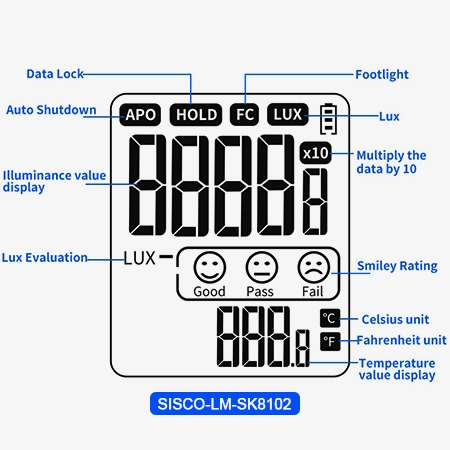
The illuminance meter automatically analyzes the illuminance and provides an intuitive emoji rating, making it easy to see whether the light is "suitable" and simplifying the professional judgment process.

One-button Light Assessment, Data Points Displayed Simultaneously.
- The pocket lux meter uses a high-precision silicon photodetector, covering a measurement range of 0.1-999,900 lux (0.1-92890FC) with an error controlled within ±4%. The one-button illuminance assessment function allows you to quickly determine whether the light is adequate.
- The screen can simultaneously lock and display key data such as illuminance and temperature, avoiding repeated switching. The HOLD data hold function ensures stable data recording, facilitating subsequent comparison and analysis.
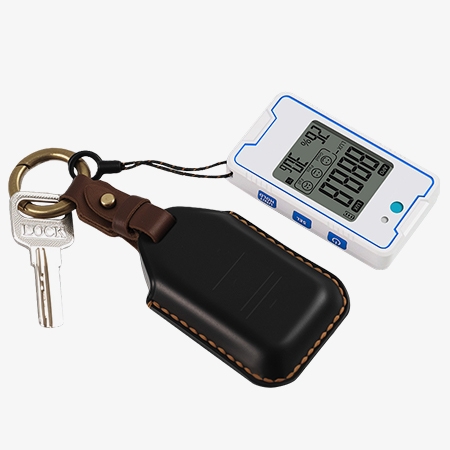
Compact Clip for Easy Carrying
- The portable lux meter uses a 65mAh lithium-ion polymer battery and a Type-C charging port, supporting up to 18 hours of continuous measurement on a single charge, eliminating the hassle of frequent charging.
- Slim and compact, it can be easily held or placed in a pocket, like a smartphone. The specially designed built-in clip can be attached to a keychain or backpack strap for true portability.
Applications
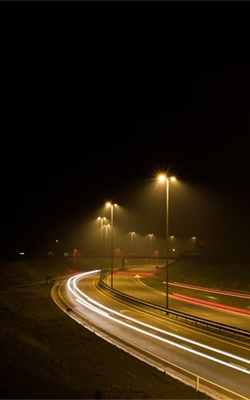
SISCO's lux meters are widely used for light monitoring and measurement in lighting enterprises, agriculture and livestock, industry and mining, laboratories, offices, medical institutions, home applications, street lighting construction and other industries.

School

Factory
Workshop

Office
| Molde | SISCO-LM-SK8100 |
| Iuminance range | 0.1~999900LUX |
| 0.1~92890FC | |
| Iuminance Accuracy | ±(4%×reading) |
| Rating | One-Click Illuminance Evaluation |
| Ambient Temperature | -20°C~50°℃ (±2℃) |
| Data Hold | Yes |
| Auto Power Off | Yes |
| Unit Conversion | Yes |
| Smiley Rating | Yes |
| Built-in Lithium Battery | 65mAh |
| Type-C Charging | Yes |
| Weight | About 40 g |
| Size | 70mm×40mm×10mm |
Structural Diagram

Q1: What is a lux meter and how does it work?
A1: A lux meter, also known as an illuminance meter, is a device used to measure the amount of light falling on a surface. It works by using a photodiode or photovoltaic cell to convert light energy into an electrical signal, which is then processed and displayed as a reading in lux units.
Q2: What are some common applications of lux meters?
A2: Lux meters are commonly used in a variety of industries and settings, including photography, film production, architecture, and interior design. They are also used in industrial settings to ensure proper lighting levels for worker safety and productivity.
Q3: How to calibrate a lux meter?
A3: Calibrating a lux meter typically involves comparing its readings to a known standard light source of a specific brightness level. This can be done using a calibration light box or similar device, and the process may vary depending on the specific type and model of the lux meter being used. It is generally recommended to have a lux meter professionally calibrated on a regular basis to ensure accuracy.
Tips: What are the differences between a Lux Meter and a Spectrometer?
A Lux Meter is primarily used to measure light intensity (illuminance), displaying the results in lux or foot-candles. It is suitable for quickly assessing ambient light or the brightness of light fixtures. A spectrometer, on the other hand, measures the spectral distribution and wavelength information of a light source. It can analyze the color, spectral composition, and energy distribution of light, making it more suitable for scientific research or precise optical analysis. The two instruments have different focuses: the former focuses on light intensity, while the latter focuses on light quality.
Thank you for buying industrial test and measurement equipment on SISCO.com, all products sold by SISCO and the partner cover a 12 months warranty, effective from the date of receiving the products.
What is covered?
SISCO is responsible for providing free spare parts, and free technical support to assist the customer to repair the defective products until the problem is solved.
What is not covered?
- Product purchased from anyone other than a SISCO store or a SISCO authorized reseller.
- Expendable parts.
- Routine cleaning or normal cosmetic and mechanical wear.
- Damage from misuse, abuse or neglect.
- Damage from use of parts other than SISCO approved.
- Damage from use outside the product’s usage or storage parameters.
- Damage from use of parts not sold by SISCO.
- Damage from modification or incorporation into other products.
- Damage from repair or replacement of warranted parts by a service provider other than a SISCO authorized service provider.
- Damage caused by the application environment not meeting the product usage requirements and the failure to perform preventive maintenance.

Shop on sisco.com for all of your industrial test and measurement equipment & accessories including portable detectors, meters, testers, scales, etc.


