
The ultrasonic level transmitter features measuring ranges from 2 m to 20 m, ±0.5% accuracy, and stable high-resolution performance. Designed for non-contact level measurement, it provides reliable data for storage tanks, reservoirs, wastewater systems, and water treatment applications.
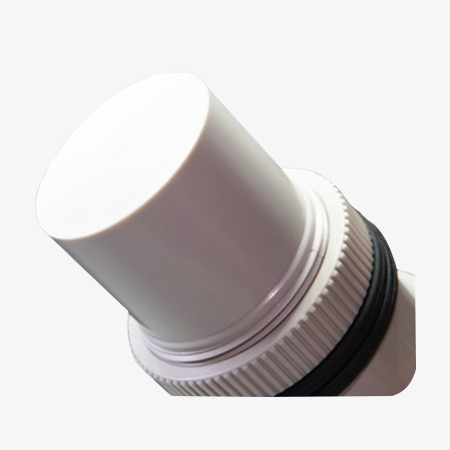
Ultrasonic Level Sensor with PTFE Anti-Corrosion Probe
- The ultrasonic water tank level sensor equipped with a high-performance PTFE sensor probe, providing excellent resistance to strong acids, alkalis, and corrosive liquids. It ensures reliable liquid level measurement in harsh environments such as chemical tanks and wastewater treatment systems.
- The ultrasonic level transmitter uses advanced ultrasonic waves to measure liquid levels without direct contact, preventing contamination and reducing maintenance requirements while ensuring stable non-contact level measurement.
- With measurement accuracy up to ±0.5% and advanced signal processing technology, the ultrasonic liquid level sensor delivers precise and consistent data for tank level monitoring, water level measurement, and industrial automation systems.
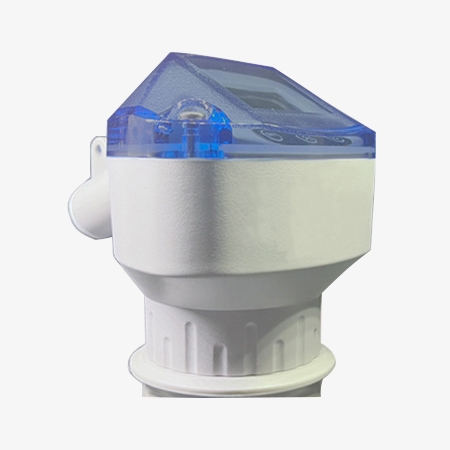
Ultrasonic Level Transmitter for Harsh Environmental Conditions
- Ultrasonic level sensor features an IP68 waterproof probe for dust protection and long-term water immersion, ensuring reliable liquid level measurement in sewage tanks, reservoirs, and wet environments.
- Ultrasonic level transmitter withstands rain, humidity, and water splashes, delivering stable level monitoring performance in outdoor and high-moisture environments.
- Ultrasonic level sensor adopts a sealed IP66 industrial housing, providing strong protection against dust and water jets for reliable industrial installations.
Applications
Improve your liquid level monitoring efficiency with the non-contact ultrasonic level sensor, a reliable ultrasonic level sensor for outdoor and industrial applications. It provides accurate water level measurement for rivers, lakes, reservoirs, fire water tanks, sewage pools, and industrial storage tanks. Designed for wastewater treatment, chemical plants, and smart water management systems, it delivers stable performance with easy installation and minimal maintenance.

Rivers And Lakes
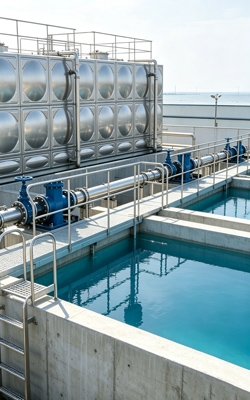
Water Tanks Ponds
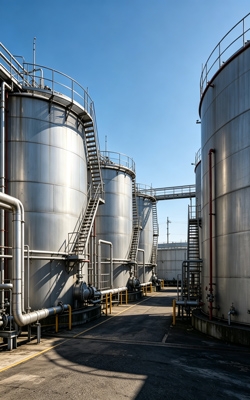
Storage Transportation Tanks
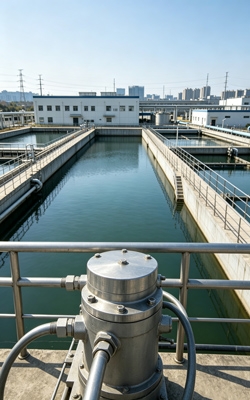
Municipal Water Conservancy
| Model | SISCO-ULT-TK-CSB5M/A |
| Measuring Range |
2m, 5m, 10m, 12m, 15m, 20m (customizable) |
| Accuracy | ±0.5% (full range) |
| Resolution | 3mm or 0.1% (whichever is greater) |
| Display | LCD display (Chinese interface) |
| Analog Output | 4–20mA (2-wire, 250Ω load)4–20mA (4-wire, 510Ω load) |
| Relay Output | Up to 2 relays (AC 277V / 1A or DC 30V / 2A), programmable |
| Power Supply | 12V DC ±10%; 24V DC ±10%; 100–240V AC |
| Ambient Temperature | -20°C to +60°C |
| Operating Temperature | Display: -20°C to +60°C Sensor: -20°C to +80°C |
| Communication | Optional RS-485 (Modbus protocol) |
| Protection Rating | Enclosure: IP66, Sensor: IP68 |
| Sensor Material | ABS, PVDF, PTFE |
| Installation | Threaded or flange mounting / standard bracket |
| Cable | None (standard configuration) |
Q1:What is an ultrasonic level transmitter?
A1: An ultrasonic level transmitter is a non-contact measurement device that uses ultrasonic wave technology to measure the level of liquids, slurries, or solid materials in tanks, vessels, or open channels. It works by transmitting high-frequency ultrasonic pulses toward the material surface and receiving the reflected echoes. The transmitter calculates the distance between the sensor and the surface based on the time taken for the sound waves to travel back, then converts this distance into a level measurement signal, such as a 4–20 mA or digital output.
Q2: What is the maximum measuring distance of this ultrasonic level transmitter?
A2: The measuring range can reach 0~15m, depending on the actual application requirements. The selected measuring range should match the tank height, installation position, and operating conditions to achieve the best measurement performance.
Q3: What accuracy can an ultrasonic level transmitter achieve?
A3: An ultrasonic level transmitter can achieve an accuracy of ±0.25% under standard conditions. This accuracy class indicates that the measured level value may deviate by up to 0.25% of the measurement range when operating under specified standard conditions. Actual accuracy may vary depending on installation, environmental factors, and process conditions such as temperature, vapor, foam, or surface turbulence.
Tips: Can the ultrasonic level sensor be used in corrosive environments?
Yes, this sensor can be used in corrosive environments. It is equipped with a PTFE (Polytetrafluoroethylene) anti-corrosion probe, which provides excellent resistance to strong acids, alkalis, and aggressive chemicals. This makes it highly suitable for demanding applications such as chemical storage tanks, wastewater treatment systems, and industrial process environments.
Additionally, the sensor features an IP68-rated probe, ensuring reliable operation even in harsh, humid, or submerged conditions.
Thank you for buying industrial test and measurement equipment on SISCO.com, all products sold by SISCO and the partner cover a 12 months warranty, effective from the date of receiving the products.
What is covered?
SISCO is responsible for providing free spare parts, and free technical support to assist the customer to repair the defective products until the problem is solved.
What is not covered?
- Product purchased from anyone other than a SISCO store or a SISCO authorized reseller.
- Expendable parts.
- Routine cleaning or normal cosmetic and mechanical wear.
- Damage from misuse, abuse or neglect.
- Damage from use of parts other than SISCO approved.
- Damage from use outside the product’s usage or storage parameters.
- Damage from use of parts not sold by SISCO.
- Damage from modification or incorporation into other products.
- Damage from repair or replacement of warranted parts by a service provider other than a SISCO authorized service provider.
- Damage caused by the application environment not meeting the product usage requirements and the failure to perform preventive maintenance.

Shop on sisco.com for all of your industrial test and measurement equipment & accessories including portable detectors, meters, testers, scales, etc.


