
Designed for reliable CO monitoring, this sensor provides a practical solution for applications where continuous carbon monoxide detection is required. It can be integrated with signal-processing circuits, displays, alarms, and control systems to support real-time CO concentration monitoring. This carbon monoxide sensor helps equipment manufacturers and system integrators develop effective CO detection solutions for the U.S. market.
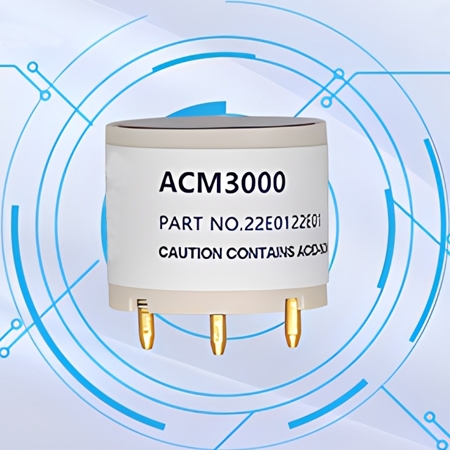
CO Gas Sensor Features
- High-Sensitivity CO Detection: Designed to detect carbon monoxide at low concentrations and provide a reliable response to changes in CO levels.
- Wide Measurement Range: Available in different measurement ranges to meet the requirements of indoor air monitoring, industrial safety, and gas detection equipment.
- Fast Response: Provides a quick response to changes in carbon monoxide concentration, helping connected detection systems monitor CO levels in real time.
- Low Detection Limit: Offers high sensitivity for detecting relatively small changes in CO concentration, making it suitable for continuous monitoring applications.
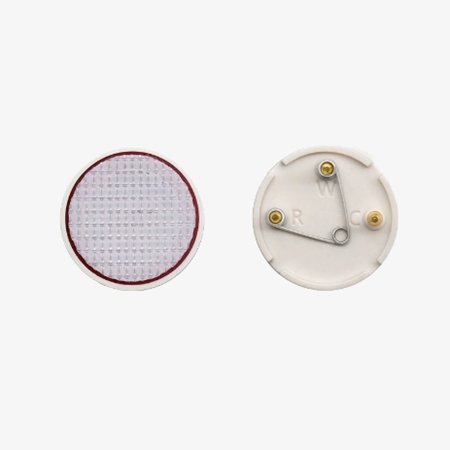
Integrated Terminal Structure
- Front Gas-Sensing Surface: The front side features a visible sensing surface designed for contact with the surrounding air, supporting efficient CO gas detection.
- Integrated Terminal Structure: The rear side is equipped with three clearly separated connection terminals, providing convenient electrical connection with the external detection circuit.
- Stable Mechanical Construction: The sensor adopts a simple two-piece structure with a sensing face and rear connection base, helping provide a practical and secure installation configuration.
- Easy Circuit Integration: The clearly positioned terminals facilitate wiring and connection to compatible signal-processing, monitoring, and alarm circuits.
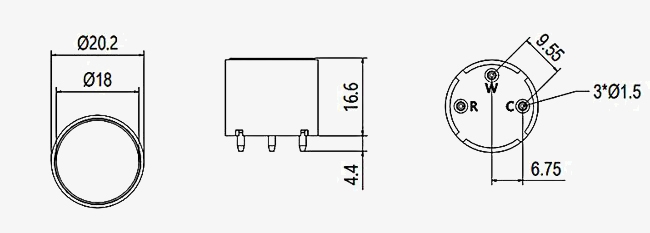
Dimension
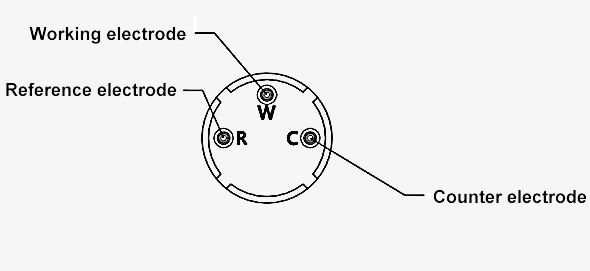
Pin Definition
Applications
The SISCO rain gauges are widely used in hydropower stations, reservoirs, agriculture and forestry, meteorological stations, and hydrological stations to accurately measure rainfall for weather observation, irrigation planning, and water resource management.

Warehouse

Fire Detection

Colliery

Underground Parking
| Model | SISCO-GS-CO-ACM3000 |
| Measuring Gas | Carbon Monoxide (CO) |
| Measuring Range | 0–1000 ppm |
| Measurement Upper Limit | 2000 ppm |
| Sensitivity | 70 ± 15 nA/ppm |
| Response Time (T90) | ≤15 s (0–500 ppm) |
| Baseline Compensation | ±2 ppm |
| Repeatability | ≤3% |
| Long-Term Drift | <2%/month |
| Life Expectancy | 2 years |
| Storage Life | 0.5 year (in a special packaging box) |
| Resolution | <1 ppm |
| Recommended Load Resistance | 10 Ω |
| Bias Voltage | 0 mV |
| Output Current | <0.2 mA (at 2000 ppm) |
| Shell Material | Polyphenylene Ether |
| Working Temperature | -20–55°C |
| Recommended Storage Temperature | 10–30°C |
| Working Pressure | 0.9–1.1 bar |
| Working Humidity | 15–90% RH (Non-Condensing) |
| Weight | <6 g |
Q1: What is a CO gas sensor?
A1: A CO gas sensor is a sensing device designed to detect and measure carbon monoxide (CO) concentrations in the air. It is commonly used in gas detection systems, safety monitoring equipment, industrial instruments, and indoor air quality applications.
Q2: What does a CO gas sensor detect?
A2: A CO gas sensor is specifically designed to detect carbon monoxide (CO). It measures the concentration of CO in the surrounding environment and provides a corresponding electrical signal for monitoring or alarm systems.
Q3: How does a CO gas sensor work?
A3: SISCO CO gas sensors use a sensing element that reacts with carbon monoxide and produces a measurable electrical signal. The signal changes according to the concentration of CO, allowing the connected instrument or control system to determine the gas level.
Tips: Can the CO sensor be integrated into a gas detection system?
Yes. A CO gas sensor can be integrated into a gas detection system, carbon monoxide monitor, industrial safety instrument, or environmental monitoring device as the core sensing component. The sensor detects carbon monoxide in the surrounding air and converts the detected concentration into an electrical output signal that can be processed by the system's control circuit.
When integrating a CO sensor, the system designer should consider key specifications such as the measuring range, sensitivity, response time, output signal, load resistance, operating temperature, humidity range, and power requirements. These parameters need to be compatible with the signal-processing and alarm circuits to ensure stable and reliable CO monitoring.
Thank you for buying industrial test and measurement equipment on SISCO.com, all products sold by SISCO and the partner cover a 12 months warranty, effective from the date of receiving the products.
What is covered?
SISCO is responsible for providing free spare parts, and free technical support to assist the customer to repair the defective products until the problem is solved.
What is not covered?
- Product purchased from anyone other than a SISCO store or a SISCO authorized reseller.
- Expendable parts.
- Routine cleaning or normal cosmetic and mechanical wear.
- Damage from misuse, abuse or neglect.
- Damage from use of parts other than SISCO approved.
- Damage from use outside the product’s usage or storage parameters.
- Damage from use of parts not sold by SISCO.
- Damage from modification or incorporation into other products.
- Damage from repair or replacement of warranted parts by a service provider other than a SISCO authorized service provider.
- Damage caused by the application environment not meeting the product usage requirements and the failure to perform preventive maintenance.

Shop on sisco.com for all of your industrial test and measurement equipment & accessories including portable detectors, meters, testers, scales, etc.


