
This carbon monoxide gas sensor uses a simple circuit to convert conductivity changes caused by CO concentration into electrical output signals. With a 5 ppm to 5,000 ppm detection range, this compact MEMS CO sensor is suitable for carbon monoxide leak detection and monitoring in residential, commercial, and industrial applications. Its space-saving design enables easy integration into CO detectors, gas monitoring instruments, and embedded safety devices for the U.S. and global markets.
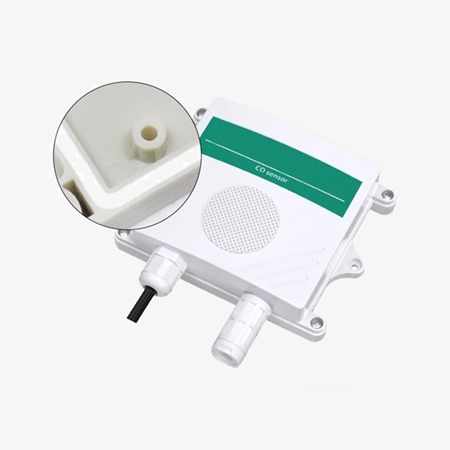
High-Density Shell Material
- High-Density Housing: The carbon monoxide gas sensor features a high-density housing that provides a solid and durable protective structure for the internal sensing components.
- Enhanced Mechanical Protection: The robust housing helps protect the sensor from mechanical impact, vibration, and everyday handling during installation and operation.
- Stable Sensor Structure: The rigid enclosure helps maintain the structural stability of the sensing element, supporting consistent performance during long-term use.
- Dust & Moisture Resistance: The dense housing works together with the protective membrane to help reduce the entry of dust, splashes, and other external contaminants.
- Durable Construction: The high-density material provides a reliable outer barrier, making the CO sensor suitable for integration into residential, commercial, and industrial gas detection equipment.
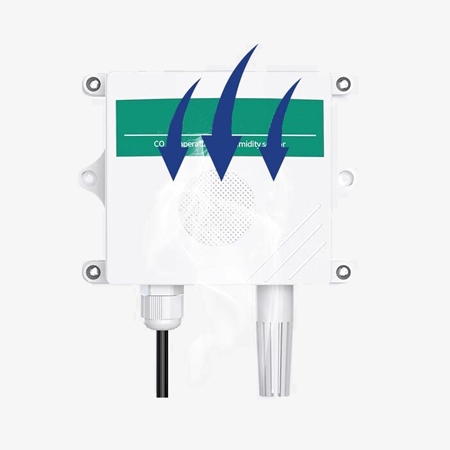
Waterproof and Breathable Membrane
- Waterproof & Breathable Membrane: Allows carbon monoxide gas to pass through to the sensing element while helping prevent liquid water from entering the sensor.
- Moisture Protection: Helps reduce the risk of water droplets and moisture affecting the internal sensing components, improving reliability in humid environments.
- Gas-Permeable Design: The breathable membrane maintains a gas-permeable path for CO detection without compromising the protective structure of the sensor.
- Improved Environmental Protection: Provides an additional protective barrier against moisture, splashes, and airborne contaminants during normal operation.
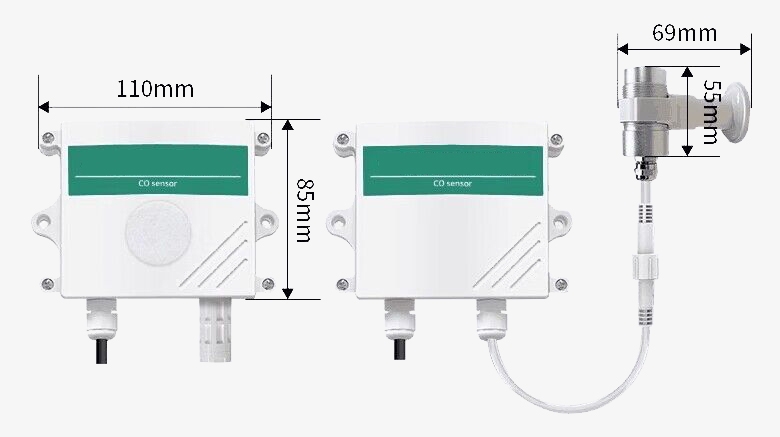
Dimension
Applications
The SISCO rain gauges are widely used in hydropower stations, reservoirs, agriculture and forestry, meteorological stations, and hydrological stations to accurately measure rainfall for weather observation, irrigation planning, and water resource management.

Warehouse

Fire Detection

Colliery

Underground Parking
| Model | SISCO-GS-CO-3002 |
| Output Signal | RS485/4-20mA/0-5V/0-10V (optional) |
| Power Supply | 10~30VDC (24V for 0-10V output models only) |
| Measurement Range | 0-2000ppm |
| Average Power Consumption | 0.18W |
| Temperature Measurement Range | -40℃~+80℃ |
| Humidity Measurement Range | 0~100%RH |
| Temperature Accuracy | ±0.5℃ |
| Humidity Accuracy | ±3%RH |
| CO Resolution | 1 ppm |
| CO Accuracy | ±5 ppm or ±10% |
| Zero Point Drift | ±3 ppm |
| Operating Temperature | -20~50℃ |
| Operating Humidity | 15~90%RH (non-condensing) |
| Stability | ≤2% signal value/month |
| Response Time | ≤30s |
| Warm-up Time | ≥5min |
| Repeatability | ≤2% |
| Pressure Range | 90~110kPa |
Q1: What is a CO gas sensor?
A1: A CO gas sensor is a sensing device designed to detect and measure carbon monoxide (CO) concentrations in the air. It is commonly used in gas detection systems, safety monitoring equipment, industrial instruments, and indoor air quality applications.
Q2: What does a CO gas sensor detect?
A2: A CO gas sensor is specifically designed to detect carbon monoxide (CO). It measures the concentration of CO in the surrounding environment and provides a corresponding electrical signal for monitoring or alarm systems.
Q3: How does a CO gas sensor work?
A3: SISCO CO gas sensors use a sensing element that reacts with carbon monoxide and produces a measurable electrical signal. The signal changes according to the concentration of CO, allowing the connected instrument or control system to determine the gas level.
Tips: How does a CO gas sensor detect carbon monoxide?
A CO gas sensor detects carbon monoxide by responding to the interaction between CO molecules and its sensing material. When carbon monoxide reaches the sensing element, it causes a measurable change in an electrical property, such as conductivity or resistance. The sensor’s circuit converts this change into an electrical output signal that corresponds to the CO concentration.
For a MEMS CO gas sensor, the compact sensing structure enables efficient gas exposure and signal conversion while maintaining a small footprint. The resulting signal can be processed by an external circuit or microcontroller to monitor CO levels, trigger alarms, or provide real-time gas concentration information in applications such as CO detectors, industrial gas monitoring systems, and air-quality monitoring equipment.
Thank you for buying industrial test and measurement equipment on SISCO.com, all products sold by SISCO and the partner cover a 12 months warranty, effective from the date of receiving the products.
What is covered?
SISCO is responsible for providing free spare parts, and free technical support to assist the customer to repair the defective products until the problem is solved.
What is not covered?
- Product purchased from anyone other than a SISCO store or a SISCO authorized reseller.
- Expendable parts.
- Routine cleaning or normal cosmetic and mechanical wear.
- Damage from misuse, abuse or neglect.
- Damage from use of parts other than SISCO approved.
- Damage from use outside the product’s usage or storage parameters.
- Damage from use of parts not sold by SISCO.
- Damage from modification or incorporation into other products.
- Damage from repair or replacement of warranted parts by a service provider other than a SISCO authorized service provider.
- Damage caused by the application environment not meeting the product usage requirements and the failure to perform preventive maintenance.

Shop on sisco.com for all of your industrial test and measurement equipment & accessories including portable detectors, meters, testers, scales, etc.


