
SISCO photosynthetically active radiation sensor features an aluminum alloy housing with a compact structure and durable construction. Designed with a fast response time and wide operating temperature range, it provides reliable radiation data measurement under different environmental conditions.
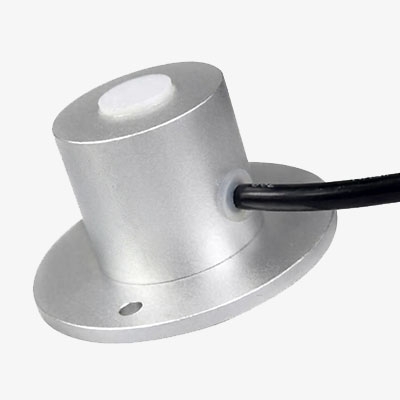
Optical Sensing Technology
- Uses a silicon photodetector to convert incident light intensity into proportional electrical signals.
- Provides high sensitivity for detecting subtle changes in radiation intensity.
- Features individual calibration with a unique sensitivity coefficient for improved measurement consistency.
- Supports direct radiation value output in μmol/m²·s or W/m² without additional conversion equipment.
- Applies cosine response characteristics to improve measurement accuracy from different light angles.
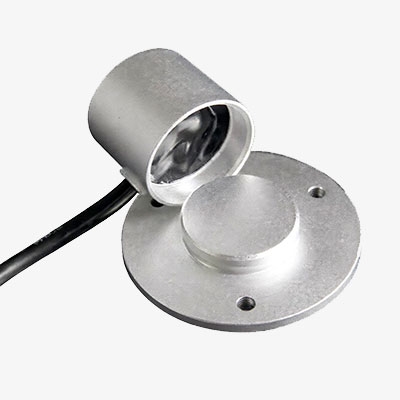
Outdoor Measurement Capability
- Features a metal construction designed for long-term outdoor installation.
- Operates across a wide temperature range from -40℃ to +80℃ for different environmental conditions.
- Provides fast response within less than 1 second (99%) for changing radiation conditions.
- Maintains measurement performance with temperature effect below 0.05%/℃.
- Offers compact dimensions for convenient installation and practical field deployment.
Applications
SISCO photosynthetically active radiation sensor is suitable for agrometeorological research, crop growth monitoring, greenhouse control, ecological studies, and environmental observation by providing accurate radiation measurement data.

Crop Growth Monitoring

Greenhouse Control

Ecological Study

Environmental Observation
| Model | SISCO-RADS-RK200-02 | |||
| Spectral Range | 0-2500 μ*mol/m²*s | 400-700 nm 350-1100 nm |
||
| 0-2000 W/m² | ||||
| Supply | 5V DC, 12V-24V DC | |||
| Accuracy | ±5% rdg | |||
| Range | 0-2500 μ*mol/m²*s, 0-2000 W/m² | |||
| Output | 0-2000 mV | 4-20 mA (2-wire) | RS485 | |
| Sensitivity | 0-2500 μ*mol/m²*s | 800 μV/μ*mol*m²*s | 6.4 μA/μ*mol*m²*s | / |
| 0-2000 W/m² | 1000 μV/W/m² | 8 μA/W/m² | / | |
| Response Time | < 1 s (99%) | |||
| Temperature Effect | < 0.05%/°C | |||
| Cosine Correction | < 10% (until 80°) | |||
| Non-linearity | < ±2% | |||
| Operating Temperature | -40 °C— +80 °C | |||
| Shell Material | Aluminum alloy | |||
| Storage Condition | 10 °C—60 °C, 20%—90% RH | |||
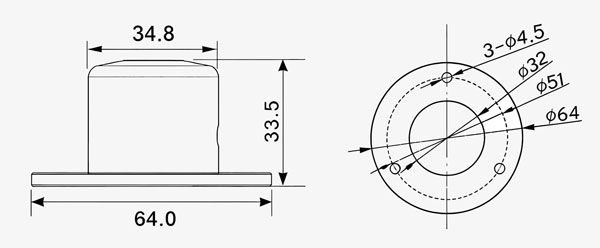
Dimensions (unit: mm)

Q1: Where should a photosynthetically active radiation sensor be installed for best results?
A1: Installation requires a perfectly horizontal position to avoid measurement errors caused by the cosine response characteristic. The location should be open and free from obstructions such as buildings, trees, or overhead structures. Regular cleaning of the sensor surface is necessary to prevent dust, bird droppings, or dew from blocking incoming light. The mounting height should match the crop canopy level to capture the light actually received by plants.
Q2: Which output type is best for a photosynthetically active radiation sensor in a remote monitoring setup?
A2: For remote or long-distance installations, a 4–20mA current loop output is generally preferred because it resists electrical noise and maintains signal integrity over long cable runs. Voltage output (0–2000mV) works well for short distances and simple connections without external power. Digital output via RS485 with MODBUS protocol supports multiple sensors on a single bus and allows real-time data access, making it ideal for automated monitoring systems.
Q3: Does a PAR sensor require regular maintenance for accurate readings?
A3: Yes, regular maintenance is essential. The sensor surface should be cleaned periodically to remove accumulated dust, pollen, or moisture that can reduce light transmission. The horizontal alignment should be checked after strong winds or physical disturbance. In humid environments, checking for condensation inside the dome is recommended. Proper maintenance ensures the sensor maintains its specified accuracy of approximately ±5% over years of continuous outdoor use.
Tips: What is the typical lifespan of a photosynthetically active radiation sensor, and when should replacement be considered?
- Most quality sensors last 3 to 5 years under continuous outdoor exposure before noticeable degradation occurs.
- Signs that replacement may be needed include consistently low readings compared to nearby reference sensors, erratic output fluctuations, or visible yellowing or cracking of the diffuser material.
- UV radiation from sunlight gradually degrades plastic diffusers and seals, reducing light transmission and allowing moisture ingress over time.
- Annual recalibration can extend useful life, but once drift exceeds the rated accuracy specification of ±5%, replacement is more cost-effective than continued use with unreliable data.
- Sensors deployed in harsh environments such as coastal areas with salt spray or deserts with sand abrasion typically have shorter service lives.
Thank you for buying industrial test and measurement equipment on SISCO.com, all products sold by SISCO and the partner cover a 12 months warranty, effective from the date of receiving the products.
What is covered?
SISCO is responsible for providing free spare parts, and free technical support to assist the customer to repair the defective products until the problem is solved.
What is not covered?
- Product purchased from anyone other than a SISCO store or a SISCO authorized reseller.
- Expendable parts.
- Routine cleaning or normal cosmetic and mechanical wear.
- Damage from misuse, abuse or neglect.
- Damage from use of parts other than SISCO approved.
- Damage from use outside the product’s usage or storage parameters.
- Damage from use of parts not sold by SISCO.
- Damage from modification or incorporation into other products.
- Damage from repair or replacement of warranted parts by a service provider other than a SISCO authorized service provider.
- Damage caused by the application environment not meeting the product usage requirements and the failure to perform preventive maintenance.

Shop on sisco.com for all of your industrial test and measurement equipment & accessories including portable detectors, meters, testers, scales, etc.


