
Buy a professional radar level transmitter designed for accurate water level measurement in industrial and municipal applications. With measuring ranges of 0–20 m and 0–35 m, 76–81 GHz radar frequency, 1 mm resolution, and up to ±2 mm accuracy, the sensor provides precise, maintenance-free monitoring. The 35 mm lens antenna generates a focused 8° beam, reducing false reflections and delivering reliable performance in water tanks, reservoirs, rivers, pump stations, and wastewater treatment systems.
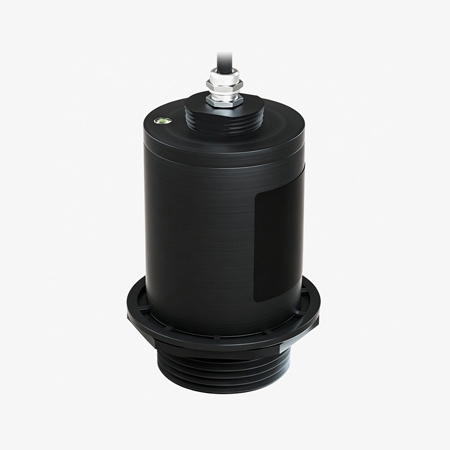
Strong Environmental Adaptability & Protection Performance
- Wide Temperature Resistance: Excellent environmental tolerance of the radar water level sensor ensures stable operation across extreme temperature changes in outdoor and industrial scenarios. Reliable monitoring is available in freezing open fields and high-temperature factory environments all year round.
- Multi-Pressure Compatibility: The radar water level meter is fully adaptable to diverse pressure conditions. Suitable for open atmospheric water pools and lightly pressurized closed water tanks, without restriction from conventional atmospheric pressure environments.
- Universal Water Media Adaptation: Highly compatible with various water media, accurate measurement for all conductive water bodies, including clean water and impurity-containing sewage, covering most conventional water monitoring applications.
- Superior Dustproof & Waterproof Performance: Top-grade full-body protection of the radar level sensor blocks dust and moisture intrusion. Supports long-term operation in open-air sites and humid underground pipe trenches. Resists rain erosion and water immersion for a prolonged service life.
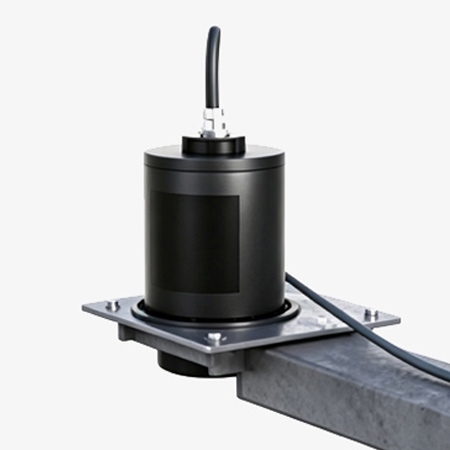
Excellent Liquid Level Measurement Performance
- Precise Shallow & Deep Water Measurement: Ultra-short blind zone structure enables the radar water level meter to achieve stable and accurate detection of ultra-shallow water levels. Consistent high precision is maintained across the full water depth ranges without invalid detections.
- Powerful Anti-Interference Capability: High-frequency lens antenna and narrow beam design form highly concentrated radar signals for the radar level transmitter. Effectively avoids signal interference from internal brackets, pipelines, water foam, and floating debris. Ensures stable and reliable measurement in complex water conditions.
Applications
Our 80GHz radar level sensor is purpose-built to deliver precise water level measurement, widely applied in municipal sewage treatment plants, reservoirs, river channels, water supply filter tanks, underground pipe gallery sump pits and industrial circulating water pools.
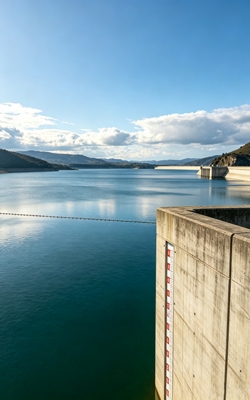
Reservoirs
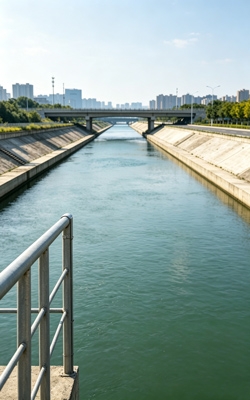
River Channels
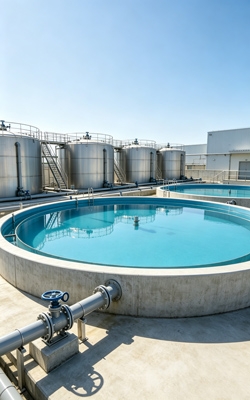
Water Supply Filter Tanks
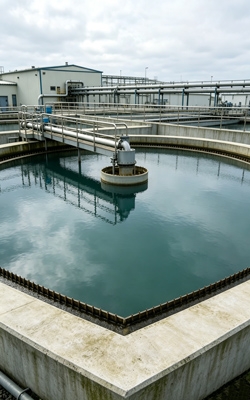
Sewage Treatment Plants
| Model | SISCO-RLT-FK-WSR100-E |
| Measured Variable | Water Level |
| Measuring Range | 0~20 m / 0~35 m |
| Dead Zone | 0.1 m |
| Accuracy |
±2 mm (0~20 m range) ±5 mm (0~35 m range) |
| Resolution | 1 mm |
| Frequency Range | 76GHz ~ 81GHz |
| Antenna Size | 35mm Lens |
| Beam Angle | 8° |
| Communication Output | RS485 interface, Modbus-RTU protocol |
| Supply Voltage | 9~30 VDC |
| Dielectric Constant | >2 |
| Process Pressure | -0.1~0.3 MPa |
| Process Temperature | -40~80 ℃ |
| Commissioning Method | Bluetooth / Modbus Protocol |
| On-site Debugging | WeChat Mini Program |
| Protection Class | IP68 |
Wiring Diagram
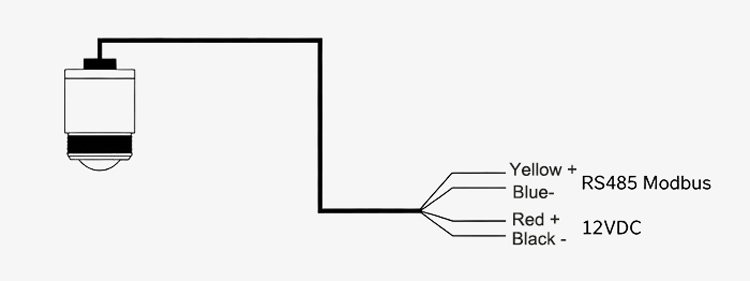
Q1: Can radar water level sensors measure dirty or wastewater?
A1: Yes. Radar water level sensors can measure dirty water and wastewater very effectively. Because they use non-contact microwave radar, the measurement is based on the reflection from the liquid surface—not the liquid itself. This means the sensor is not affected by sludge, foam, floating debris, oil, or suspended particles that are common in wastewater environments.
Q2: Is radar water level measurement affected by weather?
A2: No. Radar water level measurement is generally not affected by weather conditions. Radar water level sensors use microwave signals, which are highly stable and can pass through environmental factors like rain, wind, fog, humidity, and temperature changes without significant signal distortion.
Q3: What are the advantages of radar water level sensors?
A3: Radar water level sensors offer several key advantages, including non-contact measurement that eliminates mechanical wear and reduces maintenance, high accuracy with millimeter-level stability, and strong resistance to environmental interference such as rain, wind, fog, temperature changes, foam, and debris. Unlike traditional ultrasonic or float sensors, radar technology is not affected by vapor, dust, or air conditions, making it highly reliable in outdoor and industrial environments. They also support a wide range of applications, including water tanks, reservoirs, rivers, pumping stations, and wastewater systems, and provide a long service life due to their solid-state design with no moving parts, making them ideal for continuous, low-maintenance water level monitoring.
Tips: What pressure environments can the radar water level sensor adapt to?
Radar water level sensors can typically adapt to a wide range of process pressure environments, depending on their housing design and installation conditions. In general, industrial radar water level sensors are designed to operate in both atmospheric pressure (open tanks, rivers, reservoirs) and lightly pressurized or slightly vacuum conditions, such as closed water tanks or sealed process vessels. For many standard models, the supported process pressure range is around -0.1 to 0.3 MPa, which allows stable operation even when the system experiences minor pressure fluctuations.
Thank you for buying industrial test and measurement equipment on SISCO.com, all products sold by SISCO and the partner cover a 12 months warranty, effective from the date of receiving the products.
What is covered?
SISCO is responsible for providing free spare parts, and free technical support to assist the customer to repair the defective products until the problem is solved.
What is not covered?
- Product purchased from anyone other than a SISCO store or a SISCO authorized reseller.
- Expendable parts.
- Routine cleaning or normal cosmetic and mechanical wear.
- Damage from misuse, abuse or neglect.
- Damage from use of parts other than SISCO approved.
- Damage from use outside the product’s usage or storage parameters.
- Damage from use of parts not sold by SISCO.
- Damage from modification or incorporation into other products.
- Damage from repair or replacement of warranted parts by a service provider other than a SISCO authorized service provider.
- Damage caused by the application environment not meeting the product usage requirements and the failure to perform preventive maintenance.

Shop on sisco.com for all of your industrial test and measurement equipment & accessories including portable detectors, meters, testers, scales, etc.


