
SISCO total solar radiation sensor adopts a precision optical structure with a high-transmittance dome cover to improve solar energy measurement accuracy. The aluminum alloy housing provides excellent durability and protection, while the compact design supports reliable long-term operation.
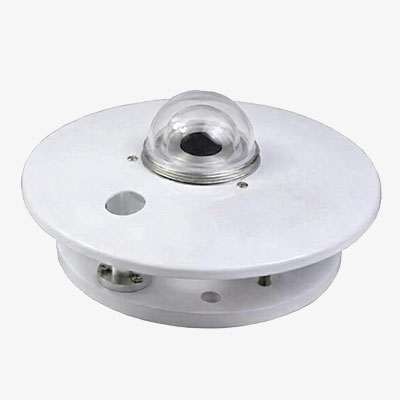
Double Glass Dome and Thermopile Detection
- Features a double-layer glass structure for solar radiation transmission.
- Converts incident solar radiation into an electrical signal through thermopile detection.
- Uses a thermopile sensing design to measure incoming solar radiation.
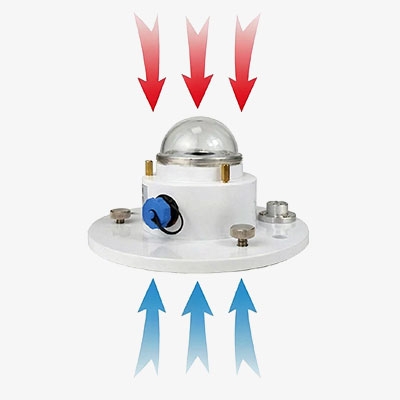
Flexible Signal Output and Data Transmission
- Supports analog and digital output options, depending on the selected configuration.
- Uses MODBUS-RTU communication through the RS485 interface.
- Provides built-in or external transmission modules according to the output type.
- Accommodates different power supply requirements; the 0–20 mV version does not require an external power supply.
Applications
SISCO total solar radiation sensor is designed for accurate solar irradiance monitoring in photovoltaic systems, weather stations, environmental monitoring equipment, and research instruments. It provides reliable radiation data collection for solar energy analysis, climate observation, and automated monitoring systems.
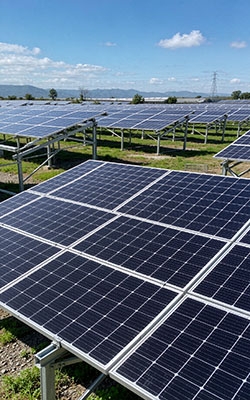
Photovoltaic Systems
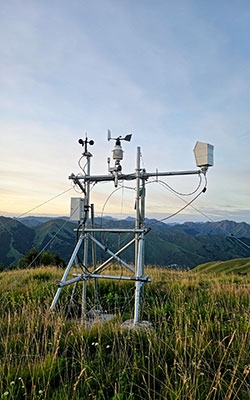
Weather Stations

Environmental Monitoring

Research Instruments
| Model | SISCO-RADS-RK200-03 |
| Spectral Range | 300–3200 nm |
| Measurement Range | 0–2000 W/m² |
| Sensitivity | 7–14 μV/(W/m²) |
| Non-linearity | < ±3% |
| Response Time (95%) | ≤ 60 s |
| Zero Drift | ±8 W/m² |
| Stability | < ±3%/year |
| Directional Response | ≤ ±30 W/m² |
| Temperature Response | < 8% (-10°C to +40°C) |
| Output | RS485 / 4–20 mA / 0–5 V |
| Communication Protocol | MODBUS-RTU (RS485) |
| Power Supply | 12–24 V DC / 5 V DC, depending on configuration |
| Operating Temperature | -40°C to +80°C |
| Ingress Protection | IP67 |
| Dimensions | Ø185 × 120 mm |
| Weight | 1.2 kg |
| Transmission Module | Built-in or external, depending on output |
| Desiccant | Built-in |
| Mounting Bracket | Horizontal or adjustable, optional |
| Recalibration Interval | 2 years |
Dimensions (unit: mm)
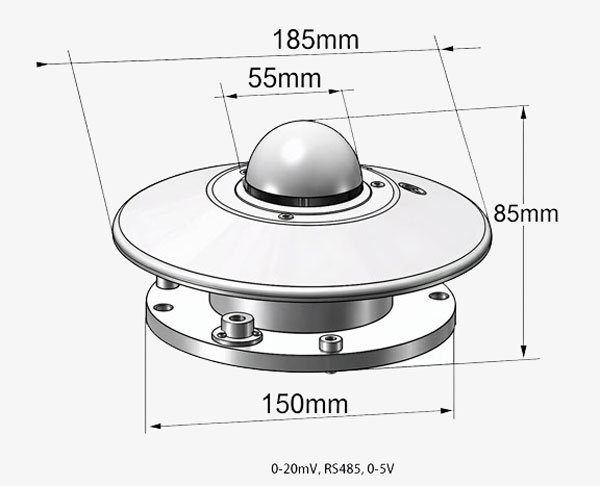
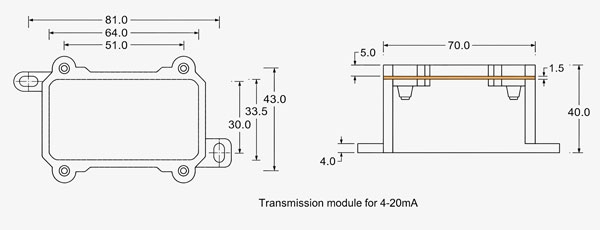
Details
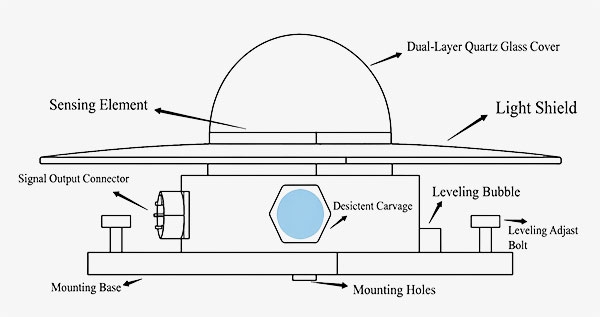

Q1: What is the difference between a total solar radiation sensor and a PAR sensor?
A1: A total solar radiation sensor measures overall solar irradiance across a wide spectral range, while a PAR sensor focuses only on photosynthetically active radiation. The two sensors are designed for different measurement purposes and wavelength ranges.
Q2: How should a solar radiation sensor be installed for accurate measurement?
A2: Proper installation requires a stable horizontal mounting position with an unobstructed view of the sky. Avoiding shadows, dust accumulation, and incorrect alignment helps maintain accurate solar radiation measurement.
Q3: How long can a total solar radiation sensor maintain measurement accuracy?
A3: With ±2%/year stability and a 2-year calibration period, a total solar radiation sensor can provide consistent measurement performance when properly installed and maintained.
Tips: How to maintain accurate measurements with a total solar radiation sensor?
- Install the sensor in an open area with an unobstructed view of the sky to avoid shadows or reflected light affecting measurement results.
- Keep the dome cover clean by removing dust, dirt, or water stains regularly to maintain proper light transmission.
- Ensure correct horizontal alignment during installation to improve measurement accuracy and reduce angle-related errors.
- Check calibration periodically according to operating conditions to maintain long-term measurement reliability.
- Protect the cable and connection points from moisture or mechanical damage when used in outdoor environments.
Thank you for buying industrial test and measurement equipment on SISCO.com, all products sold by SISCO and the partner cover a 12 months warranty, effective from the date of receiving the products.
What is covered?
SISCO is responsible for providing free spare parts, and free technical support to assist the customer to repair the defective products until the problem is solved.
What is not covered?
- Product purchased from anyone other than a SISCO store or a SISCO authorized reseller.
- Expendable parts.
- Routine cleaning or normal cosmetic and mechanical wear.
- Damage from misuse, abuse or neglect.
- Damage from use of parts other than SISCO approved.
- Damage from use outside the product’s usage or storage parameters.
- Damage from use of parts not sold by SISCO.
- Damage from modification or incorporation into other products.
- Damage from repair or replacement of warranted parts by a service provider other than a SISCO authorized service provider.
- Damage caused by the application environment not meeting the product usage requirements and the failure to perform preventive maintenance.

Shop on sisco.com for all of your industrial test and measurement equipment & accessories including portable detectors, meters, testers, scales, etc.


