
The radar level meter provides accurate, non-contact liquid level measurement for industrial applications. Featuring advanced 76–81 GHz radar technology, it delivers stable performance over long measuring distances. Available with aluminum, plastic, or stainless steel housing and a PTFE fully filled antenna, it offers excellent durability and corrosion resistance. Supporting 4–20 mA, HART, and RS485 Modbus outputs, with 2-wire or 4-wire power supply options.
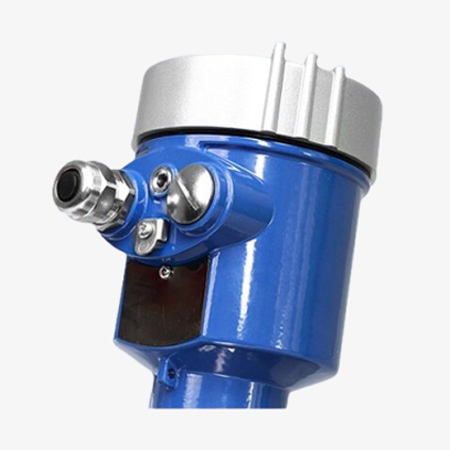
Measurement and Signal Performance Advantages
- Ultra-High Measurement Accuracy:80 GHz radar level transmitter boasts a measurement accuracy of ±1 mm. Equipped with an 80 GHz high-frequency radar, it delivers strong penetration capacity and a maximum measuring range of 120 meters
- Multiple Standard Signal Output Options: The radar level sensor supports mainstream industrial communication protocols, including 4–20 mA + HART analog current output, with RS485 Modbus digital communication available as a customized option. Both 2-wire and 4-wire power supply/output configurations are available, ensuring seamless compatibility with various industrial automation and control systems.
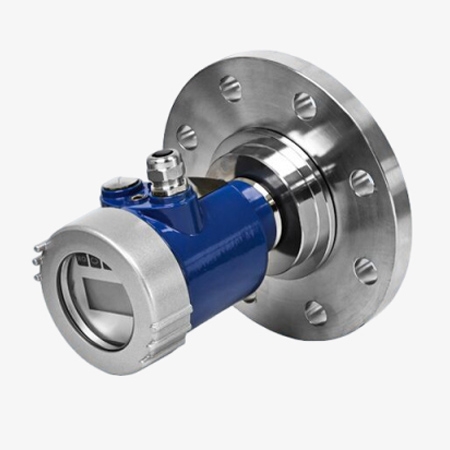
Hardware Structure, Protection, and Durability Advantages
- Robust Multi-Layer Protection Design:
Features an enclosure with protection ratings up to IP67, equipped with sealed waterproof cable glands to provide excellent resistance against water, dust, and corrosion. Its reliable sealing design minimizes the impact of humidity, temperature variations, dust, and other environmental factors on measurement performance. - Premium Durable Materials:
Supplied with a 304 stainless steel mounting flange as standard, offering outstanding vibration resistance, corrosion resistance, and long service life. The enclosure and antenna are also available in corrosion-resistant materials, making the radar level transmitter suitable for high-temperature and corrosive media applications while ensuring long-term mechanical stability and reliability.
Applications
This radar level sensor features powerful environmental adaptability and wide applicability to complex working conditions. It can stably perform level measurement amid heavy dust interference, sewage foam, highly corrosive liquids, ultra-high-temperature environments, interference from steam and oil adhesion, as well as stirring turbulence, covering chemical, wastewater treatment, metallurgy, and many other industrial scenarios.
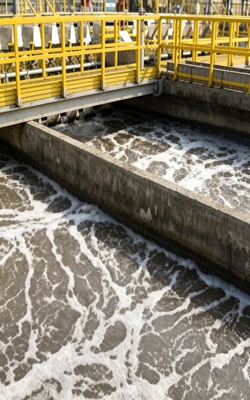
Sewage Foam

Highly Corrosive Liquid

Ultra High Temperature

Heavy Dust Interference
| Model | SISICO-RLT-HSLL-H106 |
| Accuracy | ±1mm |
| Measuring Medium | Liquid |
| Protection Class | IP67 |
| Measuring Range | 0-120m |
| Center Frequency | 76GHz~81GHz |
| Process Connection | Flange ≥ DN50 |
| Beam Angle | 3° |
| Process Temperature | -40~130°C |
| Process Pressure | 0.1~1.6MPa |
| Housing Material | Aluminum / Plastic / Stainless Steel |
| Antenna Material | PTFE, Fully Filled |
| Power Supply |
2-Wire System: DC24V 4-Wire System: DC12~24V / AC220V |
| Signal Output |
2-Wire: 4-20mA with HART Protocol 4-Wire: 4-20mA / RS485 Modbus |
Installation
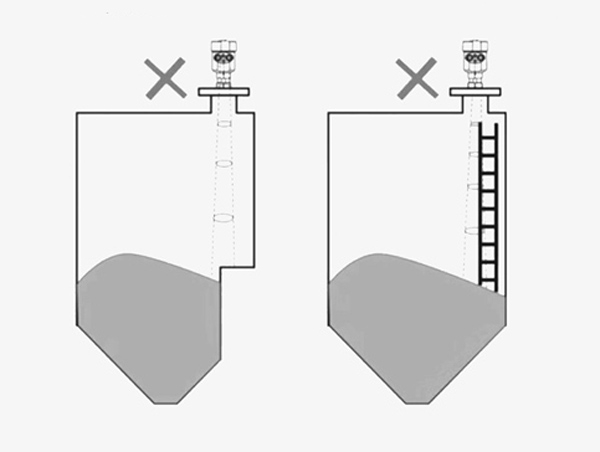
Ensure that there are no obstructions within the beam's range, such as people, ladders, or steps.
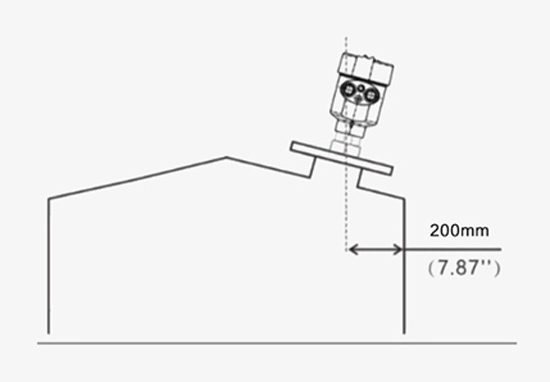
The instrument should be installed at least 20 cm away from the container wall; otherwise, it may produce incorrect readings.
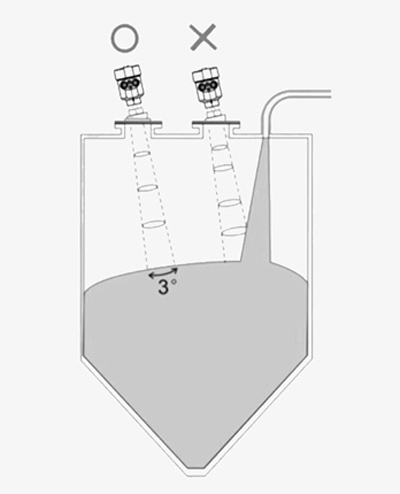
Instrument installation should ensure that the antenna beam avoids the feed inlet.
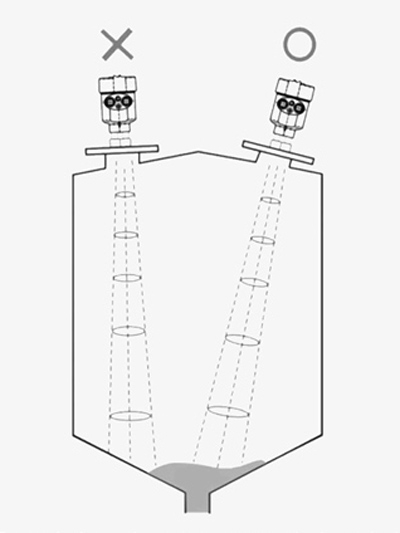
For conical containers, try to ensure the beam is directed straight at the bottom of the tank; otherwise, the measurement results at the tank bottom may be inaccurate.
Q1: Why choose an 80 GHz radar transmitter instead of a 26 GHz radar transmitter?
A1: An 80 GHz radar level sensor offers higher accuracy and a much narrower beam angle than a 26 GHz radar, making it easier to avoid interference from tank walls, pipes, mixers, and other internal structures. This results in more stable and reliable level measurements, especially in small tanks, narrow vessels, or applications with dust, vapor, or foam. If your process requires precise, maintenance-free level measurement in challenging industrial environments, an 80 GHz radar is generally the better choice.
Q2: What is an 80 GHz radar level transmitter?
A2: An 80 GHz radar level meter is a non-contact level measurement device that uses 80 GHz high-frequency microwave signals to continuously measure the level of liquids, slurries, powders, and bulk solids. It determines the material level by calculating the time it takes for the radar signal to travel to the surface and return. Thanks to its high frequency, it provides excellent accuracy, a narrow beam angle, and reliable performance even in tanks with dust, steam, foam, or internal obstacles, making it ideal for demanding industrial applications.
Q3: Does an 80 GHz radar level transmitter require calibration?
A3: In most cases, 80 GHz radar level transmitters require very little calibration because they are factory calibrated before shipment. During installation, users typically only need to configure basic parameters such as the tank height, empty distance, and measuring range. Once installed correctly, the transmitter provides accurate, stable measurements with minimal maintenance, and recalibration is usually only necessary if the application conditions or installation setup change significantly.
Tips: How do I choose the right 80 GHz radar level transmitter?
To choose the right 80 GHz radar level transmitter, you need to match the device with your actual application conditions.
Start by identifying what you are measuring—liquid, slurry, or bulk solids—and then consider key process parameters such as measuring range, tank height, temperature, pressure, and whether there is steam, dust, or foam. The dielectric constant of the medium also matters, especially for low-reflective materials.
In addition, check the required process connection, output signal (such as 4–20 mA or Modbus), and any hazardous area certifications if needed. A well-matched configuration ensures stable echo detection, higher accuracy, and long-term reliable performance in your specific industrial environment.
Thank you for buying industrial test and measurement equipment on SISCO.com, all products sold by SISCO and the partner cover a 12 months warranty, effective from the date of receiving the products.
What is covered?
SISCO is responsible for providing free spare parts, and free technical support to assist the customer to repair the defective products until the problem is solved.
What is not covered?
- Product purchased from anyone other than a SISCO store or a SISCO authorized reseller.
- Expendable parts.
- Routine cleaning or normal cosmetic and mechanical wear.
- Damage from misuse, abuse or neglect.
- Damage from use of parts other than SISCO approved.
- Damage from use outside the product’s usage or storage parameters.
- Damage from use of parts not sold by SISCO.
- Damage from modification or incorporation into other products.
- Damage from repair or replacement of warranted parts by a service provider other than a SISCO authorized service provider.
- Damage caused by the application environment not meeting the product usage requirements and the failure to perform preventive maintenance.

Shop on sisco.com for all of your industrial test and measurement equipment & accessories including portable detectors, meters, testers, scales, etc.


