
Digital ground resistance tester with a high output current range (up to 70A) and accurate resistance measurements down to 10mΩ, the ground resisitance tester is perfect for testing various grounding systems, including grounding rods, grid systems, and electrical equipment bonding. It provides precise results, ensuring that your grounding systems are effective and meet the required safety standards.
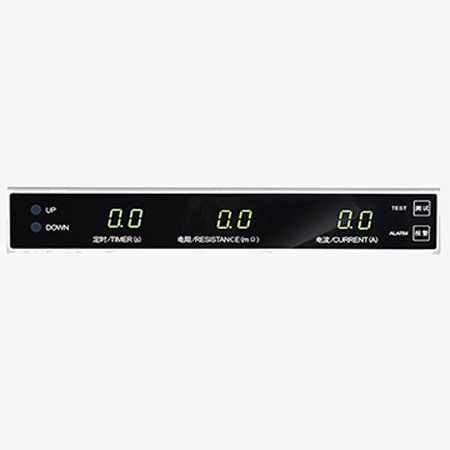
High-Visibility LED Display
- High-Visibility LED Display: The ground resistance tester is equipped with a bright LED display, ensuring clear and easy reading of test results, even in low-light environments. The LED indicators provide instant feedback on the test status and any alarm conditions.
- Clear and Intuitive Interface: The high-contrast LED display shows key parameters such as resistance values and measurement progress, making it user-friendly for both beginners and professionals in various testing environments.
- Enhanced Visibility for Outdoor Use: With its bright LED display, the tester is perfect for outdoor or industrial environments, where lighting conditions may vary. The LED screen remains visible even under direct sunlight or dimly lit conditions.
- Instant Alerts with LED Indicators: The LED display also serves as a visual alarm, alerting users to any out-of-range resistance values or fault conditions, ensuring fast response times during critical testing.
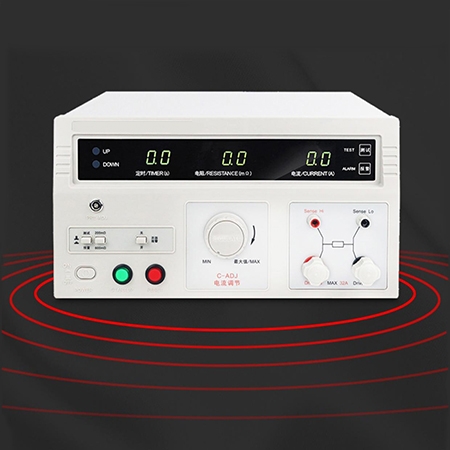
Audible and Visual Alarm Indicators
- Audible and Visual Alarm Indicators: The grounding resistance tester features both audible and visual alarm indicators, providing immediate alerts when the measured resistance exceeds or falls below the preset thresholds, ensuring quick action can be taken.
- Loud Audible Alarm for Immediate Attention: The loud audible alarm (up to 100dB) ensures the tester grabs attention, even in noisy environments, such as industrial sites or outdoor locations. This makes it easy to detect issues in real time.
- Multiple Alarm Types for Different Conditions: The alarm system is configurable to alert users to different conditions, such as high resistance, low resistance, or faulty connections, ensuring the operator is always aware of potential issues during testing.
- Enhances Safety in Critical Environments: With both audible and visual alarm functions, this earth resistance tester ensures that any unsafe grounding conditions are promptly identified, helping to maintain the safety and integrity of electrical systems.
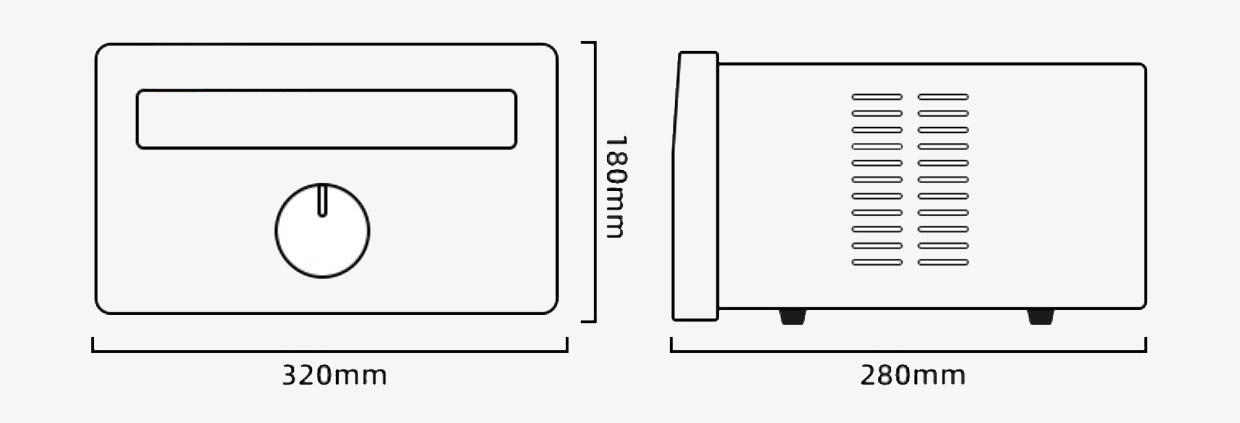
Dimension
Applications
SISCO earth ground insulation resistance tester is suitable for measuring the insulation resistance of various electrical equipment and insulating materials such as transformers, motors, cables, switches, electrical appliances, and for maintenance, testing and verification of various electrical equipment.
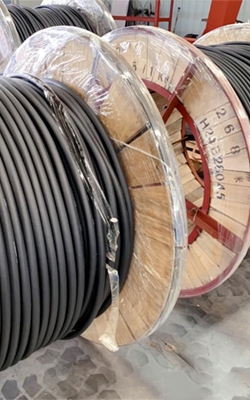
Measuring Cable

Measuring Appliances
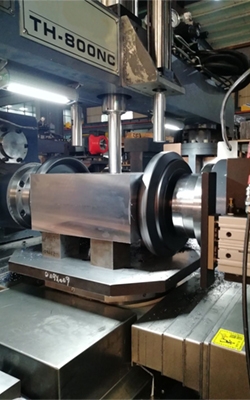
Measuring Motor
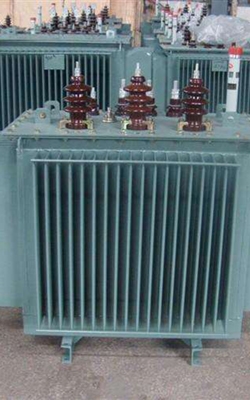
Measuring Transformer
| Model | SISCO-GRT-RK2678XM (32A) | SISCO-GRT-RK2678XM (70A) |
| Output Current | 5 ~ 32A | 5 ~ 70A |
| Test Resistance | 10.0 ~ 200mΩ (32A) | 10.0 ~ 200mΩ (70A) |
| Test Range (Low Current) | 200 ~ 600mΩ (10A) | 200 ~ 600mΩ (10A) |
| Dimensions (L×W×H) | 320 * 280 * 180 mm | 320 * 295 * 170 mm |
| Weight | 9 kg | 10.8 kg |
| Accuracy | ±5% | |
| Test Time | 0.0s ~ 999s (continuous testing) | |
| PLC Interface | Optional | |
| Power Supply | 220V±10%, 50Hz±5% | |
| Operating Environment | 0°C ~ 40°C, ≤85% RH | |
| Accessories | Test lead, power cable | |
| Optional Accessories | PLC interface, RK301 connector box | |
Q1: What is a insulation tester?
A1: Insulation tester, also known as megohmmeter or meggers, are widely used to measure cables for generators, motors, power transformers, wiring, appliances and other electrical installations such as control, signal, communication and power ) insulation resistance. They are often used in routine maintenance procedures to indicate changes in the insulation resistance of a motor over months or years. Large changes in insulation resistance may indicate potential failures. Therefore, regular calibration of the megohmmeter is required to ensure that the meter itself has not changed over time.
Q2: What is insulation resistance?
A2: Insulation resistance is the DC resistance of the insulation under the specified conditions, that is, the DC voltage is applied to the dielectric, after a certain period of polarization, the resistance corresponding to the leakage current flowing through the dielectric is called insulation resistance. It is the most basic insulation index of electrical equipment and electrical circuit.
Q3: How to measure insulation resistance?
A3: 1. Connect all the lines according to the method measured by the insulation resistance tester. The connection between the measuring lead and the pipe is more suitable for the use of magnetic joints or clips, and the connection point must be free of rust.
2. The measuring instrument should be a 500V/500MΩ (the error here cannot be greater than 10%) insulation tester. Turn the handle of the megohmmeter to reach the specified speed for 10 seconds. The resistance value indicated by the megohmmeter stably is the insulation resistance value of the insulating joint (flange), which is required to be greater than 10 megohms.
Tips: What should I do if my grounding resistance tester shows faulty readings?
If your Grounding Resistance Tester shows faulty readings, try the following:
- Check Connections: Ensure all cables and electrodes are securely connected and undamaged.
- Re-calibrate: Follow the manufacturer's instructions to recalibrate the tester.
- Inspect Electrodes: Clean or replace any corroded or damaged electrodes.
- Check Environment: Ensure the soil is not too dry or wet, and avoid electrical interference from nearby equipment.
- Replace Battery: Low battery power can cause incorrect readings.
- Test with Known Standard: Verify the tester's accuracy with a known reference.
- Consult Manual: Follow any troubleshooting tips in the user manual.
- Contact Support: If the issue persists, contact the manufacturer or service center for assistance.
By following these steps, you can troubleshoot and fix most common issues with your tester.
Thank you for buying industrial test and measurement equipment on SISCO.com, all products sold by SISCO and the partner cover a 12 months warranty, effective from the date of receiving the products.
What is covered?
SISCO is responsible for providing free spare parts, and free technical support to assist the customer to repair the defective products until the problem is solved.
What is not covered?
- Product purchased from anyone other than a SISCO store or a SISCO authorized reseller.
- Expendable parts.
- Routine cleaning or normal cosmetic and mechanical wear.
- Damage from misuse, abuse or neglect.
- Damage from use of parts other than SISCO approved.
- Damage from use outside the product’s usage or storage parameters.
- Damage from use of parts not sold by SISCO.
- Damage from modification or incorporation into other products.
- Damage from repair or replacement of warranted parts by a service provider other than a SISCO authorized service provider.
- Damage caused by the application environment not meeting the product usage requirements and the failure to perform preventive maintenance.

Shop on sisco.com for all of your industrial test and measurement equipment & accessories including portable detectors, meters, testers, scales, etc.


