
SISCO IoT air quality sensor is stable and reliable, responsive, anti-interference capability; the output signal is RS485, supports dual-frequency data acquisition and auto-calibration, is adaptable, compatible with a variety of IoT platforms, is suitable for continuous monitoring tasks, with easy installation and reliable data output.
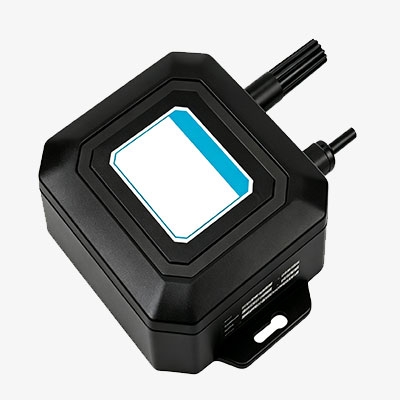
High-Precision PM2.5/PM10 Measurement
- Simultaneously measures PM2.5 and PM10 for accurate and stable data monitoring.
- Offers a wide range of 0 to 1000 μg/m3 with a resolution of 1 μg/m3.
- Uses laser scattering technology and anti-attenuation design for long-term stability.
- Applies dual-frequency data acquisition and auto-calibration with consistency up to ±10%.
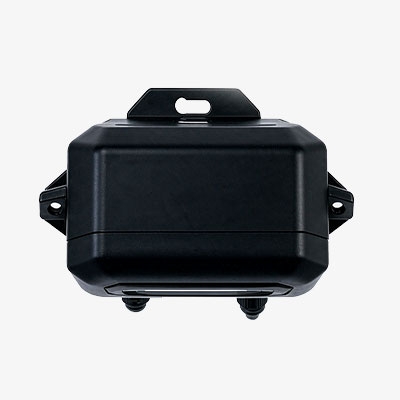
RS485 Communication & Industrial Protection
- Supports standard Modbus-RTU protocol for easy integration with PLC and IoT platforms.
- Allows parameter configuration via RS485, including baud rate, parity, and slave address.
- Features a wall-mounted housing with waterproof sealing for effective moisture resistance.
- Operates with a 10 to 30VDC power supply, -10 to +60°C temperature, and < 30 s response time.
Applications
SISCO IoT air quality sensor is suitable for outdoor weather stations, dust monitoring, libraries, archives, and industrial plants, providing reliable PM2.5 and PM10 concentration monitoring for continuous environmental data collection.

Dust Monitoring

Library

Medical Industry

Outdoor Weather Station
| Model | SISCO-AQS-2005 |
| Measurement Parameters | PM2.5, PM10 |
| Measurement Range | 0~1000 μg/m3 |
| Resolution | 1 μg/m3 |
| Accuracy | ±10% (@100~500 μg/m3); ±10 μg/m3 (@0~100 μg/m3) |
| Measurement Principle | Laser Scattering |
| Communication Interface | RS485 |
| Communication Protocol | Modbus-RTU |
| Power Supply | 10~30VDC |
| Response Time | ≤30s |
| Warm-up Time | ≤60s |
| Operating Temperature | -10°C ~ +60°C |
| Operating Humidity | 0%RH ~ 99%RH (No condensation) |
| Installation | Wall-mounted |
| Protection | Waterproof sealing, anti-condensation |
| Weight | 300 g |
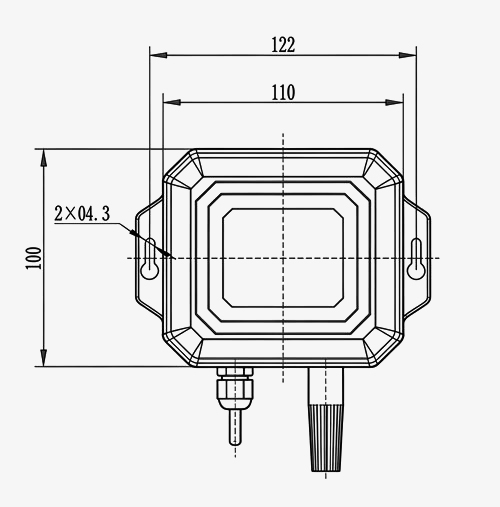
Dimensions (unit: mm)
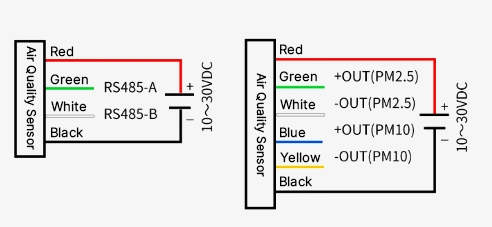
Wiring Method

Q1: What parameters can the IoT air quality sensor measure, and how accurate is it?
A1: Measuring both PM2.5 and PM10, the IoT air quality sensor offers a wide range of 0~1000 μg/m3 with a resolution of 1 μg/m3. Using laser scattering technology, it achieves high accuracy of ±10% (@100~500 μg/m3) and maintains long-term stability with dual-frequency data acquisition and auto-calibration.
Q2: How does the IoT air quality sensor integrate with existing control systems?
A2: Featuring a standard RS485 interface with Modbus-RTU protocol, the IoT air quality sensor easily connects with PLCs, industrial control systems, and various IoT platforms. Users can also configure parameters such as baud rate, parity, and slave address via the RS485 interface using the provided configuration software.
Q3: What are the operating conditions and installation requirements for the IoT air quality sensor?
A3: Designed for industrial-grade protection, the IoT air quality sensor comes with a wall-mounted housing and waterproof sealing, effectively resisting moisture and condensation. It operates on 10~30VDC power supply, functions within -10°C to +60°C, and has a fast response time of < 30 s with a warm-up time of < 60 s.
Tips: How to read PM2.5 and PM10 data from the IoT air quality sensor via RS485?
- The IoT air quality sensor uses the Modbus-RTU protocol with a default baud rate 9600bps, 1 start bit, 8 data bits, no parity, 1 stop bit, and a default slave address of 1.
- PM2.5 value is stored in holding register address 0000H, and the PM10 value is stored in address 0001H; both are read as hexadecimal numbers and converted to decimal in μg/m3.
- Modbus function code 03H is used to read the measurement values; for example, reading PM2.5 from slave address 1 sends 01 03 00 00 00 01 84 0A.
- The IoT air quality sensor allows parameter changes such as baud rate, parity, and slave address via its RS485 interface using the provided configuration software; after changing parameters, it is recommended to power on the sensor again.
Thank you for buying industrial test and measurement equipment on SISCO.com, all products sold by SISCO and the partner cover a 12 months warranty, effective from the date of receiving the products.
What is covered?
SISCO is responsible for providing free spare parts, and free technical support to assist the customer to repair the defective products until the problem is solved.
What is not covered?
- Product purchased from anyone other than a SISCO store or a SISCO authorized reseller.
- Expendable parts.
- Routine cleaning or normal cosmetic and mechanical wear.
- Damage from misuse, abuse or neglect.
- Damage from use of parts other than SISCO approved.
- Damage from use outside the product’s usage or storage parameters.
- Damage from use of parts not sold by SISCO.
- Damage from modification or incorporation into other products.
- Damage from repair or replacement of warranted parts by a service provider other than a SISCO authorized service provider.
- Damage caused by the application environment not meeting the product usage requirements and the failure to perform preventive maintenance.

Shop on sisco.com for all of your industrial test and measurement equipment & accessories including portable detectors, meters, testers, scales, etc.


