
Non contact angle sensor is designed for shaft angle measurement where mechanical contact should be minimized. It provides ±0.3° full-range accuracy and supports measurement ranges up to 0–360° for different rotary positioning requirements. The IP66 protection rating helps protect against dust and water exposure, while the -40°C to +85°C operating temperature supports use in demanding environments.
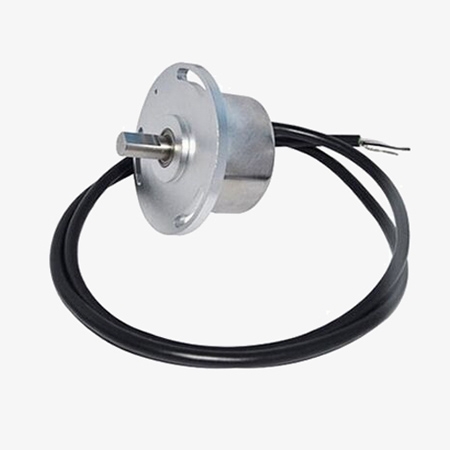
- Adopted MEMS Technology: This non-contact angle sensor integrates nanomagnetic flux concentration thin-film material and differential array magneto-sensitive elements.
- Integrated Microprocessor System: Our angle sensor comes with an onboard microprocessor, current transmitter, and multi-protection circuits. With DSP processing, it supports programmable control: linearity correction, temperature compensation, output standardization, digital filtering, zero-point setting, and multi-slope configuration.
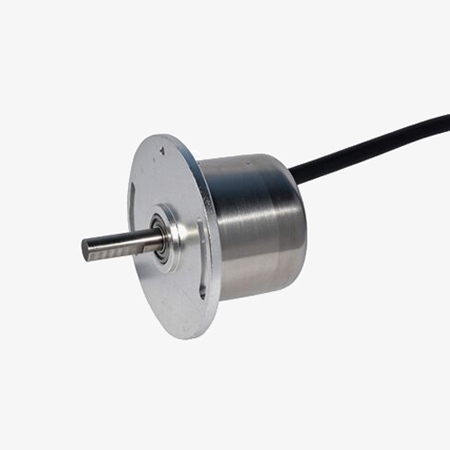
- High-protection Electrical Design: The magnetic angle sensor provides reverse polarity and anti-pulse peak voltage protection. It achieves ±0.3° measurement accuracy, 0.001mV reset repeatability, and ±20~50μA absolute temperature drift, delivering stable performance across varying temperatures.
- Non-contact Measuring Principle: The magnetic non-contact angle sensor measures rotation angles without mechanical contact. Free of friction and abrasion, it reduces maintenance and greatly extends service life.
Applications
SISCO non-contact angle sensor is used for rotary angle measurement in industrial automation, motion control, and machinery monitoring. Typical applications include servo motors, valve angular actuators, marine systems, automotive steering, coal mining equipment, textile machinery, medical CT equipment, robots, satellite antennas, cranes, excavators, and other construction machinery.
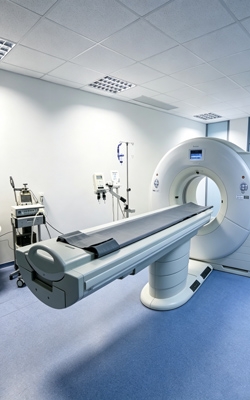
Medical Device
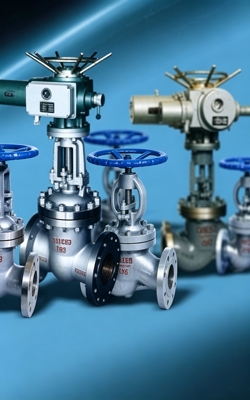
Valve
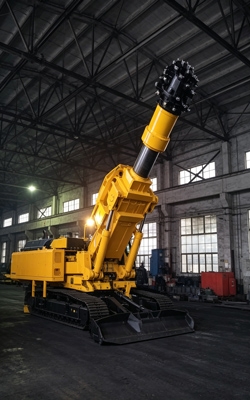
Construction Equipment
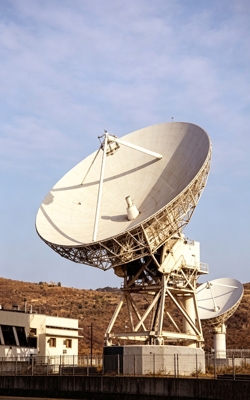
Satellite
| Model | SISCO-AS-LW120A |
| Full Range Precision | ±0.3° |
| Temperature Drift | ±0.01°/°C |
| Measuring Range | 0~30°, 0~60°, 0~90°, 0~180°, 0~270°, 0~360° (Optional) |
| Output Signal | 0-5V, 0-10V (Optional) |
| Output Load | 2kΩ |
| Voltage Input | 9-36V DC |
| Typical Voltage | 12V |
| Sampling Frequency | 1KHz |
| Linearity | 0.5%~0.15% |
| High Vibration Resistance | >20000g |
| Frequency Response | 100Hz |
| Angle Resolution | 0.022° |
| Full Range Accuracy | ±0.3° |
| Operating Temperature | -40°C~+85°C |
| Storage Temperature | -55°C~+100°C |
| Power-on Startup Time | 0.2s |
| Response Time | 0.01s |
| Average Operation Time | ≥55000 Hour/Time |
| Cable | with 1.5m length shielded cable 3*0.3mm2 |
| Power Reverse Protection | 40mV |
| Signal Reverse Protection | 40mV |
| Running Torque | <10mN·m |
| Material | Shell: Aluminum alloy oxidation Back Cover: Stainless steel Shaft: Stainless steel |
| Protection Grade | IP66 |
| Weight | 1kg |
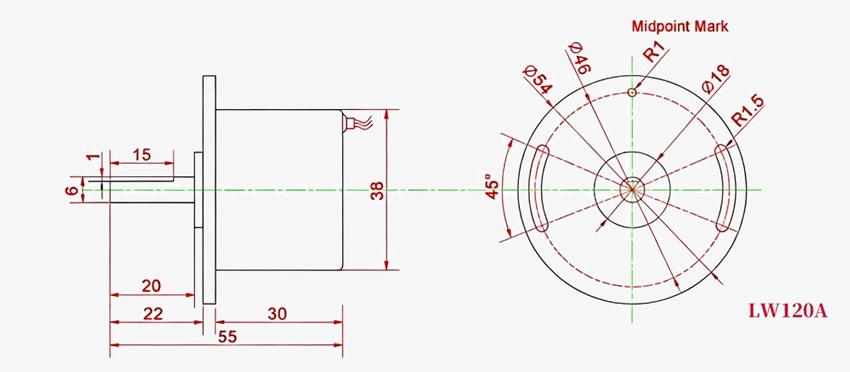
Dimensions (unit: mm)
Wiring Diagram
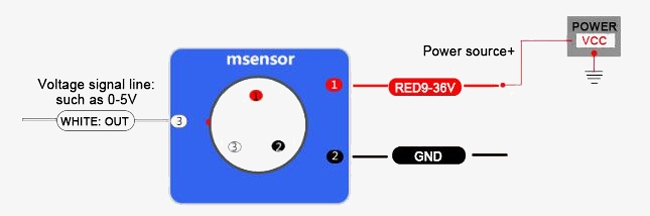
| Red | Black | Yellow |
| 1 | 2 | 3 |
| VCC (Power Positive) | GND (Power Negative) | Signal Cable |
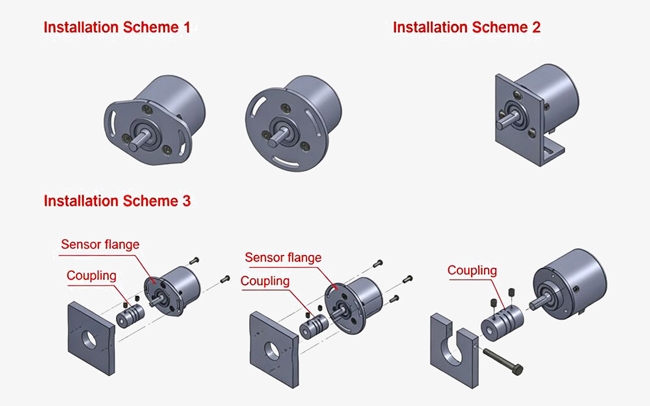
Installation Methods
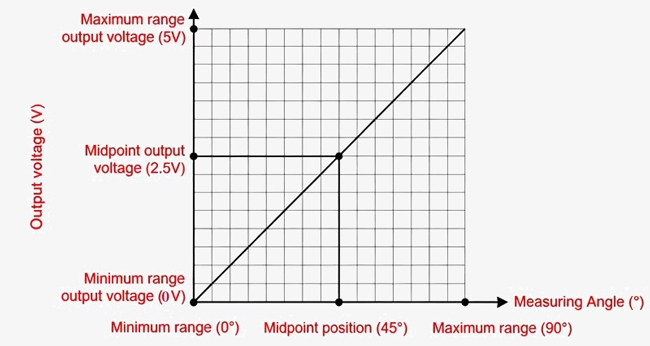
Angle Measuring Chart
Q1: What is the difference between a contact angle sensor and a non-contact angle sensor?
A1: A contact angle sensor relies on mechanical interaction between sensing components, while a non-contact angle sensor detects angular position without direct mechanical sensing contact. Non-contact measurement can reduce mechanical wear and is useful for continuous rotary position feedback.
Q2: Can this non-contact angle sensor be used for servo motor position feedback?
A2: Yes. The non-contact angle sensor can provide continuous rotary angle feedback for servo motor systems. The analog output can be connected to a compatible controller for shaft position monitoring and motion control.
Q3: What is the protection rating of the non-contact angle sensor?
A3: The non-contact angle sensor has an IP66 protection rating, which helps protect the enclosure against dust ingress and water exposure. This makes it suitable for many indoor and outdoor industrial installations.
Tips: Can this non-contact angle sensor be used in medical CT equipment?
Yes. Non-contact angular measurement can be used in suitable CT equipment mechanisms where rotary position feedback is required, and the sensor's electrical and environmental specifications are met.
Thank you for buying industrial test and measurement equipment on SISCO.com, all products sold by SISCO and the partner cover a 12 months warranty, effective from the date of receiving the products.
What is covered?
SISCO is responsible for providing free spare parts, and free technical support to assist the customer to repair the defective products until the problem is solved.
What is not covered?
- Product purchased from anyone other than a SISCO store or a SISCO authorized reseller.
- Expendable parts.
- Routine cleaning or normal cosmetic and mechanical wear.
- Damage from misuse, abuse or neglect.
- Damage from use of parts other than SISCO approved.
- Damage from use outside the product’s usage or storage parameters.
- Damage from use of parts not sold by SISCO.
- Damage from modification or incorporation into other products.
- Damage from repair or replacement of warranted parts by a service provider other than a SISCO authorized service provider.
- Damage caused by the application environment not meeting the product usage requirements and the failure to perform preventive maintenance.

Shop on sisco.com for all of your industrial test and measurement equipment & accessories including portable detectors, meters, testers, scales, etc.


