
Shop non-contact radar level transmitter equipped with M20*1.5 cable inlet supporting AWG or 0.75 mm² cables, offering ±1mm precision, 3cm resolution and 1s measurement interval for media with dielectric constant ≥2. It comes with thread, HG/T20592 standard 304 stainless steel, and universal flange connections; 316L stainless steel or PTFE flanges are available upon request. Tolerant of -0.1~2MPa process pressure and -40~150℃ medium temperature, the sensor works within -40~80℃ storage temperature. IP67-rated aluminum alloy housing guarantees stable operation in humid and dusty industrial environments.
Core Measuring Performance
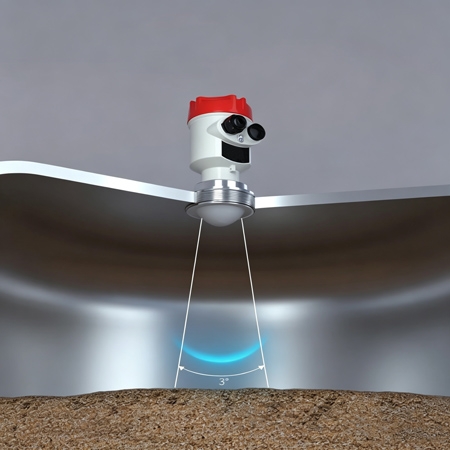
- 3° Narrow Beam Antenna: Non-contact radar level sensors feature concentrated energy and shorter wavelengths for strong penetration against dust, steam and other disturbances. Superior reflection performance on solid surfaces, securing steady measurement in complex sites, including powder silos.
- Self-developed CMOS Millimeter-wave RF Chip: Self-designed RF chips for non-contact radar level meters adopt compact radio frequency frameworks to boost signal-to-noise ratio. With an 8 cm dead zone, 5 GHz operating bandwidth, and a 60-meter maximum measuring range, the chips support precise detection of high and low material levels.
Operation & Hardware Advantages
- Intelligent Remote Maintenance: Integrated Bluetooth enables field technicians to calibrate parameters and update firmware through mobile phones, streamlining maintenance workflows.
- Premium Durable Material Selection: Non-contact radar level transmitters are assembled with premium components: IP67 sealed cable glands, high-shield aluminum alloy housings and anti-corrosion PTFE probes. The full assembly withstands humidity, dust, and chemical erosion, fitting harsh working environments with drastic temperature fluctuations and heavy dust.
Applications
This high-frequency radar level sensor measures solid powders and liquids for complex working conditions, including dusty powder silos, steam boiling tanks, agitated reactors, and viscous crystallizing storage vessels. Fit for atmospheric and pressure tanks, it serves food, daily chemical, and fine chemical industries, providing stable long-term level monitoring in harsh, humid, and dusty sites.

Steam Vessel

Agitating Reactor

Crystallization Environment

Powder Silo
| Model | SISCO-RLT-MIK-WSR550 |
| Measurement Medium | Solid Powder or Liquid |
| Measurement Range | 0.08~10m, 0.08~20m, 0.08~30m, 0.3~60m |
| Beam Angle | 3° / 8° / 20° |
| Transmitting Frequency | 76GHz~81GHz |
| Transmitter Output | 4~20mA |
| Communication Output | RS485, HART |
| Fault Output | 3.8mA, 4mA, 20mA, 21mA, Hold |
| Power Supply | 24V DC or 220V AC |
| Cable Inlet | M20*1.5 |
| Cable Specification | AWG or 0.75mm² |
| Accuracy | ±1mm |
| Resolution | 3cm |
| Measurement Interval | 1s |
| Dielectric Constant | ≥2 |
| Connection | Thread, Flange, or Universal flange |
| Flange Material | 304 Stainless Steel, Contact us for 316L Stainless Steel or PTFE. |
| Flange Standard | HG/T20592 |
| Process Pressure | -0.1~2MPa |
| Process Temperature | -40~80℃ or -40~150℃ |
| Storage Temperature | -40~80℃ |
| Protection Level | IP67 |
| Casing Material | Aluminum Alloy |
Installation
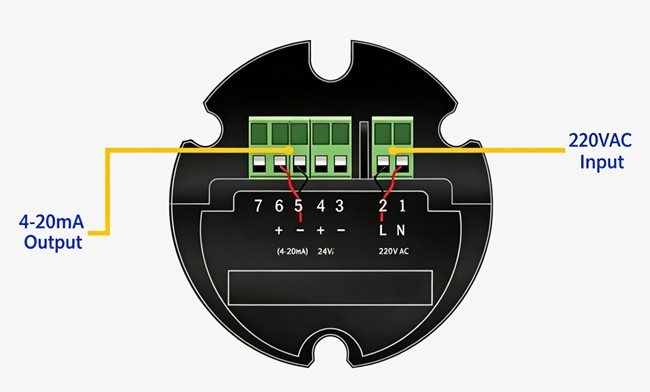
Wiring Diagram
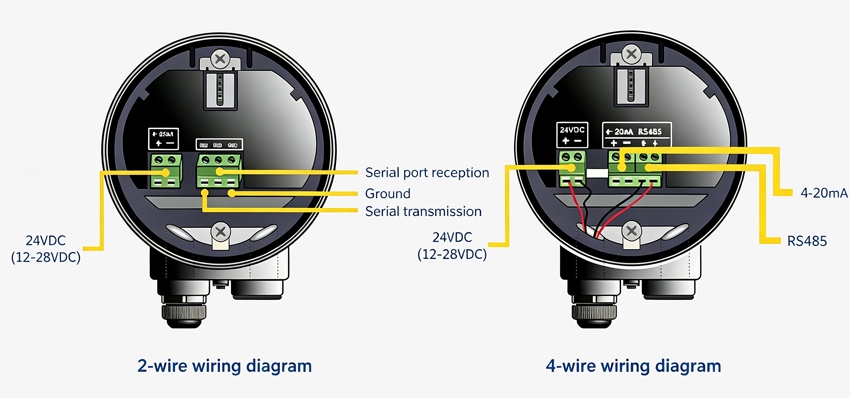
24V DC Wiring Diagram
220V AC Wiring Diagram
Q1: What is a non-contact radar level sensor?
A1: A non-contact radar level transmitter is an instrument that measures liquid or solid material levels by transmitting microwave radar signals toward the surface of the medium and receiving the reflected signal. Since the sensor does not physically contact the measured material, it reduces maintenance requirements and is suitable for harsh environments with corrosive, high-temperature, or contaminated media.
Q2: What are the advantages of a non-contact radar level sensor?
A2: The main advantages include non-contact measurement, high accuracy, low maintenance, and strong resistance to environmental interference. Unlike contact-type level sensors, radar sensors are not affected by material viscosity, density changes, foam, or corrosion, making them reliable for challenging industrial applications.
Q3: Is a non-contact radar level sensor suitable for industrial automation systems?
A3: Yes, a non-contact radar level transmitter is widely used in industrial automation systems because it provides continuous level measurement, stable signal output, and compatibility with PLC and monitoring systems. It is commonly used for automatic process control, inventory monitoring, and safety management.
Tips: How do I install a non-contact radar level sensor?
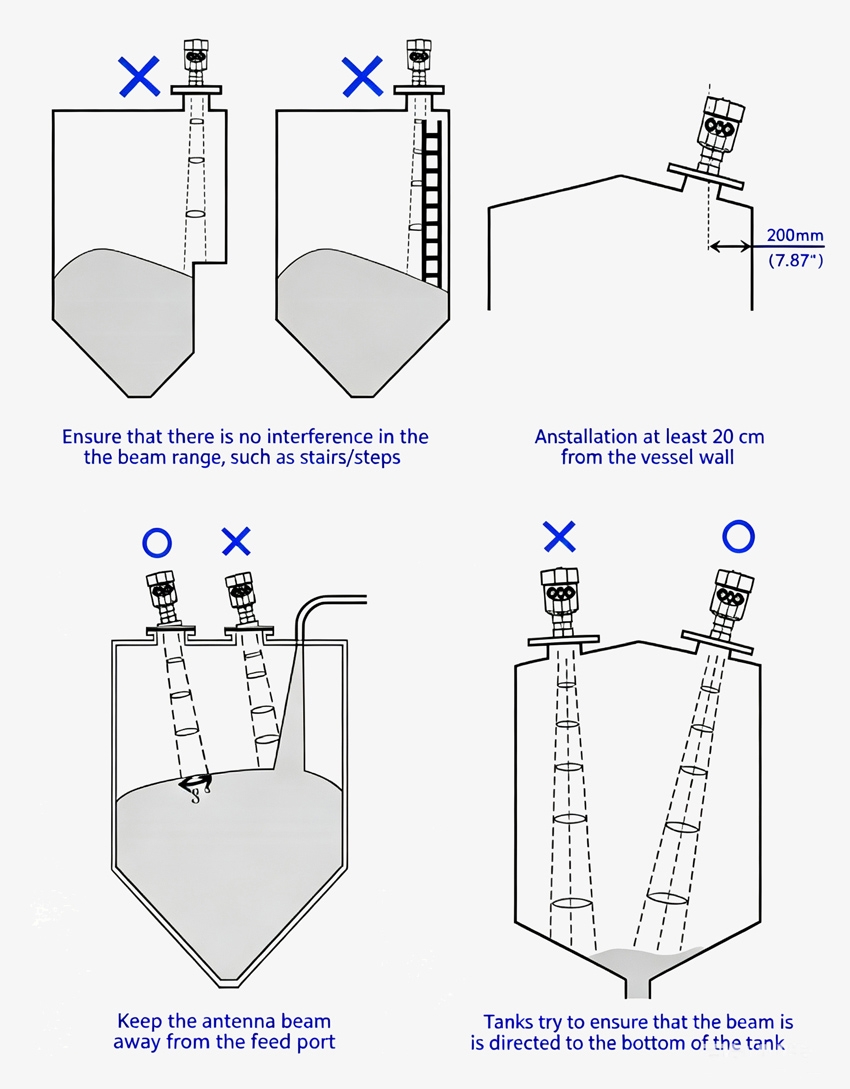
Choose a proper mounting spot on the tank top, install the sensor vertically, and keep it clear of agitators, feed openings, and internal supports to prevent signal interference.
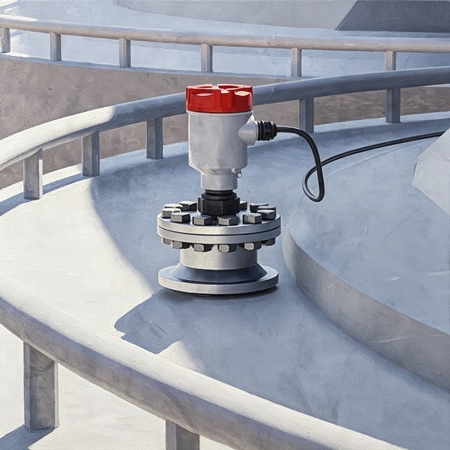
Fix the sensor with thread, 304 stainless steel, or universal flanges; 316L stainless steel and PTFE flanges can be customized upon request, and fasten all fittings evenly to withstand -0.1~2MPa process pressure.
Thread AWG or 0.75 mm² cables through the M20*1.5 cable inlet, and fully tighten the IP67 cable gland for dustproof and waterproof sealing. Then wire the 4~20 mA, RS485, or HART signal lines and connect to a 24V DC or 220V AC power supply.
Connect the sensor with a mobile phone via Bluetooth to set relevant parameters and complete calibration, achieving ±1mm measurement accuracy and 3cm resolution.
Do a final check on the intact aluminum alloy housing; the sensor works steadily at -40~150℃ process temperature and should be stored within -40~80℃ when not in use.
Thank you for buying industrial test and measurement equipment on SISCO.com, all products sold by SISCO and the partner cover a 12 months warranty, effective from the date of receiving the products.
What is covered?
SISCO is responsible for providing free spare parts, and free technical support to assist the customer to repair the defective products until the problem is solved.
What is not covered?
- Product purchased from anyone other than a SISCO store or a SISCO authorized reseller.
- Expendable parts.
- Routine cleaning or normal cosmetic and mechanical wear.
- Damage from misuse, abuse or neglect.
- Damage from use of parts other than SISCO approved.
- Damage from use outside the product’s usage or storage parameters.
- Damage from use of parts not sold by SISCO.
- Damage from modification or incorporation into other products.
- Damage from repair or replacement of warranted parts by a service provider other than a SISCO authorized service provider.
- Damage caused by the application environment not meeting the product usage requirements and the failure to perform preventive maintenance.

Shop on sisco.com for all of your industrial test and measurement equipment & accessories including portable detectors, meters, testers, scales, etc.


