
SISCO RGB color sensor with digital display comprises a fiber-optic amplifier, fiber probe, and focusing lens. It features adjustable sensitivity, delay modes, and lock/unlock functions. User-friendly keys allow quick mode switching and initialization. Its compact design ensures stable color detection.
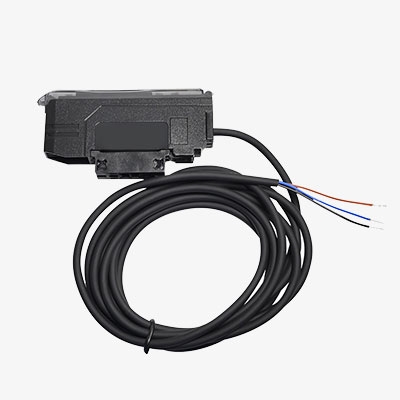
Multi-Mode Intelligent Detection
- Supports color mode, color + light Intensity contrast mode, and mark mode
- Mark mode achieves a response time of 50μs, while other modes are 130μs.
- Offers selectable LIGHT-ON / DARK-ON output to match different control logic.
- Allows quick mode switching via panel keys for flexible adaptation to detection tasks.
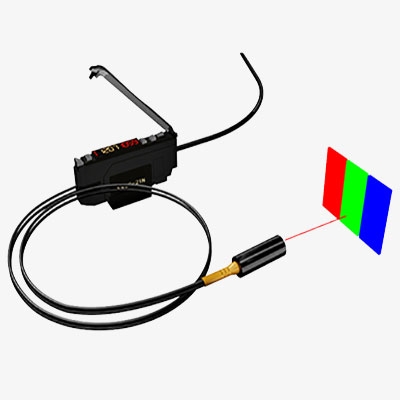
Digital Debugging and Stable Detection
- Digital display shows parameters and status in real time for precise setting and debugging.
- Supports 1-point teaching and 2-point calibration to set target colors quickly.
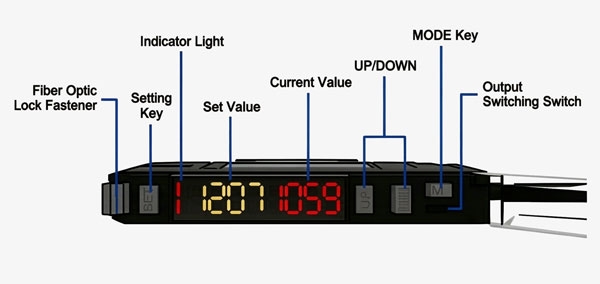
- Provides A-H/A-L light and saturation adjustment, delay modes, lock, and initialization functions.
- Uses a fiber-optic amplifier + fiber probe + focusing lens for stable detection and strong anti-interference.
Applications
SISCO RGB color sensor with digital display is widely used for color mark detection, packaging machinery, printing, label inspection, and automated production lines where fast, accurate color recognition is required.
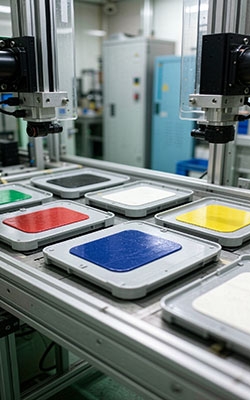
Color Mark Detection
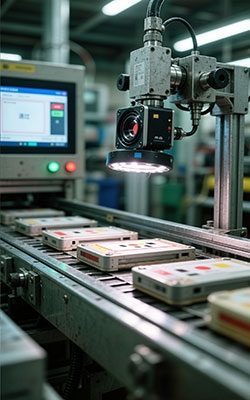
Label Detection

Packaging Machinery

Printing
| Model | SISCO-CS-GS-21N/21P |
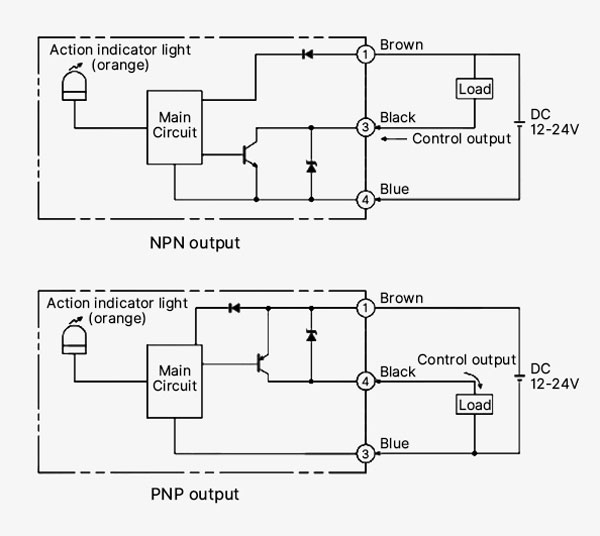
| Output Type | NPN (21N) / PNP (21P) |
| Output Configuration | 1 output, wire-lead type |
| Light Source | RGB primary-color LED |
| Detection Method | Color Mode, Color + Light Intensity Contrast Mode, MARK Mode |
| Response Time | MARK Mode: 50µs; Color or Color+Intensity Mode: 130µs |
| Output Selection | LIGHT-ON / DARK-ON (switch selectable) |
| Power Supply | 12-24 VDC ±10%, ripple P-P 10% max |
| Operating Temperature | -10 to 55 °C (non-condensing) |
| Storage Temperature | -20 to 70 °C |
| Operating Humidity | 35 to 85% RH |
| Power Consumption | Standard mode: Max. 300mW at 24V |
| Vibration Resistance | Double amplitude: 1.5mm, 10-55Hz (2 hours each in X, Y, Z directions) |
Dimensions (unit: mm)
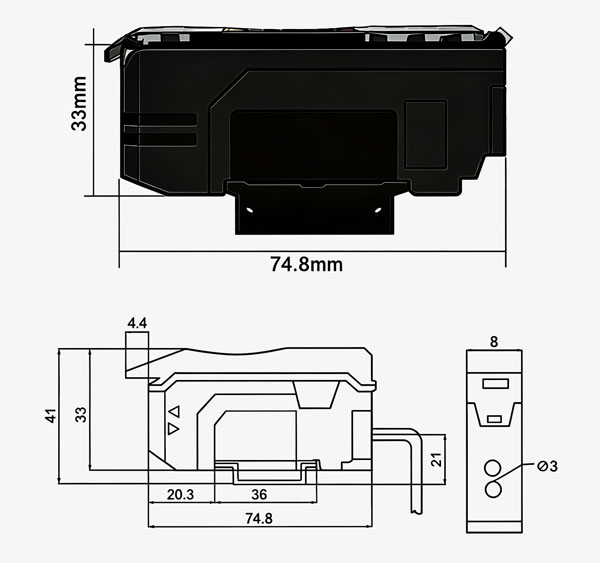
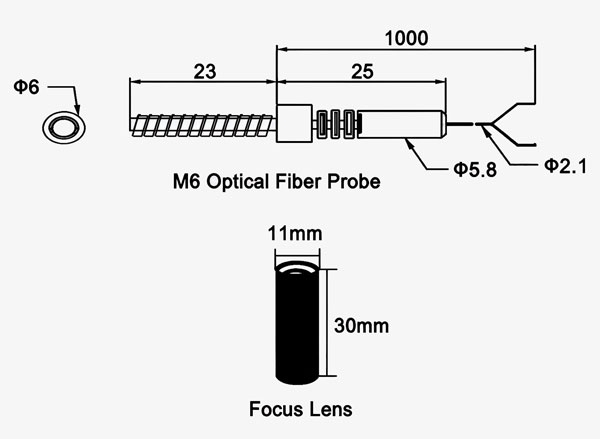
Details
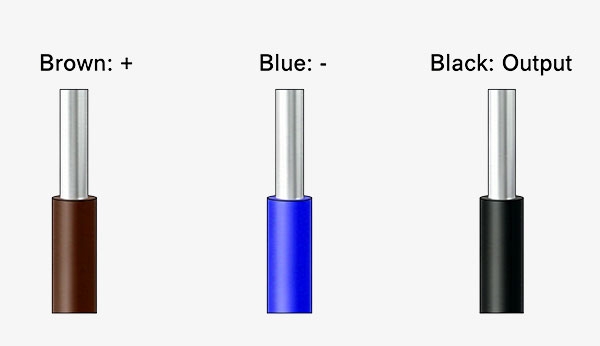
Wiring Method
Q1: What is the response time of the RGB color sensor with digital display?
A1: 50μs in MARK Mode and 130μs in Color or Color + Light Intensity Contrast Mode. This fast response allows the RGB color sensor with digital display to keep up with high-speed production lines. The mode can be selected based on specific detection needs, helping improve overall efficiency.
Q2: Can the RGB color sensor with digital display distinguish similar colors?
A2: Yes, it can. The device features a dedicated Color + Light Intensity Contrast Mode for detecting subtle color differences. With A-H / A-L light and saturation adjustment plus 1-point teaching and 2-point calibration, the RGB color sensor with digital display accurately identifies similar colors even on reflective or dark targets.
Q3: What output and power options does the RGB color sensor with digital display support?
A3: NPN/PNP output and selectable LIGHT-ON / DARK-ON logic are available. The RGB color sensor with digital display operates on 12-24 VDC with a maximum power consumption of 300mW at 24V. Its digital display, delay modes, and lock/initialization functions provide flexible control for various automated systems.
Tips: How to reduce false triggering when using the RGB color sensor with a digital display?
- Select Color + Light Intensity Contrast Mode for similar color detection, as this mode compares both color and light intensity to improve accuracy.
- Adjust A-H / A-L sensitivity to suit reflective or dark targets, preventing incorrect signals.
- Perform 2-point calibration on the RGB color sensor with digital display to set both target and background references.
- Keep the fiber optic probe and focusing lens at a fixed distance and angle to minimize ambient light interference.
Thank you for buying industrial test and measurement equipment on SISCO.com, all products sold by SISCO and the partner cover a 12 months warranty, effective from the date of receiving the products.
What is covered?
SISCO is responsible for providing free spare parts, and free technical support to assist the customer to repair the defective products until the problem is solved.
What is not covered?
- Product purchased from anyone other than a SISCO store or a SISCO authorized reseller.
- Expendable parts.
- Routine cleaning or normal cosmetic and mechanical wear.
- Damage from misuse, abuse or neglect.
- Damage from use of parts other than SISCO approved.
- Damage from use outside the product’s usage or storage parameters.
- Damage from use of parts not sold by SISCO.
- Damage from modification or incorporation into other products.
- Damage from repair or replacement of warranted parts by a service provider other than a SISCO authorized service provider.
- Damage caused by the application environment not meeting the product usage requirements and the failure to perform preventive maintenance.

Shop on sisco.com for all of your industrial test and measurement equipment & accessories including portable detectors, meters, testers, scales, etc.


