
The stainless steel pressure sensor is built for reliable pressure measurement in demanding environments. Its 304 stainless steel housing and IP68 protection help resist moisture and environmental exposure, while ±0.1% FS/year stability, 20 ms response time, and -10°C to 70°C temperature compensation support stable and responsive operation.
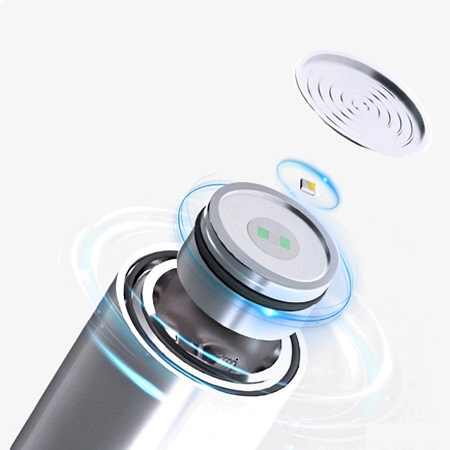
Performance and Functional Advantages
- This stainless steel pressure sensor comes with IP68 protection grade, delivering outstanding waterproof and dustproof performance for all kinds of harsh industrial working conditions.
- Adopts an imported sensing wafer, ensuring high measurement accuracy and great long-term stability.
- Built-in pulse buffer, effectively protecting the diaphragm from damage caused by instantaneous overpressure impact.
- Wide temperature compensation range, lowering measurement errors brought by temperature variation.
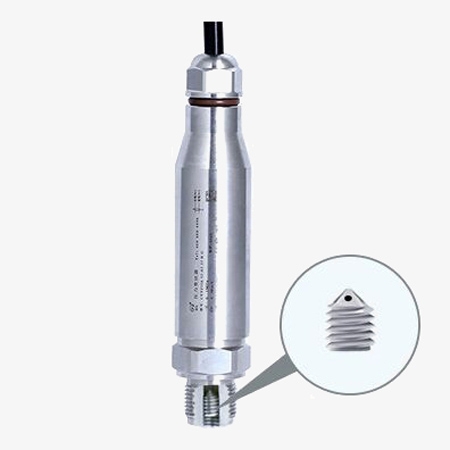
Material and Structural Advantages
- Our pressure sensor is constructed from full stainless steel material, featuring outstanding corrosion resistance and long service life for industrial pressure measurement.
- Laser marking on the sensor housing, clear and wear-resistant marks for complete production traceability.
Applications
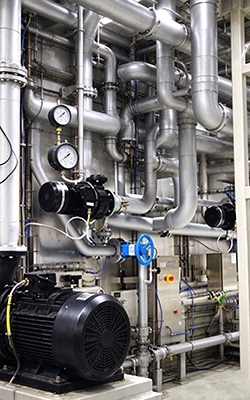
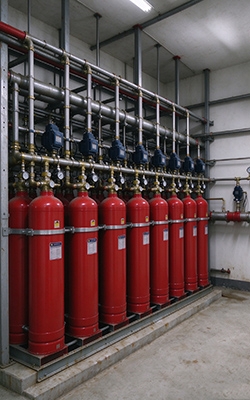
The stainless steel pressure sensor supports pressure measurement for compatible liquids and gases across multiple industrial systems. In hydraulic applications, it monitors pressure in hydraulic stations, machine tools, and injection molding machines. In industrial gas applications, it can be used with cryogenic tanks, welding gas, and gas mixing systems. For pneumatic and automated equipment, applications include air compressors, pneumatic controls, robotics, packaging machines, and textile machinery.

Industrial Gas
Industrial Equipment
Fire Protection Gas System
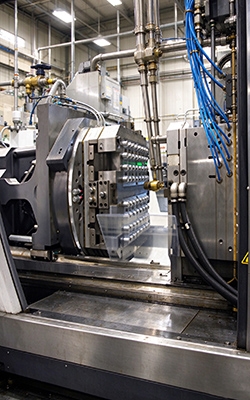
Hydraulic System
| Model | SISCO-PS-CYYZ31A |
| Measuring Medium | Liquid or gas (compatible with contact material) |
| Pressure Range | 0.001~60MPa (Optional) |
| Output Power Supply | 9~36VDC, 15-36VDC, 3-5VDC, 15-24VDC |
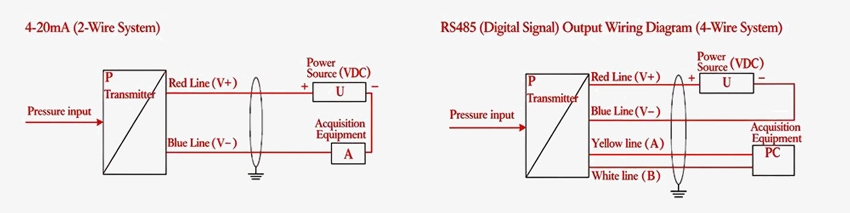
| Signal Output | 4-20mA (2-wire), RS485 (4-wire), 0-5VDC, 0-10VDC, 1-5VDC, 0.5-2.5VDC |
| Pressure Method | Gauge pressure |
| Response Time | 20ms |
| Protection Class | IP68 |
| Maximum Power | ≤0.02Us ((W)); ≤0.015Us((W) |
| Temperature Compensation | -10°C~70°C |
| Accuracy Class | Range >100kPa: 0.25%FS |
| Range <100kPa: 0.5%FS | |
| Range | <10kPa (non-conductor, non-corrosive, non-explosive gas and humidity ≤90%RH, no condensation) |
| Ambient Temperature | -40°C~85°C |
| Ambient Humidity | 0%~95%RH (no condensation and no dew) |
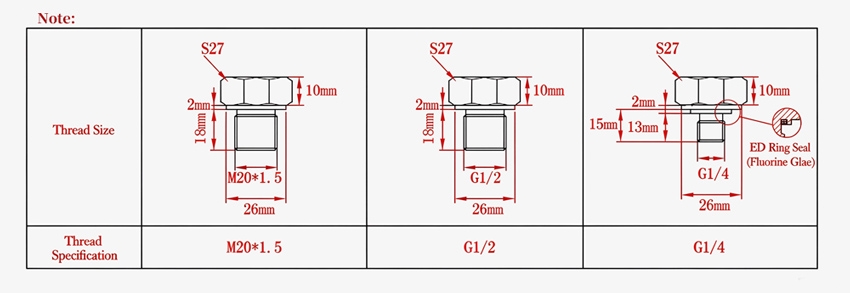
| Connection | M20*5; G1/4; G1/2 (optional) |
| Note: Range ≥60MPa, thread only M20*1.5 is available, other specifications need to be customized. | |
| Diaphragm | 316L stainless steel (contact with the measured medium) |
| Process Connection | 304 stainless steel (in contact with the measured medium) |
| Housings | 304 stainless steel |
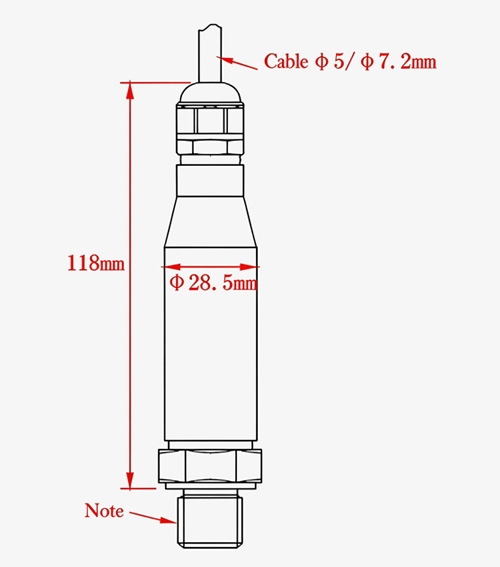
| Cables | Range ≤1.6MPa*L03 φ7.2mm Polyurethane air-conducting shielded cable (UV protection) |
| Range >1.6MPa*L01 φ5mm Polyurethane gas-conducting shielded cable (UV protection) | |
| Vibration Resistance | 10g (20~2000Hz) |
| Shock Resistance | 500g/ms |
| Short Circuit Protection | Permanent |
| Reverse Polarity Protection | No damage, but not working |
| Insulation Resistance | ≥100MΩ 500VDC |
| Dielectric Strength | 500VAC |
| Stability | ±0.1% FS/year |
| Temperature Drift | ±0.01% FS/°C (within temperature compensation range), ±0.05% FS/°C (outside temperature compensation range) |
| Durability | 1×10^8 cycles (number of cycles from lower range limit to upper range limit) |
| Net Weight | ≈540g (with 4 meter connecting cable) |
Dimensions (unit: mm)
Wiring Diagram

Q1: What is a stainless steel pressure sensor?
A1: A stainless steel pressure sensor is a device that measures the pressure of compatible liquids or gases and converts the measured pressure into an electrical signal for monitoring and control.
Q2: Can the stainless steel pressure sensor be used in hydraulic systems?
A2: Yes. The stainless steel pressure sensor can be used for pressure monitoring in hydraulic systems, including hydraulic stations, machine tools, and injection molding machines.
Q3: Is the stainless steel pressure sensor waterproof?
A3: Yes. The stainless steel pressure sensor has an IP68 protection rating, providing high protection against dust and water ingress. Its 304 stainless steel housing makes it suitable for wet and demanding industrial environments.
Tips: How do I choose a pressure sensor for gas measurement?
Check the gas type and compatibility with the sensor's wetted materials first, then match the pressure range, connection, output signal, temperature conditions, and required IP rating to the gas system.
Thank you for buying industrial test and measurement equipment on SISCO.com, all products sold by SISCO and the partner cover a 12 months warranty, effective from the date of receiving the products.
What is covered?
SISCO is responsible for providing free spare parts, and free technical support to assist the customer to repair the defective products until the problem is solved.
What is not covered?
- Product purchased from anyone other than a SISCO store or a SISCO authorized reseller.
- Expendable parts.
- Routine cleaning or normal cosmetic and mechanical wear.
- Damage from misuse, abuse or neglect.
- Damage from use of parts other than SISCO approved.
- Damage from use outside the product’s usage or storage parameters.
- Damage from use of parts not sold by SISCO.
- Damage from modification or incorporation into other products.
- Damage from repair or replacement of warranted parts by a service provider other than a SISCO authorized service provider.
- Damage caused by the application environment not meeting the product usage requirements and the failure to perform preventive maintenance.

Shop on sisco.com for all of your industrial test and measurement equipment & accessories including portable detectors, meters, testers, scales, etc.


