
Water plays a vital role in daily life, industrial production, agriculture, food processing, and environmental protection. However, seemingly clean water is not always safe or suitable for all uses. Therefore, water quality testing is crucial, and water quality testers are widely used across various industries.
Water quality analyzers provide measurable data on water quality, helping users determine whether the water meets relevant standards or specific application requirements. In this article, SISCO will discuss the definition, working principle, measurement parameters, and practical application methods of water quality analyzers.
What is a Water Quality Tester?
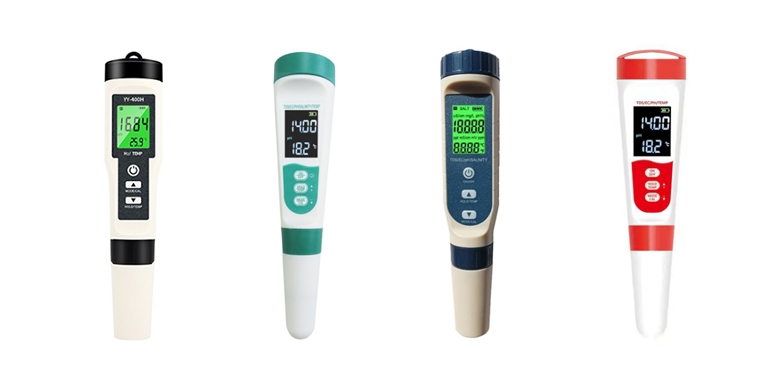
A water quality tester is a device or tool used to measure and analyze various physical, chemical, and biological parameters of water to evaluate its purity, safety, and suitability for specific uses like drinking, swimming, or industrial processes.
Unlike visual inspection or taste-based judgment, water quality testers provide objective, quantitative data, allowing users to make informed decisions based on measurable results rather than assumptions. Common parameters it tests include pH value, dissolved oxygen, turbidity, heavy metal content, residual chlorine, and total dissolved solids (TDS).
Water quality testers can be simple handheld tools for on-site checks or advanced laboratory instruments used for detailed analysis. The choice depends on accuracy requirements, testing environment, and application needs.
Why Do We Need Water Quality Tester?
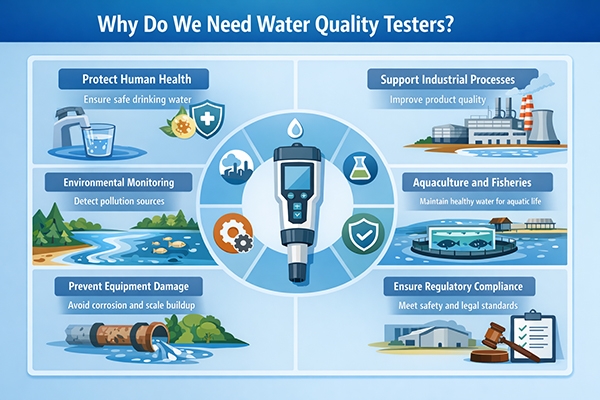
Water quality testers are important because water quality cannot be accurately judged by appearance alone. Many harmful substances, such as dissolved minerals, chemical residues, and pollutants, are invisible to the human eye. By providing objective and measurable data, water quality testers help identify potential issues early and ensure that water is safe and suitable for its intended use.
Water quality directly affects:
- Human health – drinking water safety and contamination control
- Product quality – especially in food, beverage, and pharmaceutical industries
- Equipment performance – scale buildup, corrosion, and system efficiency
- Environmental protection – monitoring pollution and ecosystem health
- Regulatory compliance – meeting local and international standards
In both daily and professional applications, water quality testers support better decision-making and risk prevention. They are widely used to protect human health, maintain consistent industrial processes, prevent equipment damage, and support environmental monitoring. Regular water quality testing helps detect changes over time, reduce hidden risks, and maintain reliable standards across different applications.
Types of Water Quality Testers
Water quality testers are available in different types, each designed to measure specific parameters or serve particular testing environments. Understanding these types helps you choose the most suitable instrument for their application.
- Single-Parameter Water Quality Testers: These testers measure one specific water quality parameter, such as pH, conductivity, dissolved substances, temperature.They are simple to use, cost-effective, and ideal for routine monitoring when only one parameter is required.
- Multi-Parameter Water Quality Testers: Multi-parameter testers can measure two or more water quality indicators using a single device. Such as TDS EC water quality tester measure total dissolved solids (minerals, salts, metals) in parts per million (ppm).They are commonly used when comprehensive water analysis is needed, helping users save time and improve testing efficiency.
- Portable Water Quality Testers: Portable water quality testers are compact and lightweight, designed for on-site and field testing. They provide fast results and are widely used in environmental monitoring, water treatment inspections, and daily quality checks.
- Bench-Top (Laboratory) Water Quality Instruments: Bench-top instruments are used in laboratories or controlled environments where higher accuracy and stability are required. They are suitable for research, quality control, and regulatory testing.
How to Choose the Right Water Quality Tester?
Choosing the right water quality tester can significantly impact the accuracy and usefulness of your measurements. With many types of testers and a variety of parameters to consider, it’s important to follow a structured approach to find the best fit for your needs. Here’s a step-by-step guide to help you make an informed decision:
- Identify required parameters: Determine which water quality indicators you need to measure, such as pH, TDS, EC, temperature, or others. Choose a tester that supports all necessary parameters for your application.
- Define the application scenario: Consider whether the tester will be used for drinking water, industrial processes, environmental monitoring, aquaculture, or laboratory analysis, as different uses require different accuracy levels.
- Consider accuracy and resolution: Select a tester with appropriate accuracy and measurement resolution based on how precise your results need to be.
Choose portable or bench-top design: Handheld testers are suitable for on-site and field testing, while bench-top instruments are better for laboratory and controlled environments. - Check temperature compensation: Testers with automatic temperature compensation help maintain accurate readings under varying water temperatures.
- Evaluate ease of use and maintenance: Look for clear displays, simple operation, easy calibration, and low maintenance requirements.
- Assess durability and build quality: For outdoor or industrial use, choose a tester with a robust, water-resistant design.
Applications of Water Quality Testers
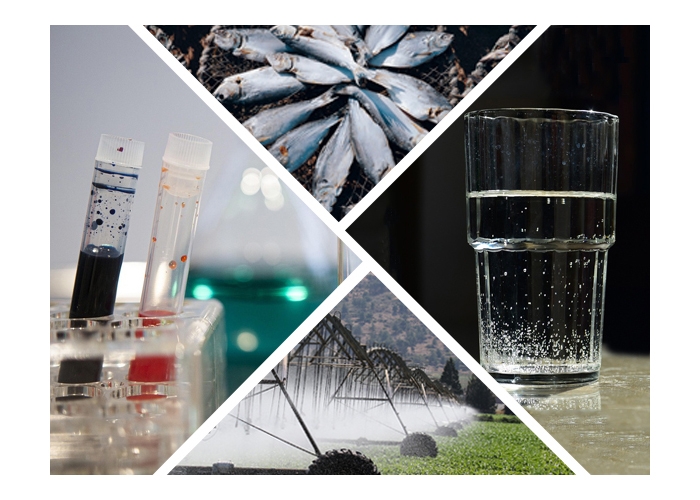
- Drinking Water Monitoring: Used to assess the quality of tap water, bottled water, and filtered water to ensure it meets safety and taste requirements.
Environmental Monitoring: Applied in rivers, lakes, groundwater, and wastewater testing to track pollution levels and environmental changes. - Industrial Processes: Used to monitor water used in manufacturing, cooling systems, boilers, and process control to maintain product quality and protect equipment.
- Water Treatment Systems: Helps evaluate the performance of filtration systems, reverse osmosis units, and purification processes.
- Agriculture and Irrigation: Used to test irrigation water quality, helping prevent soil salinity issues and protect crop health.
- Aquaculture and Fisheries: Ensures proper water conditions for fish and aquatic organisms by monitoring key water quality parameters.
- Laboratory and Research Use: Supports scientific research, quality control, and analytical testing in controlled environments.
Conclusion
A water quality tester is an essential tool for measuring, monitoring, and managing water quality across countless applications. By providing objective and reliable data, these instruments support safer water use, better process control, and more informed decision-making.
Understanding how water quality testers work—and how to choose and use them correctly—lays the foundation for effective water management, whether in daily life, industry, or environmental protection. SISCO Store offers a variety of water quality testers, and you can choose according to your needs.