
In today's industrial environment where quality standards are strict and industry regulations are rigorous, selecting a suitable ball mill is crucial—whether you're a production supervisor responsible for maintaining stable material grinding quality, a laboratory researcher verifying the accuracy of fine powder preparation, or an enterprise operator cutting down on losses caused by subpar processing results. This guide will assist you in navigating the selection and purchasing process to find the right ball mill for your unique requirements. It includes an introduction to ball mills, tips for purchasing a ball mill, the advantages of SISCO ball mills, and a price list for the ball mills we offer for sale. You can also click on the directory links below to jump to the section you are interested in.
Content
Why buy a Ball Mill from sisco.com?
What is Ball Mill?
A ball mill is a versatile industrial grinding device designed to reduce materials—such as ores, ceramics, chemicals, and pharmaceuticals—into fine particles or powders. It operates on a simple yet effective principle: a rotating cylindrical chamber (lined with wear-resistant materials like rubber or steel) filled with grinding media (e.g., steel balls, alumina balls, or ceramic balls). As the chamber rotates, the grinding media is lifted by centrifugal force and then falls under gravity, creating impact and friction that crushes and grinds the material inside. This process can be adjusted for different fineness requirements, from coarse grinding (for pre-processing ore) to ultra-fine grinding (for producing nano-scale powders), making it a core piece of equipment in industries like mining, building materials, pharmaceuticals, and advanced material manufacturing.
Beyond its basic grinding function, modern ball mills are often integrated with intelligent features to enhance performance and usability. Depending on application needs, they come in various types—such as planetary ball mills for lab-scale precision grinding, high-energy ball mills for rapid ultra-fine processing, and roller ball mills for large-scale industrial production. Many models also include systems for real-time monitoring of parameters like rotation speed, material temperature, and grinding chamber pressure, allowing operators to optimize efficiency, reduce energy consumption, and ensure consistent product quality. Whether used in small laboratories for research or large factories for mass production, the ball mill’s adaptability and reliability make it an indispensable tool for material processing workflows.
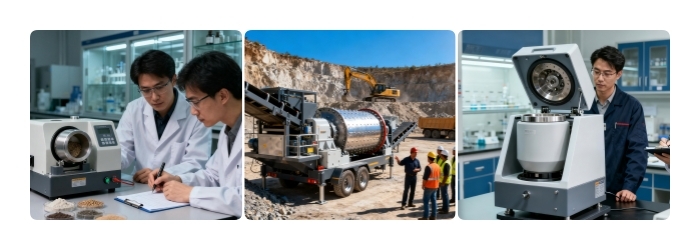
Tips for Purchasing Ball Mill
Whether you're a lab researcher or an industrial production operator, selecting the right ball mill can significantly impact your material grinding results and work efficiency. With various ball mill types available, focusing on key factors before purchasing ensures you get one that’s efficient, durable, and fits your needs.
Determine the Type of Ball Mill You Need
Choose based on your material properties, grinding goals, and application scenarios. For large-scale continuous grinding of bulk materials (like cement clinker or ore) with moderate fineness requirements, a roller ball mill is ideal. It uses roller pressure and grinding media to process materials, featuring high throughput and stable operation, suitable for building materials or mineral processing industries. If you’re doing lab-scale research or need ultra-fine grinding (e.g., preparing nano-powders), a planetary ball mill works well. Its high-speed rotation creates strong centrifugal force, enabling fine grinding of small batches, perfect for chemical or material science labs. For processing hard, brittle materials (such as ceramics or metals) that need rapid ultra-fine grinding, a high energy ball mill is a top choice. It delivers high impact energy, shortening grinding time, and is widely used in advanced material production. For materials prone to agglomeration (like pigments or pharmaceuticals) requiring uniform fine grinding, a stirred ball mill is suitable. Its internal stirrer enhances material-media contact, ensuring consistent fineness.
Check for Operational Efficiency and Performance
A quality ball mill should have excellent efficiency and stable performance. Focus on grinding fineness—ensure it meets your target (e.g., nano-level for labs, micron-level for industry). Check output per hour (critical for industrial use) and energy consumption; lower energy use per unit product reduces costs. For labs, look at batch processing capacity and consistency between batches. Also, consider ease of parameter adjustment (like rotation speed or stirring rate) to adapt to different materials.
Evaluate Durability and Build Quality
Durability matters for long-term use. Key components should use high-quality materials: the grinding chamber of a planetary or stirred ball mill might use wear-resistant ceramics or stainless steel to avoid contamination. The transmission system (motor, reducer) of roller or high energy ball mills should be reliable, with stable power output and low noise. Sealing performance is vital too—good seals prevent material leakage and dust entry, protecting internal parts. Buttons, knobs, or control panels should be sturdy and easy to operate, and the base should be stable to reduce vibration during operation.
Why buy a Ball Mill from sisco.com?
There are many ball mills available on the market, but SISCO Store offers higher-quality ball mills and better services. Below are some advantages we have outlined in terms of application scenarios and product design:
1. Diverse Types to Cover Multiple Application
SISCO store offers a full range of ball mill models, including roller ball mills for large-scale industrial grinding (such as cement clinker and ore processing), planetary ball mills for lab-scale ultra-fine powder preparation (like nano-material research), high-energy ball mills for rapid grinding of hard brittle materials (ceramics, metals), and stirred ball mills for uniform processing of easy-to-agglomerate materials (pigments, pharmaceuticals). Whether you’re a factory production manager needing continuous high-throughput equipment or a lab researcher requiring precise small-batch grinding, you can find a model that fits your specific needs without searching across multiple suppliers.
2. Superior Quality for Stable and Efficient Operation
All SISCO ball mills are built with high-grade materials and strict quality control—key components like grinding chambers use wear-resistant ceramics or high-strength alloy steel to resist long-term abrasion, while transmission systems adopt reliable brand motors and reducers to ensure consistent power output. For example, our high-energy ball mills maintain stable grinding efficiency even during 24-hour continuous operation, with energy consumption per unit product 10-15% lower than ordinary models; planetary ball mills feature precise speed control (error within ±1 RPM), ensuring repeatable grinding results for lab experiments. This focus on quality minimizes equipment downtime and reduces long-term maintenance costs.
3. User-Friendly Design for Strong Adaptability
SISCO prioritizes usability in ball mill design to fit different working environments. Our planetary ball mills come with built-in rollers at the bottom, allowing easy movement between lab benches without heavy lifting—ideal for research teams that need to switch workspaces. Stirred ball mills are equipped with detachable grinding chambers, making cleaning and material replacement faster, which is especially useful for processing multiple batches of different materials. Additionally, most industrial-grade models support flexible adjustments to parameters like filling rate and rotation speed, enabling quick adaptation to changes in material properties (e.g., hardness, moisture content) without replacing core parts.
Ball Mill Price List
| Product | SKU | Ball mill speed | Price |
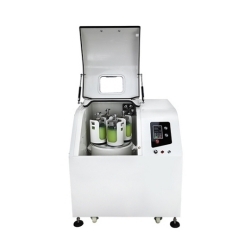 Full Direction Planetary Ball Mill |
SISCO-BM-QM-QX | 10-900r/min | $6,354.35-$8,557.53 |
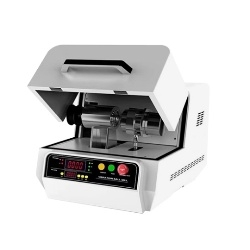 High Energy 3D Vibration Ball Mill |
SISCO-BM-P-VC | 1700r/min | $4,891.18-$7,470.53 |
 Laboratory Horizontal Planetary Ball Mill |
SISCO-BM-WXQM | Revolution: 35-335r/min Rotation: 70-670r/min |
$4,813.01-$5,391.07 |
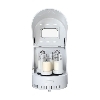 Vertical Planetary Ball Mill, Semi-circle Type |
SISCO-BM-XQM-2A | Revolution: 35-335r/min Rotation: 70-670r/min |
$4,910.06 |
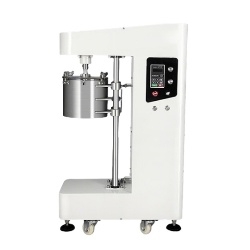 Stirred Ball Mill For Lab |
SISCO-BM-SJM | 0-1000r/min | $6,365.89-$6,397.04 |
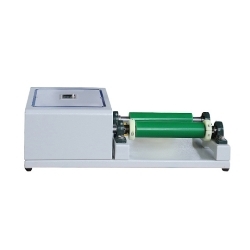 Roller Ball Mill For Lab |
SISCO-BM-QM | 60-570r/min | $1,997.72-$2,256.34 |
Note: The above price list is for reference only.
Efficient grinding and precise control of product fineness. The ball mills from sisco.com—including roller ball mill, planetary ball mill, high energy ball mill, and stirred ball mill—adopt optimized core structures and suitable grinding media. This design ensures sufficient contact between materials and media, supporting efficient crushing and grinding of various common materials. With stable operating systems and mature control logic, they can flexibly adjust key working parameters to help control the particle size of the final product, meeting different precision needs in practical applications.
Such high-quality ball mills can greatly improve the overall production efficiency and reduce operating costs. We believe they will become your reliable assistants. If you have any questions, please feel free to contact us. We sincerely hope you can select your ideal ball mill at SISCO.