
When installing a TV mount, hanging shelves, fixing cabinets, or completing a home renovation project, finding the hidden studs behind walls is one of the most important steps. A reliable stud finder helps you locate wood studs, metal structures, and electrical wires behind drywall, preventing installation mistakes and improving safety.
However, with so many options available, choosing the right stud finder can be confusing. Some models only detect basic studs, while advanced digital stud finders can identify multiple materials, including wood, metal, pipes, and live electrical wires. Many buyers search for questions like "What should I look for when buying a stud finder?", "Are digital stud finders accurate?", and "Which stud finder is best for home use?" before making a purchase decision.
According to popular tool reviews and buyer discussions, the most important factors are not only price but also detection accuracy, scanning functions, ease of use, and safety features. This stud finder buying guide explains the 5 key things you should check before purchasing to help you choose the right tool for your home improvement or professional projects.
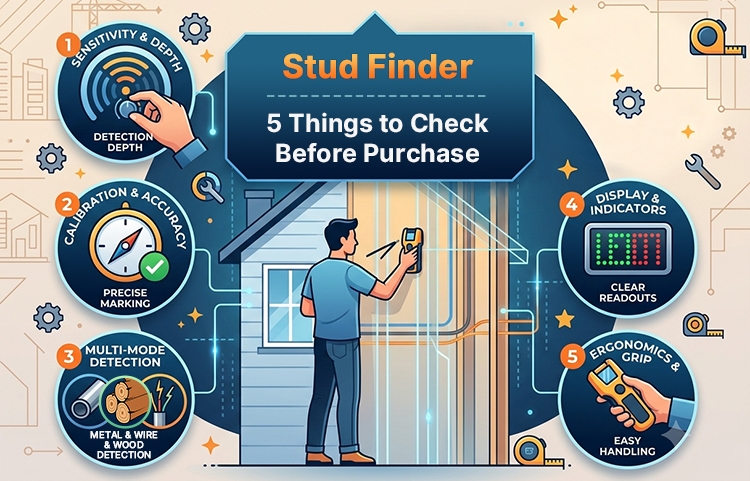
1. Check the Detection Capability: What Can the Stud Finder Find?
The first thing to consider when buying a stud finder is its detection capability. A basic stud finder may only locate wooden studs, while advanced electronic models can detect multiple materials hidden behind walls. Before purchasing, think about what you actually need to find.
Common detection functions include:
- Wood Stud Detection. Wood studs are the main support structures behind drywall. They are essential when mounting: TVs, floating shelves, cabinets, mirrors, wall decorations, garage storage racks. A reliable stud finder should help identify the exact location or center of the stud so screws can be installed securely.
- Metal Detection. Modern buildings may use metal studs, pipes, nails, screws, or other metal components behind walls. A multi-function stud finder with metal detection helps users avoid drilling into unexpected metal objects.
- Live Wire Detection. Safety is one of the biggest reasons people purchase stud finders. Electrical cables are often hidden behind drywall. Drilling into a live wire can cause serious damage or safety risks. Therefore, many advanced stud finders include AC wire detection to warn users before drilling.
Buying tip: If you only occasionally hang pictures, a basic model may be enough. For renovation projects or frequent DIY work, choose a stud finder with multiple detection modes.
2. Check Accuracy and Sensor Technology
Accuracy is one of the most important factors when choosing a stud finder.
A cheap or low-quality tool may produce false readings, causing users to drill in the wrong location. This can result in damaged walls, unstable installations, or unnecessary repair work. A good electronic stud finder typically uses sensors to measure changes in wall density and identify objects hidden behind surfaces. Important accuracy-related features include:
Center Finding Technology
Finding the edge of a stud is useful, but locating the center is even better. The center position provides stronger support when installing heavy objects such as:
- Large TVs
- Wall-mounted shelves
- Kitchen cabinets
- Storage systems
Auto Calibration
Many modern digital stud finders include automatic calibration. This feature allows the tool to adjust to different wall materials and reduces user errors. Without proper calibration, some devices may provide inconsistent results.
Multiple Scanning Modes
Different walls require different detection methods. For example:
- Drywall may require standard stud detection
- Thick walls may require deep scanning
- Renovation projects may require metal and wire detection
Buying tip: Do not judge a stud finder only by price. A slightly more advanced sensor system can save time and prevent costly mistakes.
3. Check Scanning Depth and Wall Compatibility
Another important factor is scanning depth. Walls are not always the same. A stud finder that works well on standard drywall may perform differently on thicker materials. Before purchasing, consider the types of surfaces you will scan. Common wall materials include:
- Drywall
- Plaster walls
- Wooden panels
- Wallpaper-covered walls
- Ceilings
- Floors
A good stud finder should provide stable performance across different surfaces.
Why Scanning Depth Matters? If the detection depth is too shallow, the device may miss objects hidden deeper inside walls. This becomes especially important when working on:
- Older houses
- Thick plaster walls
- Commercial buildings
- Renovation projects
Buying tip: Choose scanning depth based on your project. For simple home decoration, a standard model works well. For professional construction or remodeling, consider a deeper scanning model.
4. Check Display, Alerts, and Ease of Use
A stud finder should not only be accurate but also easy to operate. Many users who search for stud finders are homeowners or DIY beginners. Therefore, usability is an important purchase factor. Look for these user-friendly features:
Clear Digital Display
A readable LCD screen helps users understand:
- Detection mode
- Battery level
- Signal strength
- Object location
A clear display is especially useful when scanning large wall areas.
Audible Alerts
Sound alerts allow users to focus on the scanning process without constantly watching the screen. Many digital stud finders combine:
- Visual signals
- Audio alarms
- Direction indicators
This makes locating hidden objects faster.
Lightweight and Portable Design
For home users, a compact design is convenient. A portable stud finder can easily fit into:
- Toolboxes
- Drawers
- DIY kits
- Work bags
SISCO offers compact digital stud finder options designed for convenient operation, including models with digital displays and multi-material detection functions.
Buying tip: The best stud finder is not always the one with the most features. Choose a model that you can understand and operate quickly.
5. Check Battery Life, and Build Quality
The final thing to consider is long-term reliability.
A stud finder is a tool that should provide consistent performance over time. Before purchasing, check:
Battery Type and Battery Life.
Most digital stud finders use 9V batteries, some use Type-C charging. Consider:
- Easy battery replacement
- Low power consumption
- Automatic shut-off features
These features help extend operating time and reduce maintenance.
Durability
A good stud finder should withstand normal workshop conditions. Useful design features include:
- Strong housing materials
- Drop-resistant construction
- Comfortable grip
Frequently Asked Questions Before Buying a Stud Finder
Q1: What is the best type of stud finder for home use?
For most homeowners, a digital multi-function stud finder is the best choice because it can detect wood studs, metal objects, and electrical wires. It provides more information and improves safety compared with simple models.
Q2: Do I need a stud finder to mount a TV?
Yes. A stud finder helps locate structural support behind the wall, allowing safer installation of heavy objects such as TVs and large shelves.
Q3: Can a stud finder detect electrical wires?
Yes. In SISCO Store, electronic stud finders include wire detection features that help locate live electrical wires behind walls. However, users should always follow electrical safety guidelines.
Q4: Does a stud finder need battery or charging?
A stud finder can be powered by either batteries or rechargeable power sources, depending on the model. Many stud finders use a 9V battery because it provides stable power, is easy to replace, and is widely available. Some modern stud finders feature built-in rechargeable batteries and can be charged through Type-C for more convenience and reduced battery waste. SISCO offers different types of stud finders, including models powered by 9V batteries and rechargeable options, allowing users to choose the right tool based on their working habits and needs.
Conclusion:
Before buying a stud finder, always check these five factors:
- Detection capability – Can it detect wood, metal, and live wires?
- Accuracy and sensor technology – Does it provide reliable readings?
- Scanning depth and compatibility – Can it work on your wall types?
- Ease of use – Does it have a clear display and simple operation?
- Build quality and value – Will it provide reliable performance over time?
A good stud finder is more than just a wall scanner. It is a safety tool that helps you complete installation projects faster, avoid hidden hazards, and achieve professional results. Whether you are mounting a TV, installing shelves, renovating a room, or working on a DIY project, choosing the right stud finder before purchase can save time, money, and unnecessary repairs.