
A flame detector is a safety device designed to detect the presence of fire or flames quickly and accurately. Flame detectors are widely used in industries such as oil and gas, chemical processing, power generation, manufacturing, aviation, mining, and warehousing. These environments often contain flammable gases, liquids, or combustible materials, making fast fire detection critical for protecting personnel, equipment, and property. This article explains what a flame detector is, how it works, the different types, applications, and using tips.
What is a Flame Detector?
A flame detector is an electronic fire detection device that senses the optical radiation produced by flames. Flames emit energy across multiple wavelengths, including: ultraviolet (UV), visible light, infrared (IR). Different flame detectors different portions of this spectrum depending on their sensing technology. When the detector recognizes the specific radiation pattern generated by a real flame, it sends an alarm signal to a fire alarm panel, emergency shutdown system, or building management system. Unlike smoke detectors, which may require smoke to travel to the sensor, flame detectors can often detect a fire almost instantly after ignition, significantly reducing response time.
How Does a Flame Detector Work?
Flame detectors operate based on the principle of optical and spectral analysis. Different types of detectors use different technologies, but the fundamental process is similar:
- Detection of Radiation. Flames emit UV radiation, infrared radiation, and flickering visible light.
- Sensor Capture. The detector uses photodiodes, infrared sensors, or UV tubes to capture radiation signals.
- Signal Processing. The device analyzes the intensity, frequency, and flicker pattern of the detected radiation.
- Flame Recognition Algorithm. Advanced algorithms differentiate real flames from false sources such as sunlight, hot surfaces, or electrical sparks.
- Alarm Activation. If flame characteristics match predefined criteria, the detector triggers alarms or safety systems.
What are the Types of Flame Detectors?
There are several types of flame detectors available today. Among them, Ultraviolet (UV), Triple Infrared (IR3), and UV/IR flame detector are the most commonly used because they offer fast response times and reliable fire detection for different applications. These three types of flame detectors are all available on SISCO Online Shop.
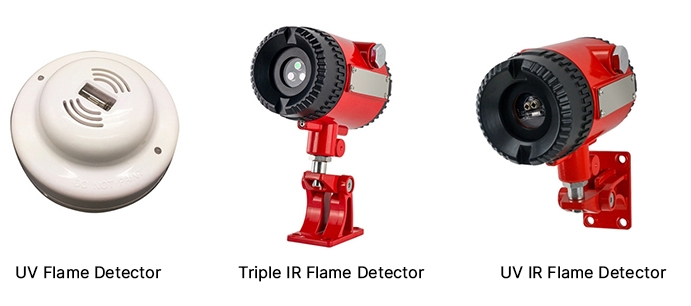
| Type | Response Speed | False Alarm Resistance | Best Environment |
| UV Flame Detector | Very fast | Moderate | Indoor industrial areas |
| IR3 Flame Detector | Fast | Excellent | Dusty, smoky areas |
| UV/IR Flame Detector | Very fast | High | General industrial applications |
Ultraviolet (UV) Flame Detector
An ultraviolet flame detector is a device that detects fire by sensing ultraviolet radiation emitted during combustion. It typically responds to wavelengths below 300 nm, which are strongly produced by hydrocarbon flames but filtered out by most natural sunlight at ground level. The working principle is based on a UV-sensitive sensor tube that continuously monitors UV intensity; when a sudden increase in UV radiation is detected within a defined threshold and time pattern, the detector triggers an alarm. Advantages include very fast response time, high sensitivity to small flames, and ability to detect fire at long distances. Therefore, it is commonly used in indoor environments such as laboratories, aircraft hangars, and industrial facilities where controlled lighting conditions reduce interference risks.
Triple IR (IR3) Flame Detector
A triple infrared flame detector uses three separate infrared sensors to detect specific wavelengths of infrared radiation produced by flames, typically in the 4.0–5.0 µm range. Its working principle relies on flame flicker analysis and spectral comparison: the detector analyzes the unique flickering pattern of real flames and compares signals from three IR channels to distinguish fire from false heat sources. This multi-spectrum verification significantly improves immunity to false alarms caused by hot surfaces, or industrial infrared sources. Advantages include high reliability, strong resistance to false triggers, and excellent performance in harsh environments such as oil refineries and petrochemical plants. However, it is more expensive. IR3 detectors are widely used in high-risk industries where accuracy and false alarm prevention are critical.
UV/IR Flame Detector
A uv/ir flame detector combines ultraviolet and infrared sensing technologies to detect fire by simultaneously analyzing UV radiation and IR emission from flames. Its working principle requires both UV detection of flame ignition and IR confirmation of flame presence, creating a dual-verification system that reduces false alarms while maintaining fast response. When a flame appears, UV sensors react instantly to ignition, while IR sensors confirm sustained combustion based on infrared patterns. Advantages include balanced performance, fast response, and improved false alarm rejection compared to single-sensor types. It is more versatile than UV-only detectors and more cost-effective than IR3 systems. UV/IR flame detector is widely used in commercial buildings, power plants, and moderate-risk industrial environments where both speed and reliability are required.

Key Applications of Flame Detectors:
- Oil & Gas Industry. Flame detectors are widely used in oil refineries, offshore platforms, and gas processing plants to provide early detection of fire hazards. They can quickly identify hydrocarbon flames and trigger alarms or suppression systems to prevent explosions.
- Power Plants & Energy Facilities. In power generation stations, flame detectors monitor boilers, turbines, and combustion systems to ensure safe and stable operation. They help detect abnormal flames or flame failure in real time.
- Industrial Manufacturing. Factories using flammable materials, such as chemical plants and metal processing facilities, rely on flame detectors to reduce fire risks and protect equipment and workers.
- Aviation & Aerospace Facilities. Flame detectors are installed in aircraft hangars, fuel storage areas, and launch facilities to ensure rapid fire detection in high-risk environments.
- Warehouses & Storage Facilities. Large warehouses storing chemicals, fuel, or flammable goods use flame detectors to provide continuous fire monitoring and early warning.
- Transportation Systems. Flame detectors are also used in tunnels, train stations, and ship engine rooms to enhance safety in enclosed and high-risk transportation environments.
Precautions For Using Flame Detectors:
- Proper Installation Location. Install the flame detector in areas with a clear line of sight to potential fire sources. Avoid placing it behind obstacles, corners, or ventilation ducts that may block flame radiation.
- Avoid False Alarm Sources. Keep the detector away from strong light sources such as welding arcs, infrared heaters, or direct sunlight reflections, which may trigger false alarms.
- Regular Cleaning and Maintenance. Dust, oil, or smoke deposits on the sensor lens can reduce sensitivity. Clean the detector surface regularly using a soft cloth.
- Periodic Testing. Test the flame detector periodically using a controlled flame simulation or built-in test function to ensure proper operation.
- Correct Power Supply. Ensure stable voltage supply according to manufacturer specifications to avoid malfunction or system failure.
- Environmental Considerations. Avoid installing in extremely high humidity, corrosive gas environments, or extreme temperatures unless the device is rated for such conditions.
Conclusion:
Flame detector is a vital fire safety device that provides rapid detection of flames using optical and spectral sensing technologies. Whether based on UV, UV/IR, or triple IR systems, these detectors play a crucial role in protecting lives, equipment, and infrastructure. In high-risk industries such as oil and gas, chemical processing, and power generation, flame detectors are not just optional—they are essential components of modern safety systems. By enabling early detection and fast response, they help prevent small incidents from becoming catastrophic disasters. As technology continues to evolve, flame detectors are becoming more accurate, and resistant to false alarms, making them an indispensable part of global fire protection strategies.